Command & Conquer: Red Alert 2 is beloved for its perfect fusion of accessible base-building RTS mechanics — ore harvesting, MCV deployment, asymmetric faction unit rosters — and a gloriously campy alternate Cold War setting dripping with over-the-top units, FMV cutscenes, and pulp sci-fi absurdity. Its two (later three) factions feel genuinely distinct, rewarding faction loyalty and encouraging replay.
When players look for games like Red Alert 2, they want that base-construction and resource-harvesting loop paired with sharply asymmetric factions, manageable micro-management complexity, and either a sci-fi, historical, or military setting. The tone matters too — RA2 is fun, not grim — so games with personality score higher than bare mechanical clones.
Top pick:Command & Conquer: Red Alert 3 is the single closest pick: it is literally the next game in the same series, preserving RA2's ore-harvesting economy, asymmetric Allied/Soviet/Imperial factions, MCV base deployment, and campy FMV storytelling while adding a third faction, optional co-op campaigns, and a naval combat layer — making it the natural next stop for any RA2 fan.
Some store buttons are affiliate links — we may earn a commission at no extra cost to you.
16 games like Command & Conquer: Red Alert 2
93%
Command & Conquer: Red Alert 3 2008
Red Alert 3 is the direct continuation of RA2's formula: two (now three) asymmetric Cold War-flavored factions, ore harvesting, base construction, and the same campy FMV presentation with over-the-top units like the Imperial Shogun Executioner. It even adds a third Japanese faction and optional co-op campaigns.
Key difference: Adds a third faction and mandatory naval combat emphasis.
Best for: RA2 fans who want more of the exact same experience.
Skip if: You dislike the shift toward even sillier comedy tone.
The direct predecessor that established the alternate-history Soviet-vs-Allies setup, ore harvesting, and two-faction asymmetry that RA2 perfected. Tesla Coils, Tanya, and Chronospheres all originate here with largely the same RTS loop.
Key difference: Older engine and interface; no Yuri third faction.
Best for: Players who want the purest classic RA2 precursor.
Skip if: You need modern UI quality-of-life features.
StarCraft pioneered three-faction asymmetric RTS with distinct unit rosters, base building, and resource harvesting — the same pillars RA2 is built on. Its Terran/Zerg/Protoss factions have the same rock-paper-scissors depth as Allies vs Soviets.
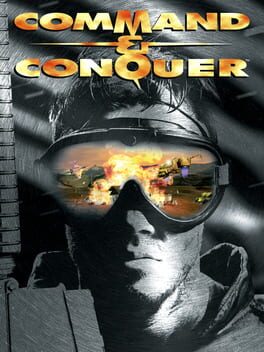
The original Command & Conquer established the franchise's DNA: two factions (GDI vs Brotherhood of Nod), Tiberium harvesting, MCV deployment, and a story-driven campaign — every mechanic RA2 inherits directly.
Key difference: Grittier, less fantastical tone; older interface.
Best for: Series historians wanting the franchise roots.
Skip if: You need modern unit pathfinding and QoL improvements.
C&C Generals transplants the franchise's base-building and resource-gathering into a contemporary near-future military conflict with three factions — USA, China, and Global Liberation Army — each with radically different playstyles.
Key difference: Realistic modern military aesthetic replaces Cold War sci-fi fun.
Best for: Players who want C&C mechanics in a grounded setting.
Skip if: You love the cheesy FMV and over-the-top fantasy units.
Tiberium Wars returns the C&C franchise to its 3D era with GDI, Nod, and the alien Scrin as a third faction. Base construction, Tiberium harvesting, and asymmetric unit rosters are all intact with a higher-fidelity engine.
Key difference: Three factions and darker sci-fi tone; no Yuri-style mind control.
Best for: C&C fans who want a graphically modern entry.
Skip if: You want the retro alternate-history Cold War setting.
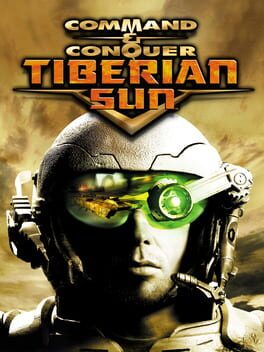
Tiberian Sun is the direct bridge between C&C and RA2, set in a bleak 2030 Tiberium-infected Earth. It shares the same base-building loop and introduces terrain deformation and infantry veterancy that RA2 built upon.
Key difference: Much darker post-apocalyptic tone; slower, grittier pacing.
Best for: Players who appreciate the more serious C&C branch.
Skip if: You prefer RA2's bright, colorful, playful presentation.
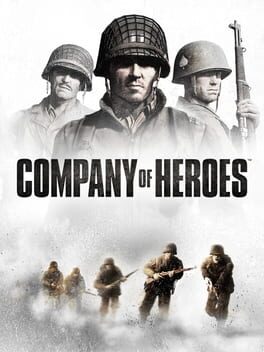
Company of Heroes applies RA2-style base construction and asymmetric factions to WWII tactical combat, adding cover systems and territory-based resource nodes. Its two-faction Allied-vs-Wehrmacht setup mirrors RA2's fundamental structure.
Key difference: Tactical cover and unit suppression replace mass-unit spam.
Best for: Players who want RTS with real tactical squad-level decision-making.
Skip if: You prefer macro base-building over micro-intensive infantry tactics.
Warcraft III blends base-building RTS with hero units, giving each of its four factions a distinct unit roster and economy — the same core asymmetric formula. Its campaigns have strong cinematic storytelling comparable to RA2's missions.
Key difference: Fantasy setting and hero RPG mechanics add a very different layer.
Best for: Players who want base-building RTS with deeper hero progression.
Skip if: You strictly want modern/sci-fi military aesthetics.
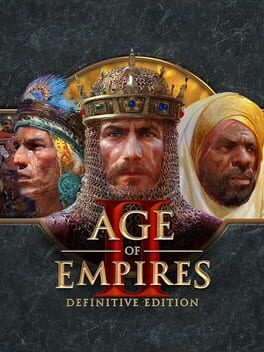
The genre benchmark for accessible base-building RTS with distinct civilization asymmetry, resource gathering, and escalating tech trees — sharing the same core loop as RA2 but in a medieval historical setting.
Key difference: Medieval real-world civilizations instead of sci-fi Cold War factions.
Best for: Players who want the most polished, well-supported classic RTS.
Skip if: You need a sci-fi or modern military aesthetic.
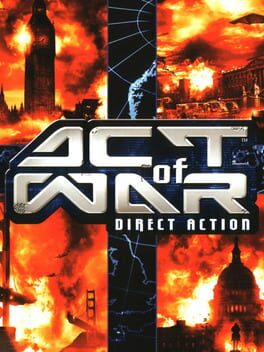
Act of War is practically a spiritual successor to C&C Red Alert 2 in a modern setting: two factions, base building, ore-equivalent POW resource system, and live-action FMV cutscenes with an over-the-top near-future military plot.
Key difference: Modern-day realistic military units instead of Cold War sci-fi gadgets.
Best for: RA2 fans who want the FMV-driven campaign feel in a modern skin.
Skip if: You want fantasy or sci-fi units over realistic armor and infantry.
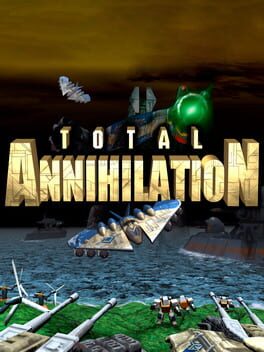
Released in 1997, Total Annihilation pioneered 3D terrain, metal/energy economies, and massive-scale robot warfare between two factions — sharing RA2's base-expansion and unit-spam satisfaction with a deeper economy layer.
Key difference: Fully 3D physics-based projectiles; much larger army scales.
Best for: Classic RTS purists who want deeper economic and unit-physics depth.
Skip if: You need modern graphics or the alternate-history Cold War theme.
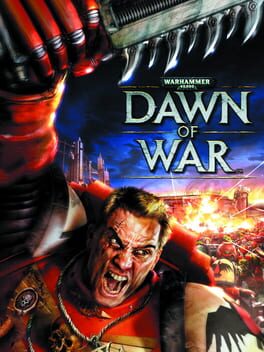
Dawn of War's four wildly asymmetric factions, base construction, and unit production translate RA2's faction-pride appeal into the grimdark 41st millennium. Territory capture replaces ore harvesting but the skirmish feel is similar.
Key difference: Dark sci-fi/fantasy 40K license; smaller scale, more squad-focused.
Best for: Players who want strong faction identity and lore-rich RTS.
Skip if: You want a lighthearted, campy tone or traditional resource nodes.
Rise of Nations layers traditional RTS base-building with Civilization-like territory control and era advancement, supporting large-scale battles across multiple historical periods. Its city-centric economy and national borders add strategic depth absent in RA2.
Key difference: Territory and attrition systems replace pure unit annihilation.
Best for: Players who want RTS with more macro grand-strategy flavor.
Skip if: You want fast-paced skirmishes over slower empire building.
The Lord of the Rings: The Battle for Middle-earth II 2006
Battle for Middle-earth II is an accessible base-building RTS with sharply asymmetric factions — each race plays differently and has unique heroes — set in Tolkien's world. Its fortress-centric base design and resource nodes echo RA2's structure.
Key difference: Fantasy license replaces Cold War sci-fi; hero units are central.
Best for: Players who want RTS accessibility with strong faction identity.
Skip if: You dislike fantasy settings or licensed game compromises.
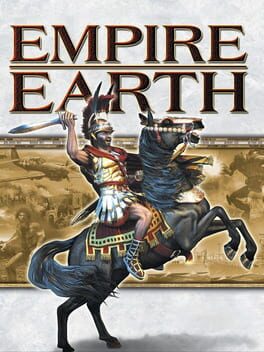
Empire Earth spans all of human history in a single RTS framework with base building, unit production, and civilization-era advancement. Its scope is massive and its 2001 pedigree places it squarely in RA2's peer era.
Key difference: 14 historical epochs to advance through instead of a fixed tech tree.
Best for: Players who want a sweeping historical RTS from the same era.
Skip if: You want tight faction asymmetry and a focused campaign tone.
PC
At a glance
Game
Match
Shared DNA
Biggest difference
Platforms
Command & Conquer: Red Alert 3
93%
Real Time Strategy (RTS), Strategy
Adds a third faction and mandatory naval combat emphasis.
PlayStation, PC, Xbox
Command & Conquer: Red Alert
92%
Real Time Strategy (RTS), Strategy
Older engine and interface; no Yuri third faction.
PlayStation, PC
StarCraft
88%
Real Time Strategy (RTS), Strategy
Science-fiction aliens replace Cold War politics; higher mechanical ceiling.
PC
Command & Conquer
87%
Real Time Strategy (RTS), Strategy
Grittier, less fantastical tone; older interface.
Nintendo, PC, PlayStation
Command & Conquer: Generals
85%
Real Time Strategy (RTS), Strategy
Realistic modern military aesthetic replaces Cold War sci-fi fun.
PC
Command & Conquer 3: Tiberium Wars
84%
Real Time Strategy (RTS), Strategy
Three factions and darker sci-fi tone; no Yuri-style mind control.
PC, Xbox
Command & Conquer: Tiberian Sun
82%
Real Time Strategy (RTS), Strategy
Much darker post-apocalyptic tone; slower, grittier pacing.
PC
Company of Heroes
82%
Real Time Strategy (RTS), Strategy
Tactical cover and unit suppression replace mass-unit spam.
PC, Mobile
Warcraft III: Reign of Chaos
80%
Real Time Strategy (RTS), Strategy
Fantasy setting and hero RPG mechanics add a very different layer.
PC
Age of Empires II: Definitive Edition
80%
Real Time Strategy (RTS), Strategy
Medieval real-world civilizations instead of sci-fi Cold War factions.
Xbox, PC, PlayStation
Act of War: Direct Action
80%
Real Time Strategy (RTS), Strategy
Modern-day realistic military units instead of Cold War sci-fi gadgets.
PC
Total Annihilation
78%
Real Time Strategy (RTS), Strategy
Fully 3D physics-based projectiles; much larger army scales.
PC
Warhammer 40,000: Dawn of War
75%
Real Time Strategy (RTS), Strategy
Dark sci-fi/fantasy 40K license; smaller scale, more squad-focused.
PC
Rise of Nations
70%
Real Time Strategy (RTS), Strategy
Territory and attrition systems replace pure unit annihilation.
PC
The Lord of the Rings: The Battle for Middle-earth II
68%
Real Time Strategy (RTS), Strategy
Fantasy license replaces Cold War sci-fi; hero units are central.
PC, Xbox
What makes a game truly feel like Red Alert 2?
The RA2 feeling comes from three interlocking pillars: a base-construction economy where you deploy an MCV, build ore refineries, and expand outward; sharply asymmetric factions where every unit roster tells a story (Prism Tanks vs Apocalypse Tanks); and a campaign with personality — missions that escalate in creative ways with memorable objectives. Games that nail all three — like StarCraft and StarCraft II — come closest even if their setting is alien sci-fi rather than Cold War pulp.
The Command & Conquer franchise entries in this list (Red Alert, Red Alert 3, Tiberian Sun, Tiberium Wars, Generals) each preserve most of these pillars. Outside the franchise, Warcraft III adds hero units to the formula, and Company of Heroes (additional pick) swaps mass-unit spam for tactical squad depth — both are worth trying depending on which pillar you value most.
Best picks if you love the Cold War alternate-history flavor
RA2's alternate-history tone — Soviet tanks rolling through suburban America, a psychic villain mind-controlling entire cities — is rare. The closest tonal match in the pool is Red Alert 3, which cranks the absurdity even higher with Imperial Japan as a third faction and units like the Warrior Tank Shogun. Red Alert (1996) is the pure origin of that aesthetic, and fans of the campy FMV presentation will find both entries deeply satisfying.
For something adjacent in tone, Act of War: Direct Action (additional pick) is a largely forgotten gem that copies the FMV-driven narrative and modern-military base-building almost beat for beat — it is one of the best RA2 spiritual successors most lists never mention.
If you want the competitive skirmish depth over the campaign
StarCraft II: Wings of Liberty is the gold standard for players who want the RTS base-building formula taken to its competitive extreme, with ranked ladder, constant balance patches, and three factions as distinct as anything in the C&C universe. StarCraft (1998) remains astonishingly balanced and is free to play today. Both reward deep faction mastery.
For a slower, more expansive take on skirmish play, Rise of Nations is a hidden gem from 2003 that adds territory control and era-advancement to a familiar RTS base — it rewards macro thinking over micro, making it a satisfying alternative for players who find pure unit rushes exhausting.
Is there a game exactly like Red Alert 2 but modern?
Command & Conquer: Red Alert 3 (2008) is the most direct modern equivalent, preserving the same base-building formula, two-vs-two faction asymmetry, and FMV campaign with updated graphics. Beyond the franchise, Act of War: Direct Action replicates the formula in a modern-military skin with live-action cutscenes.
What RTS games have the same base-building and ore-harvesting as Red Alert 2?
The entire Command & Conquer series uses the same MCV deployment and Tiberium/ore harvesting loop. StarCraft and StarCraft II use mineral/gas harvesting with a nearly identical base-expansion rhythm. Age of Empires II uses similar resource gathering with villagers instead of harvester vehicles.
Are there any free games like Command & Conquer Red Alert 2?
OpenRA is a free, open-source recreation of Red Alert (and Red Alert 2 mechanics) with modern netcode and cross-platform support — it is the closest free equivalent. StarCraft: Remastered's original StarCraft is also free to download from Blizzard.
What game has the same two-faction asymmetric RTS feel as RA2?
StarCraft's Terran vs Zerg vs Protoss and Company of Heroes' Allied vs Wehrmacht setups are the genre benchmarks for asymmetric faction design. Within the C&C universe, Red Alert 3 introduces a third Imperial Japan faction alongside Allies and Soviets for even more variety.
Is Warcraft III similar to Red Alert 2?
Warcraft III shares the base-building and asymmetric faction DNA but adds mandatory hero units with RPG leveling, creep-farming, and a fantasy setting — it is more complex and slower-paced. If you enjoyed RA2's campaign structure and faction identity but want deeper decision-making, Warcraft III is an excellent next step.
 93%
93%