Terraria's appeal comes from a uniquely dense combination: a 2D side-scrolling sandbox where mining, crafting, building, and combat all reinforce each other, and where defeating bosses tangibly unlocks new tiers of gear, biomes, and NPCs. That boss-gated progression loop, layered atop near-infinite procedurally generated worlds and a surprising breadth of content, is what keeps players for thousands of hours.
When someone asks for "games like Terraria," they're usually chasing at least one of three things: the survival-crafting-sandbox loop (dig, build, craft, progress), the 2D platformer action with boss encounters and loot variety, or the sense of an ever-deepening world that rewards curiosity. The best picks below cover all three angles.
Top pick:Starbound is the single closest match in the candidate pool—it transplants Terraria's exact 2D sandbox loop (dig, craft, build bases, fight bosses, recruit NPCs, unlock gear tiers) into a sci-fi universe with procedurally generated planets, making it the first game any Terraria fan should try.
Some store buttons are affiliate links — we may earn a commission at no extra cost to you.
18 games like Terraria
95%
Starbound 2016
Starbound is essentially Terraria taken to a sci-fi galaxy: same 2D side-scrolling sandbox loop of digging, crafting gear tiers, building bases, and fighting bosses, now spread across procedurally generated planets with varied biomes and races. The progression structure—gear unlocks, boss gates, NPC recruitment—mirrors Terraria almost beat for beat.
Key difference: Sci-fi space setting replaces fantasy; more story/quest structure.
Best for: Terraria fans who want a fresh universe to explore.
Skip if: You dislike sci-fi aesthetics or want tighter boss design.
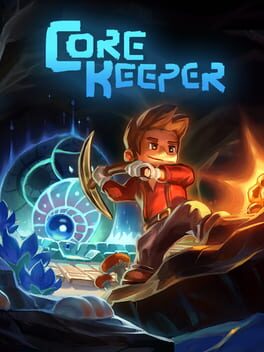
Core Keeper is a top-down 2D mining sandbox where you dig through layered underground biomes, craft gear in escalating tiers, build a base, and defeat bosses to unlock new materials and areas—the closest modern spiritual sibling to Terraria's full loop.
Key difference: Top-down perspective instead of side-scrolling; newer and smaller community.
Best for: Terraria veterans who want that exact loop in a fresh package.
Skip if: You specifically need Terraria's vertical platformer feel.
Minecraft shares Terraria's core loop of mining resources, crafting tools and armor, building structures, and defeating bosses to advance tiers. Where Terraria is 2D and combat-heavy, Minecraft is 3D and more architecture-focused, but the survival-sandbox DNA is identical.
Key difference: 3D first-person perspective with far less combat depth.
Best for: Players who want the sandbox/crafting loop in a 3D world.
Skip if: You specifically love Terraria's tight 2D platformer combat.
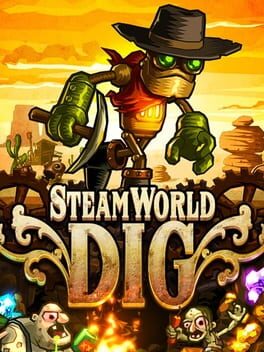
SteamWorld Dig puts mining and underground exploration at its centre: you dig downward through layered terrain, collect ores, sell them to upgrade your tools, and push deeper into procedurally flavoured caves. The loop of dig→upgrade→dig deeper directly echoes Terraria's early-game satisfaction.
Key difference: Linear mine shaft structure, no base building or open sandbox.
Best for: Players who love Terraria's mining feel above all else.
Skip if: You need open-world freedom or multiplayer.
Don't Starve is a 2D survival sandbox where you gather resources, craft tools and structures, manage hunger and sanity, and face escalating threats across procedurally generated worlds. Its hostile, darkly whimsical biomes and crafting tree echo Terraria's survival progression.
Key difference: Perma-death roguelike runs; no building freedom or boss gear tiers.
Best for: Terraria fans who want harsher survival stakes.
Skip if: You hate permadeath or want deep combat variety.
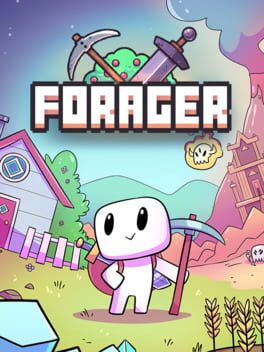
Forager is a 2D top-down idle-action game where you gather resources, unlock crafting recipes, build structures, solve puzzles, and fight bosses across expanding island biomes. Its incremental progression and crafting tree feel directly inspired by Terraria.
Key difference: More casual idle-game pacing; less emphasis on action combat.
Best for: Terraria fans who love the crafting tree and progression unlocks.
Skip if: You want deep combat challenge or true open-world exploration.
Hollow Knight is a 2D underground exploration game where you fight bosses to unlock new areas and abilities, gradually peeling back a sprawling hand-crafted world. The boss-gated metroidvania progression and punishing-but-fair combat share Terraria's satisfaction of unlocking the next tier of challenge.
Key difference: Completely hand-crafted world; no crafting, mining, or building.
Best for: Terraria fans who want deeper combat and atmosphere.
Skip if: You dislike challenging combat with little gear grind.
Stardew Valley shares Terraria's resource-gathering, crafting, NPC-relationship, and dungeon-boss progression loop wrapped in a farming RPG. Its mines feature floor-by-floor enemy and ore tiers that feel directly Terraria-adjacent, and crafting unlocks gate further progression.
Key difference: Farming and social life are the main focus, not combat or building.
Best for: Players who want a slower, cozier progression loop.
Skip if: You want fast-paced combat or freedom to build anywhere.
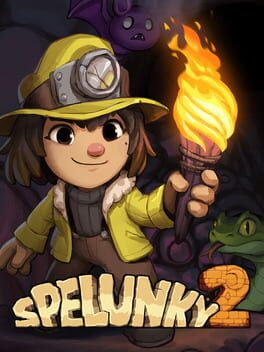
Spelunky 2 is a 2D side-scrolling roguelike platformer with dense underground exploration, hidden biomes, boss fights, and an enormous amount of systemic depth in how its elements interact—sharing Terraria's joy of descending into dangerous procedural caverns.
Key difference: Permadeath roguelite runs; no crafting, building, or persistence.
Best for: Terraria fans who love the cave exploration and challenge.
Skip if: You hate losing progress or need a persistent world.
Rogue Legacy is a 2D side-scrolling action platformer where you fight through procedurally generated castles, collect gold to buy permanent upgrades between runs, and unlock new character classes. Its loot-and-power-up loop and 2D platform combat feel very close to Terraria's combat layer.
Key difference: Roguelite runs replace open persistent worlds; no building or crafting.
Best for: Terraria fans who want the 2D combat loop in roguelite form.
Skip if: You dislike starting over and want persistent world freedom.
Grounded is a survival-crafting sandbox where you gather resources from a backyard environment, build bases, craft gear tiers, and fight escalating bosses—structurally nearly identical to Terraria but in a 3D first-person perspective.
Key difference: 3D first-person; bug-themed setting instead of fantasy.
Best for: Terraria fans who want the survival-crafting-boss loop in 3D co-op.
Skip if: You want 2D platforming or Terraria's breadth of content.
The Binding of Isaac: Rebirth is a top-down roguelite shooter where every run assembles a gear build from synergistic item drops, mirroring Terraria's item-synergy class system. Boss encounters gate each floor, and the sheer variety of items provides comparable depth of build experimentation.
Key difference: Top-down roguelite runs; no world exploration, crafting, or building.
Best for: Terraria players obsessed with build variety and boss fights.
Skip if: You need a persistent world or dislike Isaac's dark tone.
Hades is a 2D action-RPG roguelite with tight combat, incremental permanent progression between runs, and a rich boss-fight sequence that gates story advances. The boon/build system echoes Terraria's class-through-gear approach, and the "one more run" loop is equally compelling.
Key difference: Linear dungeon runs; no open world, crafting, or building.
Best for: Players who love Terraria's boss fights and build variety.
Skip if: You want open exploration or a persistent world to shape.
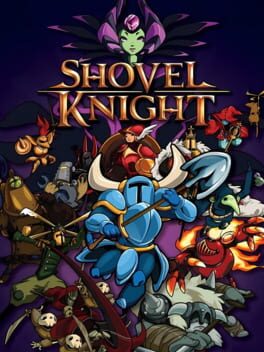
Shovel Knight is a polished 2D action-platformer with retro aesthetics, boss-gated progression, collected gear and relics that alter your playstyle, and optional challenge stages. Its 2D side-scrolling combat and sense of unlocking new tools shares Terraria's surface feel.
Key difference: Strictly linear levels; no sandbox, crafting, or world generation.
Best for: Terraria fans who want pure 2D platformer craftsmanship.
Skip if: You need open-world freedom or crafting systems.
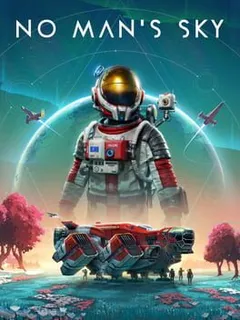
No Man's Sky puts you in a procedurally generated universe where you mine planet surfaces for resources, craft equipment and base components, fight bosses, and progress through gear tiers—all in first-person 3D. The survival-crafting-exploration loop is structurally close to Terraria.
Key difference: 3D first-person space exploration; far less combat depth.
Best for: Terraria fans who want the sandbox loop in a massive sci-fi scale.
Skip if: You want tight 2D combat or dense boss progression.
Fez is a 2D exploration-platformer set in a world where rotating the perspective reveals hidden paths, secrets, and collectibles across interconnected hand-crafted zones. The sense of incremental world exploration and uncovering hidden mechanics mirrors Terraria's exploratory joy.
Key difference: Pure puzzle-exploration; no combat, crafting, or survival systems.
Best for: Terraria fans who love exploration and secrets above combat.
Skip if: You need action, loot, or building gameplay.
Ori and the Blind Forest is a 2D metroidvania platformer with ability-gated exploration, tight platforming, and a beautiful hand-crafted underground world. Players who love Terraria's sense of descending into unknown biomes and unlocking movement abilities will feel at home.
Key difference: Purely linear metroidvania; no sandbox, crafting, or building.
Best for: Terraria fans who want polished 2D platforming and exploration.
Skip if: You need crafting, loot variety, or open-world building.
Celeste is a precision 2D platformer with a chapter-by-chapter progression that unlocks new movement mechanics, optional hidden challenges, and a growing sense of mastery. Players drawn to Terraria for its tight 2D movement and challenge will find satisfaction here.
Key difference: Pure platformer, no combat systems, crafting, or world building.
Best for: Terraria fans who love 2D movement precision above all else.
Skip if: You need any RPG, survival, or sandbox elements.
Sci-fi space setting replaces fantasy; more story/quest structure.
Xbox, PC
Core Keeper
93%
Role-playing (RPG), Adventure
Top-down perspective instead of side-scrolling; newer and smaller community.
Xbox, PlayStation, PC, Nintendo
Minecraft: Java Edition
90%
Simulator, Adventure
3D first-person perspective with far less combat depth.
PC
SteamWorld Dig
82%
Platform, Adventure
Linear mine shaft structure, no base building or open sandbox.
PlayStation, PC, Nintendo, Xbox
Don't Starve
80%
Simulator, Adventure
Perma-death roguelike runs; no building freedom or boss gear tiers.
PlayStation, PC, Xbox, Nintendo
Forager
80%
Role-playing (RPG), Simulator
More casual idle-game pacing; less emphasis on action combat.
PlayStation, PC, Mobile, Xbox, Nintendo
Hollow Knight
75%
Platform, Adventure
Completely hand-crafted world; no crafting, mining, or building.
Xbox, PlayStation, PC, Nintendo
Stardew Valley
72%
Role-playing (RPG), Simulator
Farming and social life are the main focus, not combat or building.
PlayStation, PC, Nintendo, Mobile, Xbox
Spelunky 2
72%
Platform, Adventure
Permadeath roguelite runs; no crafting, building, or persistence.
Xbox, PlayStation, PC, Nintendo
Rogue Legacy
68%
Platform, Role-playing (RPG)
Roguelite runs replace open persistent worlds; no building or crafting.
PlayStation, PC, Xbox, Nintendo
Grounded
68%
Role-playing (RPG), Adventure
3D first-person; bug-themed setting instead of fantasy.
Xbox, PlayStation, PC, Nintendo
The Binding of Isaac: Rebirth
65%
Role-playing (RPG), Adventure
Top-down roguelite runs; no world exploration, crafting, or building.
PlayStation, PC, Nintendo, Mobile, Xbox
Hades
62%
Role-playing (RPG), Adventure
Linear dungeon runs; no open world, crafting, or building.
Xbox, PlayStation, PC, Mobile, Nintendo
Shovel Knight
60%
Platform, Adventure
Strictly linear levels; no sandbox, crafting, or world generation.
PlayStation, PC, Nintendo, Xbox
No Man's Sky
58%
Simulator, Adventure
3D first-person space exploration; far less combat depth.
Xbox, PlayStation, Nintendo, PC
What makes a game truly feel like Terraria?
The key is the intersection of three systems working together: a living, destructible 2D world you can reshape; a crafting and gear progression that gates new content behind boss milestones; and a sense that exploring deeper always yields something new. Starbound and Core Keeper (see additional picks) nail all three. Minecraft: Java Edition covers the sandbox and crafting pillars but trades Terraria's 2D combat depth for 3D spatial creativity.
Don't Starve and No Man's Sky capture the survival-exploration loop with unique twists—Don't Starve adding permadeath tension, No Man's Sky scaling it to a galaxy—but both sacrifice the tight 2D combat that makes Terraria's boss fights memorable.
Best picks if you love Terraria's 2D platformer combat and boss fights
Hollow Knight is the standout here: its boss roster is exceptional, its underground world rewards exploration, and the ability-gated progression shares Terraria's satisfying "I can finally access that area" moments. Hades and Rogue Legacy bring comparable build variety and boss-fight quality in roguelite form, letting you experiment with different playstyle archetypes the way Terraria's melee/ranged/mage/summoner classes do.
For the retro 2D action feel, Shovel Knight and SteamWorld Dig are excellent hidden gems—SteamWorld Dig especially nails the underground mining tension of Terraria's early hours.
If you want the crafting and progression loop without the combat focus
Stardew Valley shares more DNA with Terraria than it first appears: tiered mine progression, NPC recruitment tied to achievements, and a crafting tree that unlocks new tools and structures. The pace is slower and farming takes centre stage, but players who love Terraria's sense of always having a next goal to work toward will feel right at home.
Forager (see additional picks) leans even further into the incremental crafting-unlock loop, delivering rapid-fire progression satisfaction in a compact 2D package.
Starbound is the closest match: it's a 2D side-scrolling sandbox with the same loop of mining, crafting gear tiers, building bases, fighting boss-gated progression, and recruiting NPCs—just set in a sci-fi universe. Core Keeper (not in every store listing) is another near-perfect match in a top-down perspective.
Is Minecraft similar to Terraria?
Yes, but with key differences. Both share a survival-crafting-sandbox loop where you gather resources, build structures, craft equipment, and fight bosses. Terraria is 2D with a stronger combat and loot system, while Minecraft is 3D and more focused on construction and exploration breadth. Many players enjoy both for complementary reasons.
Are there games like Terraria that focus more on the underground exploration aspect?
SteamWorld Dig and Spelunky 2 both centre on descending through layered underground biomes with escalating danger. Hollow Knight goes even further with a rich, interconnected underground world full of secrets and boss fights. Don't Starve also features deep world exploration tied to a survival loop.
What should I play after finishing Terraria?
Starbound is the natural next step for the same loop in a new setting. After that, Hollow Knight offers the deepest boss-progression experience in 2D, and Hades provides hundreds of hours of build variety with tight action combat. For a different pace, Stardew Valley's mine progression and NPC systems will feel surprisingly familiar.
Is there a game like Terraria with more story?
Starbound adds explicit quests and story missions to the Terraria-style loop. Hollow Knight has one of the most acclaimed lore-dense worlds in indie gaming delivered through environmental storytelling. Hades integrates narrative directly into its roguelite progression, revealing story beats every time you play.
 95%
95%