Doom (2016) earns its love by rejecting cover mechanics entirely and building every encounter around aggressive forward momentum: kill enemies to get health, use the chainsaw to force ammo drops, and never stop moving. The glory-kill system, arena design, and relentless metal soundtrack create a feedback loop where playing offensively is the only viable survival strategy—a deliberate inversion of the cautious hide-and-peek shooters that dominated the preceding decade.
When fans ask for "games like Doom (2016)," they're really asking for one or more of three things: a fast, fluid FPS with no regenerating health and aggressive encounter design; sci-fi horror aesthetics and a demonic or monstrous enemy roster; or the pure satisfaction of a modern game that confidently channels the spirit of the 1993 original. The games below are ranked by how faithfully they scratch those specific itches.
Top pick:DOOM Eternal is the single closest pick—it is, quite literally, the direct sequel that takes every mechanic from Doom (2016) and sharpens them to a razor edge, making the resource loop of glory kills, chainsaw fuel, and flame belch feel like an intricate dance rather than mere button mashing; if you loved 2016, Eternal is the mandatory next stop.
Some store buttons are affiliate links — we may earn a commission at no extra cost to you.
19 games like Doom
99%
Doom Eternal 2020
The direct sequel to Doom (2016) refines every system—adding a dash, flame belch, and chainsaw as mandatory resource loops—creating the most mechanically pure arena-FPS expression of the formula.
Key difference: More demanding resource management and mobility; steeper skill curve.
Best for: Doom 2016 fans ready for the definitive, harder evolution.
Skip if: Doom 2016's pace already felt overwhelming.
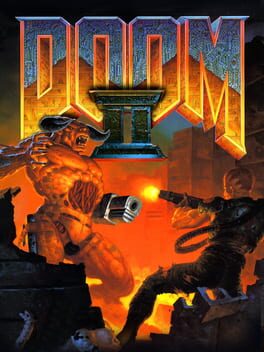
Doom II expands the original with a new super shotgun and larger, more intricate maps packed with demon hordes—the same relentless push-forward combat loop.
Key difference: Larger, more maze-like levels than the 2016 reboot's arena focus.
Best for: Classic Doom fans who want more of the original template.
Skip if: You need modern quality-of-life features and fluid aiming.
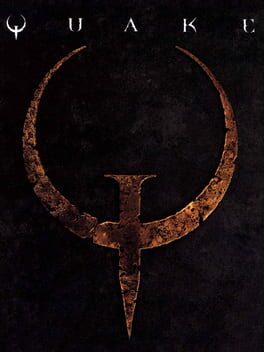
id Software's 1996 follow-up to the original Doom is a pure arena FPS with rocket launchers, fast strafe movement, and gothic horror enemies—the direct mechanical ancestor of Doom 2016's combat loop.
Key difference: 1996 graphics, no narrative, fully arena-focused deathmatch roots.
Best for: History-seekers wanting the direct lineage of Doom 2016's design.
Skip if: Dated graphics and no story are dealbreakers.
Nintendo
85%💎 Gem
Dusk 2018
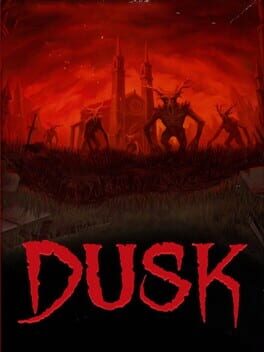
Dusk is an indie retro-FPS clearly inspired by Quake and Doom: sprint-strafing through farm horror, industrial hellscapes, and nightmare dimensions with a shotgun and sickles.
Wolfenstein: The New Order revived the retro FPS spirit in the same year's window as Doom's reboot, featuring fast gunplay, dual-wielding, and brash, over-the-top action against sci-fi enemies.
Key difference: Slower movement, more story focus, Nazi sci-fi setting instead of hell.
Best for: Players who want campaign-driven FPS with similar brutality.
Skip if: You hate cutscenes interrupting your shooting pace.
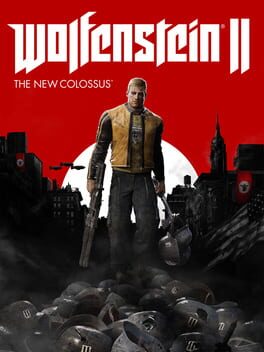
Wolfenstein II doubles down on the explosive FPS action, adding dual-wielding chaos and even more bombastic set-pieces in an alternate-history America overrun by sci-fi Nazis.
Key difference: More cinematic story beats; shorter combat sections than Doom.
Best for: New Order fans wanting more of the same with wilder set-pieces.
Skip if: You find over-the-top political satire jarring mid-shooter.
Titanfall 2 features one of the best FPS single-player campaigns ever made, built on lightning-fast movement—wall-running and sliding—that channels the same kinetic aggression as Doom's combat dance.
Key difference: Military sci-fi tone, mechs, no demons or horror element.
Best for: Speed-focused players who love fluid movement above all else.
Skip if: You dislike multiplayer-centric games with a short campaign.
Bulletstorm is a ludicrous, fast FPS built around killing enemies with style via a tethering whip and over-the-top weapons—shares Doom's aggressive push-forward combat and rewards creative, brutal kills.
Key difference: Skill-shot scoring system over pure survival; comedy tone.
Best for: Doom fans who want FPS creativity and wild weapon sandbox.
Skip if: You want serious atmosphere over comedic, stylized kills.
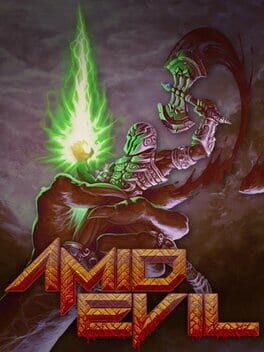
Amid Evil is a fantasy-themed retro arena FPS built to the exact rhythm of classic Doom: large maps, hordes of enemies, and spectacular weapons that feel devastating and fluid.
Key difference: High-fantasy theme instead of sci-fi/hell; retro visual style.
Best for: Classic Doom players who want the modern retro FPS highpoint.
Skip if: Retro aesthetics and indie scope feel cheap to you.
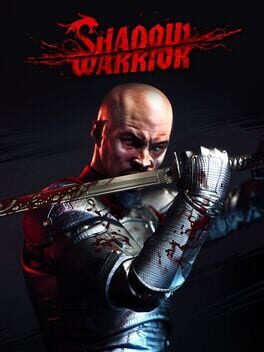
Shadow Warrior (2013) is a gory, fast FPS reboot with swords and guns against demon hordes—the same resource-management-through-kills loop and relentless forward momentum as Doom 2016.
Key difference: Self-aware comedy tone and katana melee focus over glory kills.
Best for: Doom fans who want more arena FPS with a lighter, weirder vibe.
Skip if: You need a serious, weighty tone and premium production values.
Returnal is a bullet-hell third-person shooter set in a nightmarish alien world with Lovecraftian horror—its loop of aggressive, fast-paced combat against overwhelming monster hordes scratches a similar itch.
Key difference: Roguelite structure with permadeath and third-person perspective.
Best for: Doom fans who want brutal difficulty and sci-fi horror pressure.
Skip if: Permadeath and randomized runs feel punishing rather than fun.
Prey (2017) places you aboard a space station overrun by alien horrors with FPS combat and a dark sci-fi atmosphere—shares Doom's Immersive Sim corridor DNA and supernatural enemy encounters.
Key difference: Slower, exploration/stealth RPG focus; fewer pure combat arenas.
Best for: Doom players who want sci-fi horror FPS with deeper systems.
Skip if: You have zero patience for backtracking and ability trees.
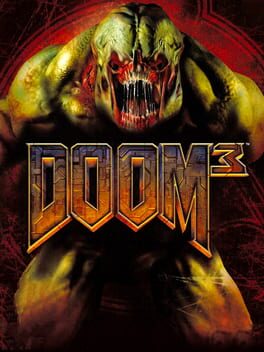
Doom 3 shares the franchise DNA but takes the series into slow, atmospheric survival-horror corridors with jump-scares—the opposite of 2016's wide-open arenas but unmistakably the same hellish universe.
Key difference: Slow, horror-focused crawl versus Doom 2016's aggressive speed.
Best for: Players who want the Doom lore in a creepier, moodier package.
Skip if: Regenerating tension and darkness frustrate you; you want action.
Half-Life 2 is a foundational FPS with relentless corridor gunfights against horrifying alien enemies—the same linear campaign structure pushing you forward through hell (on Earth).
Key difference: Slower pace, physics puzzles, and no glory-kill resource loop.
Best for: Doom players who want a story-driven FPS masterpiece next.
Skip if: You specifically want arena-style demon-slaying with no puzzles.
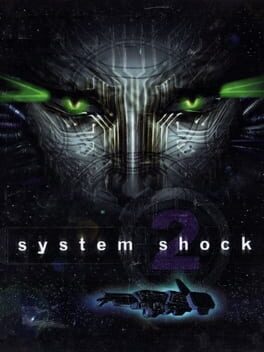
System Shock 2 pairs FPS gunplay with Alien-horror atmosphere aboard a doomed spacecraft, fighting corrupted soldiers and creatures—shares the sci-fi horror FPS tone, just with deeper RPG layers.
Key difference: RPG skill trees, scarce ammo, and slow systemic horror pacing.
Best for: Doom fans who want sci-fi horror FPS with lasting legacy appeal.
Skip if: Pure twitch shooting with no stats or inventory management.
BioShock delivers first-person shooting through a deteriorating underwater city against mutated splicers and Big Daddies, wrapped in sci-fi horror—a slower but thematically rich FPS cousin to Doom.
Key difference: Story-heavy, slower-paced, and leans on RPG powers over raw speed.
Best for: Players who want FPS + horror atmosphere with strong narrative.
Skip if: You want relentless forward momentum with no story interruptions.
Borderlands 2 is a cel-shaded co-op FPS looter with relentless enemy waves, guns with wild effects, and a comedic sci-fi setting—shares the run-and-gun FPS loop with added RPG depth.
Key difference: Loot-driven RPG systems and comedy tone versus Doom's serious brutality.
Best for: Players who want FPS action with long-term gear progression.
Skip if: You hate loot tables and comedy clashing with your violence.
Singularity is an underrated FPS with a time-manipulation weapon, Soviet sci-fi horror settings, and monster-filled corridors—shares Doom's horror-infused FPS action and weapon creativity.
Key difference: Puzzle-gating via time mechanics, lower production budget.
Best for: Hidden gem hunters who love creative FPS with horror atmosphere.
Skip if: You need polished modern visuals and top-tier gunfeel.
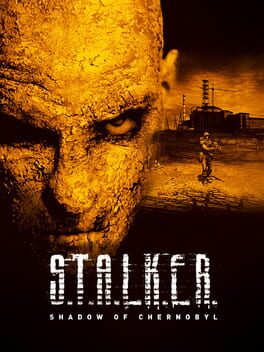
S.T.A.L.K.E.R.: Shadow of Chernobyl is a grim FPS survival set in a radioactive anomaly zone swarming with mutants and cultists—shares Doom's atmospheric horror-shooter DNA in an open world.
Key difference: Slow survival FPS with RPG systems, not arena-speed action.
Best for: Players who want immersive FPS horror with real tension.
Skip if: You want fast arena slaughter; this is patience and dread.
More demanding resource management and mobility; steeper skill curve.
Xbox, PlayStation, PC, Nintendo
Doom II: Hell on Earth
93%
Shooter, Action
Larger, more maze-like levels than the 2016 reboot's arena focus.
PC
Quake
88%
Shooter, Action
1996 graphics, no narrative, fully arena-focused deathmatch roots.
Nintendo
Dusk
85%
Shooter, Action
Retro pixel aesthetic and arena-wave design, tiny indie scope.
Xbox, PlayStation, PC, Nintendo
Wolfenstein: The New Order
84%
Shooter, Action
Slower movement, more story focus, Nazi sci-fi setting instead of hell.
PlayStation, PC, Xbox
Wolfenstein II: The New Colossus
83%
Shooter, Action
More cinematic story beats; shorter combat sections than Doom.
PlayStation, PC, Xbox, Nintendo
Titanfall 2
82%
Shooter, Action
Military sci-fi tone, mechs, no demons or horror element.
PlayStation, PC, Xbox
Bulletstorm
82%
Shooter, Action
Skill-shot scoring system over pure survival; comedy tone.
PlayStation, PC, Xbox
Amid Evil
82%
Shooter, Action
High-fantasy theme instead of sci-fi/hell; retro visual style.
PC
Shadow Warrior
76%
Shooter, Action
Self-aware comedy tone and katana melee focus over glory kills.
PlayStation, PC, Xbox
Returnal
72%
Shooter, Action
Roguelite structure with permadeath and third-person perspective.
PC, PlayStation
Prey
70%
Shooter, Action
Slower, exploration/stealth RPG focus; fewer pure combat arenas.
PlayStation, PC, Xbox
Doom 3
68%
Shooter, Action
Slow, horror-focused crawl versus Doom 2016's aggressive speed.
Xbox, PC
Half-Life 2
65%
Shooter, Action
Slower pace, physics puzzles, and no glory-kill resource loop.
Xbox, PlayStation, PC, Mobile
System Shock 2
63%
Shooter, Action
RPG skill trees, scarce ammo, and slow systemic horror pacing.
PC
What makes a game truly feel like Doom (2016)?
The core of Doom (2016)'s feel is aggressive resource management through combat: health comes from glory kills, ammo from the chainsaw, and armor from the flame belch in Eternal. Games that share this DNA demand you stay in the fight rather than retreat. Titanfall 2 nails this with wall-running and slide-hopping that punish passivity, while Shadow Warrior (2013) replicates the gory arena loop almost beat for beat with swords replacing glory kills.
A second pillar is the arena structure—combat rooms that seal shut and open only when every demon is dead. Classic Doom (1993) and Doom II: Hell on Earth invented this template, and both remain essential playing even decades later. The modern retro-FPS gems in our "additional" list—Dusk and Amid Evil—are the indie world's most faithful homages to that exact structure.
If you want narrative-driven FPS horror instead
Doom (2016) is light on story by design, but its sci-fi horror atmosphere is very real. If you want that same demon-haunted, corporate-gone-wrong setting with more story, Prey (2017) is the strongest pick: a space station overrun by alien mimics with Immersive Sim depth and genuine dread. System Shock 2—older but still terrifying—goes even further, merging FPS combat with a haunted-ship horror RPG that inspired nearly everything in the genre.
BioShock sits at the more story-heavy end of the spectrum, trading speed for atmosphere and setting, but its first-person combat against grotesque enemies in a crumbling sci-fi world shares enough of Doom's tonal DNA to satisfy players who want world-building alongside their shooting.
The fastest, most kinetic FPS picks on this list
If Doom (2016)'s movement speed is what hooked you, prioritize Titanfall 2 above almost everything else on this list: its wall-running, slide-chaining, and grapple-hook mobility make it the closest any non-Doom game gets to the feeling of being physically unstoppable. Its single-player campaign is short but among the finest ever made in the genre.
Returnal earns a mention here too—its bullet-pattern third-person shooting demands total spatial awareness and punishes the same passive playstyle that Doom forbids, making it one of the best modern games for players who love pressure-cooked, movement-dependent combat. And among the hidden gems, Shadow Warrior (2013) remains criminally underplayed for a game that matches Doom's fast-FPS moment-to-moment feel almost exactly.
Absolutely—it's the direct sequel and considered by many to be even better. Eternal adds a dash ability, flame belch mechanic, and stricter resource management that deepens the combat loop. Expect a steeper learning curve but a more rewarding skill ceiling. It is the single most recommended next game for anyone who loved 2016.
Are there any good free or multiplayer-focused alternatives to Doom (2016)?
Quake Champions (not in our main list) offers free-to-play arena FPS in the direct id Software lineage. Among paid options, Overwatch scratches a different FPS itch with hero abilities, while Titanfall 2's multiplayer is fast and movement-focused but the servers have quieted considerably. For pure Doom-style arena combat, Quake Champions is the best free option.
What's the best Doom-like game for someone who has never played an FPS before?
Wolfenstein: The New Order is the gentlest entry point on this list—it has more story scaffolding, checkpoints, and a slightly slower pace that teaches FPS fundamentals without Doom 2016's punishing aggression. Titanfall 2 is a close second thanks to its well-paced tutorial campaign.
Does Doom (2016) have a good story, and are there games like it with stronger narratives?
Doom 2016's story is minimal and deliberate—the Doom Slayer's characterization is largely wordless rage. If you want a similar sci-fi horror FPS setting with a deeper narrative, Prey (2017) and BioShock are the strongest picks on this list, both featuring rich world-building and morally complex stories wrapped around first-person action.
Which classic Doom games should I play before or after Doom (2016)?
Doom (1993) and Doom II: Hell on Earth are both on this list and remain essential. Both are available in modern ports (KEX engine) with controller support and widescreen. Playing them after Doom 2016 helps you appreciate how faithfully the reboot preserved the original's DNA; playing them before gives you context for just how much 2016 honored the classic formula.
 99%
99%