Among Us works because it weaponizes trust: every player shares the same mundane objective — fix the ship — while one or two impostors work in secret to unravel it all. The genius is the discussion and voting phase, where bluffing, reading body language, and calling out suspicious behavior replace any traditional skill ceiling, making it accessible to anyone yet endlessly replayable.
When players look for games like Among Us they're really chasing three things: hidden social roles, group deduction and debate, and a casual party format that works across a big group of friends. The best alternatives nail at least two of these — the ones that hit all three are rare and worth seeking out.
Top pick:Goose Goose Duck is the single closest match to Among Us: it replicates the exact task-and-vote loop, adds built-in proximity voice chat, expands the role roster, and is free to play — if you've exhausted Among Us's maps and want the same itch scratched with fresher content, this is the immediate next stop.
Some store buttons are affiliate links — we may earn a commission at no extra cost to you.
18 games like Among Us
97%
Goose Goose Duck 2021
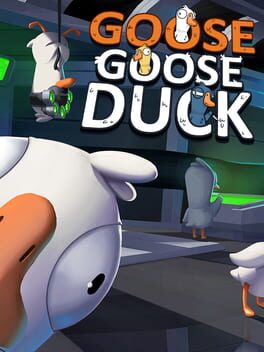
Goose Goose Duck is the most direct Among Us equivalent: a multiplayer social-deduction party game where Ducks (impostors) hide among Geese (crewmates), complete or sabotage tasks, and players vote out suspects each round. It adds more roles, maps, and a built-in proximity voice chat.
Key difference: More role variety and built-in voice chat from the start.
Best for: Among Us fans who want a richer, more role-diverse experience.
Skip if: You prefer Among Us's simpler, cleaner ruleset.
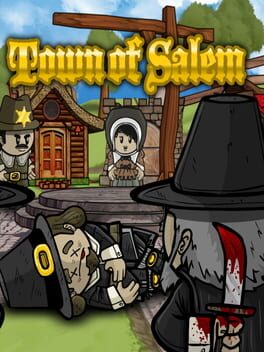
Town of Salem is a browser-based social deduction game with deep hidden-role mechanics where players are assigned secret alignments (Town, Mafia, Neutral) and must deduce, deceive, and vote out enemies through chat and logic.
Key difference: Text-only browser game; no spatial movement or tasks.
Best for: Players who love the deduction and voting loop above all else.
Skip if: You need movement and visual gameplay to stay engaged.
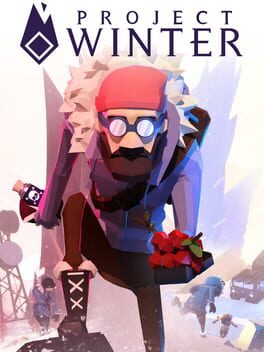
Project Winter is a survival co-op game where most players work together to escape a frozen wilderness while one or two hidden traitors sabotage the effort — extremely close to Among Us's core betrayal loop but set in a tense 3D outdoor environment.
Key difference: 3D survival setting with crafting; sessions are longer and more complex.
Best for: Among Us fans ready for a deeper, more atmospheric betrayal game.
Skip if: You want quick 10-minute sessions with little setup.
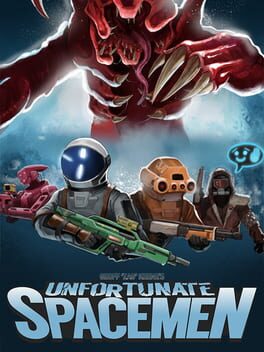
Unfortunate Spacemen is a first-person sci-fi social deduction game where a hidden Monster eliminates Spacemen while they complete objectives aboard a space station — practically Among Us in 3D with voice acting and shapeshifting mechanics.
Key difference: First-person 3D gameplay instead of top-down 2D.
Best for: Among Us fans who want the same concept with more immersive visuals.
Skip if: You prefer the simple, readable 2D perspective.
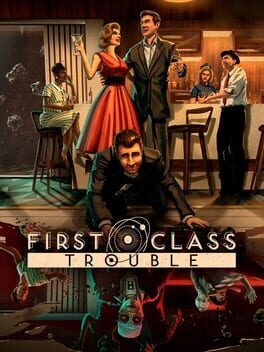
First Class Trouble is a social deduction party game set on a luxury space cruise liner where human Residents must work together against two secretly evil android Personoids — tasks, voting, and betrayal in a gorgeous environment.
Key difference: More narrative polish and physics-based interactions; smaller player count.
Best for: Among Us fans wanting a visually richer, cinematic spin on the formula.
Skip if: You want a large group game (it caps at six players).
Deceit is a first-person multiplayer game where two players are secretly infected and must survive to the exit while infecting or killing others — social deduction meets tense escape-room horror across rounds with a voting phase.
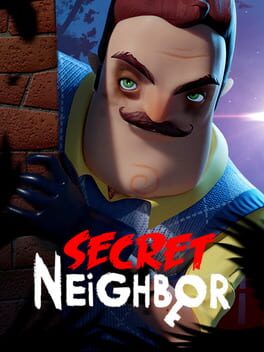
Secret Neighbor hides one player-controlled villain among a group of children trying to rescue a friend from a basement — a third-person social-deduction horror game built around the same 'one of us is the killer' premise.
Key difference: Third-person asymmetric horror; younger-skewing art style.
Best for: Among Us fans who want a spookier, more action-oriented variant.
Skip if: You dislike jump scares or cartoony horror aesthetics.
Left 4 Dead 2 features cooperative survival against overwhelming threats plus a dedicated 'Versus' mode where one team plays as special infected hunting the survivors — the closest the candidate pool gets to Among Us's asymmetric predator-vs-group tension. The need to coordinate, communicate, and sometimes suspect teammates adds social friction familiar to Among Us fans.
Key difference: No hidden roles or voting; roles are openly assigned each round.
Best for: Players who want asymmetric multiplayer with real stakes.
Skip if: You dislike first-person shooting or horror gore.
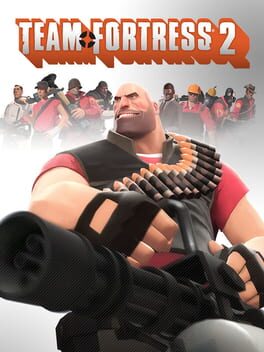
Team Fortress 2 is a chaotic team multiplayer game with a cast of distinct roles that require coordination and, at times, reading opponents' moves. Its free-to-play status and cartoonish tone match Among Us's accessibility and humor.
Key difference: Pure shooter — no hidden roles, tasks, or social deduction.
Best for: Among Us fans who want a deeper multiplayer skill ceiling.
Skip if: You need deception and discussion to enjoy a session.
Castle Crashers is a chaotic co-op brawler best played with a group of friends on the couch or online, capturing Among Us's 'party game night' energy through loud, unpredictable multiplayer moments.
Key difference: Pure cooperative beat-'em-up with no betrayal or deduction.
Best for: Groups who loved Among Us game nights and want a different co-op type.
Skip if: You specifically need the social-deduction and suspicion loop.
Rust is a brutal open-world survival multiplayer where trusting strangers is always a gamble and alliances can collapse at any moment — the paranoia of not knowing who will betray you resonates with Among Us fans, even if the mechanics are completely different.
Key difference: Open-world survival grind, not a structured party-game session.
Best for: Players who love the betrayal theme and want it in a persistent world.
Skip if: You want quick, structured rounds with friends.
Minecraft's multiplayer ecosystem includes hugely popular Murder Mystery and Manhunt game modes — community-built experiences that directly replicate Among Us's one-killer-among-innocents premise.
Key difference: The base game has no deduction modes; you need community servers.
Best for: Players who want Among Us-style fun in a blocky sandbox.
Skip if: You want a polished, out-of-the-box social deduction experience.
CS:GO's competitive team format rewards reading opponents, bluffing, and coordination under pressure, offering some of the strategic interpersonal tension Among Us fans enjoy — just through gunplay rather than discussion.
Key difference: Skill-based tactical shooter; no hidden-role or voting system.
Best for: Among Us players ready to invest in a more mechanically demanding game.
Skip if: You want a casual, no-shooter party experience.
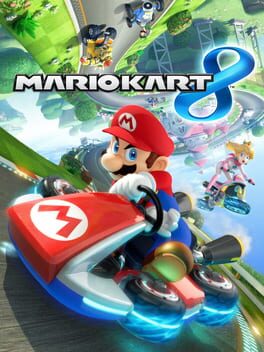
Mario Kart 8 excels as a party-night multiplayer game with cross-platform potential, matching Among Us's strength as a casual social experience that friends can jump into immediately.
Key difference: Racing game with no deception or hidden-role mechanics whatsoever.
Best for: Friend groups who loved Among Us as a hang-out game, not a strategy game.
Skip if: You're here for social deduction, not lighthearted competition.
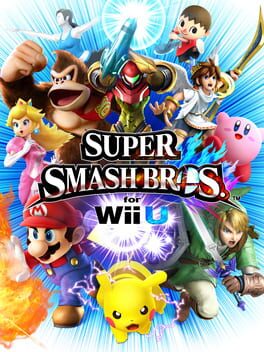
Super Smash Bros. for Wii U is a celebrated multiplayer party title that shines with a group of friends, carrying the same 'everyone in the same room' energy that made Among Us a phenomenon.
Key difference: Fighting game — zero deception, hidden roles, or task mechanics.
Best for: Groups who want couch-party chaos after an Among Us session.
Skip if: You need a game centered on lying and suspicion.
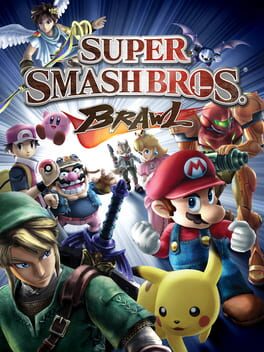
Super Smash Bros. Brawl remains a classic party fighting game for groups, embodying the same unpredictable fun that drove Among Us's popularity at LAN parties and family gatherings.
Key difference: No social deduction — pure fighting game with no hidden information.
Best for: Older console owners who want party multiplayer without modern hardware.
Skip if: You specifically want discussion-and-vote gameplay.
Valorant is a tactical team shooter where calling out enemies, coordinating roles, and reading opponents provide a cerebral multiplayer experience with some of Among Us's team-communication intensity.
Key difference: Competitive tactical FPS — no hidden traitors or casual deduction.
Best for: Among Us fans craving a more demanding team-skill multiplayer game.
Skip if: You want accessible, session-based party gameplay.
Animal Crossing: New Horizons is a beloved casual social game that pairs well with Among Us as a multiplayer hang-out experience, appealing to the same broad, family-friendly audience.
Key difference: Chill life simulator — no competition, deception, or conflict at all.
Best for: Fans who loved Among Us's social element more than the tension.
Skip if: You want any form of competitive or deductive gameplay.
Third-person asymmetric horror; younger-skewing art style.
PlayStation, PC, Mobile, Xbox, Nintendo
Left 4 Dead 2
52%
Action, Survival
No hidden roles or voting; roles are openly assigned each round.
PC, Xbox
Team Fortress 2
38%
Action
Pure shooter — no hidden roles, tasks, or social deduction.
PlayStation, PC, Xbox
Castle Crashers
35%
Indie, Action
Pure cooperative beat-'em-up with no betrayal or deduction.
PlayStation, PC, Xbox
Rust
34%
Indie, Action
Open-world survival grind, not a structured party-game session.
PC
Minecraft: Java Edition
32%
Survival
The base game has no deduction modes; you need community servers.
PC
Counter-Strike: Global Offensive
28%
Action
Skill-based tactical shooter; no hidden-role or voting system.
PlayStation, PC, Xbox
Mario Kart 8
27%
Action, Party
Racing game with no deception or hidden-role mechanics whatsoever.
Nintendo
Super Smash Bros. for Wii U
25%
Action, Party
Fighting game — zero deception, hidden roles, or task mechanics.
Nintendo
What makes a game genuinely feel like Among Us?
The core formula is deceptively specific: hidden-role asymmetry (some players have a secret agenda), shared observable space (everyone sees the same board so lies can be verified), and a formal discussion-and-vote phase where social skill, not reflexes, decides who wins. Most multiplayer games in the candidate pool — Left 4 Dead 2, Team Fortress 2 — carry cooperative or competitive energy but skip the deduction and bluffing loop entirely.
Games that truly replicate the formula are almost all purpose-built social deduction titles: Goose Goose Duck and Project Winter come closest from the "additional" list, while from the main candidate pool, Rust approximates the paranoia of trusting strangers most authentically — even if it wraps it in a survival sandbox rather than a structured session.
Best picks for group game nights (party-first recommendations)
If your priority is recreating the chaotic friend-group atmosphere of Among Us rather than the precise deduction loop, several candidates hold up well. Mario Kart 8 and Super Smash Bros. for Wii U are immediate-access party titles that require zero onboarding and scale to large groups, matching Among Us's strength as a zero-barrier social game. Castle Crashers extends the party further with co-op brawling chaos that keeps everyone laughing.
For groups comfortable with a short setup, Minecraft's Murder Mystery servers on platforms like Hypixel deliver an Among Us-style experience inside a familiar world — one crewmate is secretly the murderer, and survivors must deduce their identity before being eliminated. It's a community-built solution that shows how strong the core formula is.
If you want the impostor fantasy in a richer setting
Among Us keeps its scope intentionally small — simple tasks, low-res maps, minimal narrative. Players who want the same tension of hiding a secret identity inside a richer world should look at Project Winter and First Class Trouble from the additional list, both of which add environmental storytelling and more complex survival objectives to the betrayal loop.
From the candidate pool, Rust is the wildest expansion of the impostor fantasy: you never know if an ally is about to betray you, alliances form and collapse organically, and the social reading of other players is constant — it just never resolves with a clean vote, which is either liberating or frustrating depending on your preference.
Is there a game exactly like Among Us but with more roles and content?
Goose Goose Duck is the closest equivalent — it's free to play, uses the same task-and-vote loop, and adds a wide roster of unique roles for both crewmates and impostors. It also includes built-in proximity voice chat, which Among Us lacks by default.
What is Among Us similar to for people who prefer PC gaming?
Town of Salem and Project Winter are the strongest PC alternatives. Town of Salem emphasizes pure text-based social deduction with deep role variety, while Project Winter wraps a similar betrayal mechanic in a 3D survival co-op environment with more complex objectives.
Are there Among Us-style games for younger players or families?
Secret Neighbor is designed for a younger audience and uses a similar hidden-villain format in a cartoonish horror style. Among Us itself is rated PEGI 7 / ESRB E10+, and its simple mechanics mean most family-friendly multiplayer games like Mario Kart 8 or Minecraft pair naturally with it for game nights.
What should I play if I love Among Us but want something with more tension and atmosphere?
Alien: Isolation (in the candidate pool) captures intense cat-and-mouse horror in a sci-fi setting, though it's a single-player stealth game. For multiplayer tension closer to Among Us, First Class Trouble and Deceit from our additional picks both ratchet up the atmosphere while keeping the hidden-traitor structure.
Can you play Among Us-style games offline or in single-player?
Social deduction games are inherently multiplayer — the bluffing loop collapses without human opponents. The closest single-player experience is Prey (2017), which features a spaceship setting and the constant paranoia of not knowing who or what to trust, but it replaces multiplayer deduction with solo exploration and survival.
 97%
97%