R.E.P.O. works because it fuses three things rarely found together: co-op chaos, genuine horror tension, and a physics-based object-handling system that punishes every mistake with comedic consequence. The loop of carefully hauling fragile valuables through procedurally shuffled monster-filled corridors — then spending your earnings on upgrades before the next doomed run — creates a social experience that's equal parts terrifying and hilarious.
When players search for games like R.E.P.O., they're really chasing that specific cocktail: a co-op extraction loop with real stakes, physics-driven emergent humor, hostile creatures that demand stealth or panicked sprinting, and a roguelite meta that makes each wipe feel like progress. The best alternatives share at least two of those four pillars.
Top pick:Lethal Company is the single closest match — R.E.P.O. is essentially its spiritual successor, sharing the co-op scavenging-and-extraction loop, quota system, hostile creature avoidance, and upgrade shop almost beat for beat; if you haven't played it, start there before anything else on this list.
Some store buttons are affiliate links — we may earn a commission at no extra cost to you.
Lethal Company is the closest game to R.E.P.O. in existence — co-op crews scavenge abandoned moons for scrap, haul fragile loot back to the ship, and avoid terrifying creatures, all within a quota-driven roguelite loop with an upgrade shop. R.E.P.O. is essentially its spiritual successor.
Key difference: Less polished physics but more established creature variety and modding scene.
Best for: Anyone who loved R.E.P.O. wanting the genre originator.
Skip if: You want smoother physics or a more refined upgrade system.
Content Warning sends a co-op crew of up to four into monster-infested vaults to record footage and escape alive — the same tension-soaked extraction loop as R.E.P.O., down to the comedic horror tone and post-run review screen. Both games live or die by team communication under pressure.
Key difference: Goal is recording viral video, not retrieving fragile valuables.
Best for: Fans who want the chaos dial turned up and laughs prioritized.
Skip if: You want meaningful upgrade depth between runs.
Phasmophobia sends co-op teams of up to four into haunted locations to identify ghost types using tools while the ghost hunts them — the same co-op horror tension loop, voice-driven interaction, and 'stay quiet or die' stealth that defines R.E.P.O.
Key difference: Investigation puzzle focus rather than physical object extraction.
Best for: Players who want slower, more methodical co-op horror investigation.
Skip if: You want roguelite progression or comedic physics chaos.
Deep Rock Galactic drops four dwarves into procedurally generated alien caves to mine resources and extract before the drop pod leaves — the same mission-structure tension of gathering valuables and reaching an exit while enemies hunt you. The between-mission upgrade loop is similarly satisfying.
Key difference: Full co-op shooter combat replaces physics-object avoidance gameplay.
Best for: Players who want more action and less fragile-item dread.
Skip if: You dislike first-person shooters or want a horror atmosphere.
Pacify is a low-budget co-op horror game (1–4 players) where teams must collect items across a haunted house and reach extraction while a supernatural entity hunts them — nearly identical tension beats to R.E.P.O. at a fraction of the production value.
Key difference: Much shorter, simpler maps with less procedural variety.
Best for: Players who want pure co-op ghost-avoidance without roguelite systems.
Skip if: You need polished production values or meaningful progression.
Devour is a co-op horror survival game (1–4 players) where teams complete objectives in haunted environments while a demonic entity hunts them — the extract-and-survive structure and escalating creature aggression closely match R.E.P.O.'s gameplay loop.
Key difference: Objective is ritual destruction, not valuable retrieval or quota.
Best for: Players who want pure co-op horror with minimal roguelite systems.
Skip if: You want physics-based gameplay or meaningful between-run upgrades.
Prey: Mooncrash is a sci-fi horror roguelite set on a space station where each run procedurally reshuffles enemy placements and loot — you extract survivors while avoiding Typhon creatures, earning persistent upgrades. The loop of careful movement through hostile environments mirrors R.E.P.O.'s DNA.
Key difference: Solo experience with narrative context inside a full AAA game.
Best for: Solo players who love the extraction-loop feel in a polished single-player shell.
Skip if: You need co-op or a purely horror atmosphere.
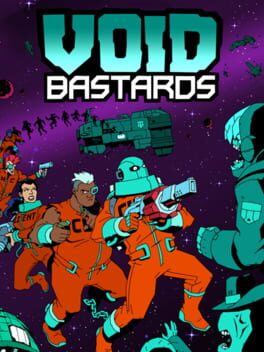
Void Bastards sends you looting derelict spaceships for supplies while avoiding or outmaneuvering hostile alien inmates — procedurally generated ships, resource extraction under threat, and a roguelite meta-progression all parallel R.E.P.O.'s core feel. The dark comedy tone also fits.
The Blackout Club is a co-op stealth horror game where teams sneak through enemy-patrolled neighborhoods collecting evidence while avoiding a supernatural entity that only reveals itself to closed eyes — the stealth-avoidance co-op horror loop maps closely onto R.E.P.O.
Key difference: Narrative-focused with a persistent world, not roguelite runs.
Best for: Players who want co-op stealth horror with social deduction elements.
Skip if: You want replayable roguelite runs or physics-based comedy.
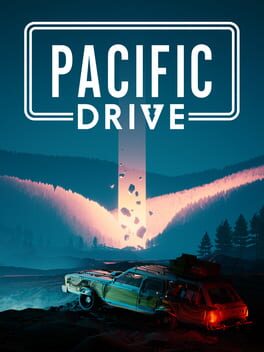
Pacific Drive is a first-person extraction survival game in a procedurally generated anomaly zone — you scavenge resources from threatening environments and must return to your garage safely before the zone destabilizes. The high-stakes return-to-base loop closely echoes R.E.P.O.'s extraction tension.
Key difference: Solo, car-centric survival rather than team-based object retrieval.
Best for: Solo players who want slow-burn extraction dread and crafting depth.
Skip if: You want co-op laughs and fast, chaotic runs.
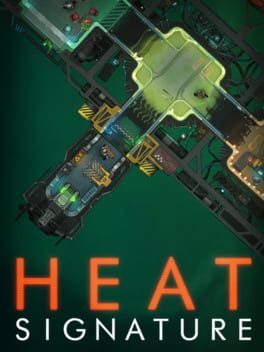
Heat Signature tasks you with infiltrating procedurally generated spaceships to extract targets or steal objects while avoiding guards — every mission is a small-scale stealth extraction problem solved cooperatively with your own toolkit. The improvised tension is remarkably similar to R.E.P.O.
Key difference: Top-down solo stealth action with time-manipulation tools.
Best for: Solo players who love improvised extraction problem-solving.
Skip if: You need co-op or first-person horror atmosphere.
Risk of Rain 2 is a third-person co-op roguelite where up to four players fight through alien environments, collect items, and must reach the teleporter extraction point before scaling difficulty overwhelms them. The between-run upgrade loop and increasing tension are structurally similar to R.E.P.O.
Key difference: Pure action combat, no stealth or fragile-object handling.
Best for: Players who want the co-op roguelite run structure with fast combat.
Skip if: You want horror atmosphere or careful physics-based gameplay.
Returnal is a sci-fi horror roguelite with procedurally generated alien biomes — each death resets your run, and the creeping dread of hostile environments that punish mistakes echoes R.E.P.O.'s tension, even if the genre shifts to bullet-hell.
Key difference: Solo, fast-action bullet hell with no extraction mechanic.
Best for: Solo players who want punishing sci-fi horror with roguelite resets.
Skip if: You need co-op or prefer methodical avoidance over reflex combat.
Peak (2025) is a co-op adventure where small teams navigate dangerous environments together, relying on communication and coordination to survive — the same social glue that makes R.E.P.O. compelling. It lacks the horror extraction loop but delivers strong co-op chaos.
Key difference: Mountain climbing adventure, no horror or extraction scoring system.
Best for: Groups who love co-op chaos and funny emergent moments.
Skip if: You need roguelite progression or a horror atmosphere.
Spelunky 2 is a procedurally generated roguelite where you extract treasure from dangerous caverns while avoiding traps and enemies — the delicate interplay of physics objects, irreversible mistakes, and run-based progression shares R.E.P.O.'s careful-movement tension.
Key difference: Solo/small co-op 2D platformer with no horror tone.
Best for: Players who love physics-driven mistakes punishing carelessness.
Skip if: You need online co-op or a first-person horror experience.
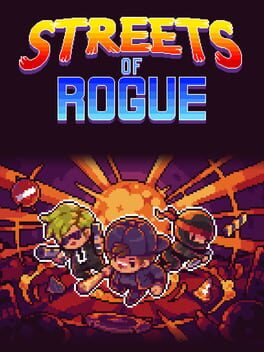
Streets of Rogue is a co-op roguelite with stealth, procedural levels, and run-based upgrades — teams pick objectives in hostile environments and escape, which parallels R.E.P.O.'s structure. The anarchic sandbox emergent comedy also matches the tone.
Key difference: Top-down, much broader sandbox with minimal horror atmosphere.
Best for: Players who want co-op roguelite chaos with more freedom and variety.
Skip if: You want horror tension or careful object-transport gameplay.
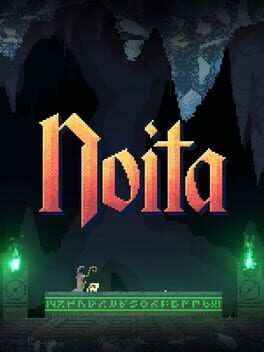
Noita's fully simulated pixel-physics world means every object, substance, and creature interacts realistically — while solo and very different in structure, the catastrophic consequences of careless movement and the procedural hostility mirror R.E.P.O.'s physics-led peril.
Key difference: Solo, top-down mage roguelite with no extraction objective.
Best for: Physics sandbox lovers who enjoy emergent chaos punishing mistakes.
Skip if: You need co-op or an explicit horror extraction loop.
Narrative-focused with a persistent world, not roguelite runs.
PlayStation, PC, Xbox
Pacific Drive
60%
Indie, Action
Solo, car-centric survival rather than team-based object retrieval.
Xbox, PC, PlayStation
Heat Signature
52%
Strategy, Indie
Top-down solo stealth action with time-manipulation tools.
PC
Risk of Rain 2
48%
Indie, Action
Pure action combat, no stealth or fragile-object handling.
Xbox, PlayStation, PC, Nintendo
Returnal
45%
Action, Science fiction
Solo, fast-action bullet hell with no extraction mechanic.
PC, PlayStation
Peak
43%
Indie, Action
Mountain climbing adventure, no horror or extraction scoring system.
PC
Spelunky 2
42%
Indie, Action
Solo/small co-op 2D platformer with no horror tone.
Xbox, PlayStation, PC, Nintendo
What makes a game feel like R.E.P.O.?
The core of R.E.P.O.'s appeal is the extraction tension triangle: you want the loot, the loot wants to break, and something wants to eat you. Games that truly replicate this feel need at least a co-op extraction objective and meaningful consequences for failure. Content Warning nails the co-op horror extraction tone almost perfectly, while Deep Rock Galactic delivers the mission-structure satisfaction and procedural variety with a more action-forward twist.
The roguelite between-run upgrade loop is the second pillar — the sense that each death funds the next attempt. Risk of Rain 2 and Returnal both deliver this relentless escalation, even if their combat is more direct than R.E.P.O.'s avoidance-first design.
Best hidden gems for R.E.P.O. fans
Two lesser-known picks stand out as criminally underplayed by R.E.P.O. fans. Void Bastards captures the dark-comedy extraction-under-threat loop in a stylish comic-book sci-fi wrapper — each derelict ship is a self-contained extraction puzzle where running out of food or oxygen raises the stakes exactly as R.E.P.O.'s creature encounters do. Prey: Mooncrash is even closer in structure for solo players: a horror roguelite where the space station reshuffles between runs and every extraction route must be planned carefully around lurking Typhon.
Pacify is the budget co-op horror pick that most lists ignore — while visually modest, it delivers the same four-player 'grab stuff and don't get caught' tension that makes R.E.P.O. sessions unforgettable, especially with friends on voice chat.
If you want the co-op chaos without the horror
Not every R.E.P.O. fan is in it for the scares — some just love the emergent comedy of friends failing together. Deep Rock Galactic is the gold standard here: four-player procedural extraction with a mountain of upgrade depth, zero horror, and a famously positive community. Peak (2025) is a newer option leaning entirely into co-op adventure chaos, trading the horror and roguelite systems for pure emergent teamwork moments that produce the same kind of breathless, laugh-until-you-cry sessions R.E.P.O. is known for.
Is there a game exactly like R.E.P.O. but with more players?
Lethal Company (additional list) supports up to four players by default but scales with mods to much larger crews, and its quota-based co-op extraction loop is virtually identical to R.E.P.O.'s design. Deep Rock Galactic supports four and has far more content depth if you want longevity.
What is the closest single-player alternative to R.E.P.O.?
Prey: Mooncrash is the strongest single-player match — a horror roguelite extraction loop on a procedurally reshuffled space station with stealth-or-sprint creature avoidance and meaningful run-to-run progression. Pacific Drive is also excellent if you prefer a slower, atmospheric extraction experience.
Are there any free or browser-based games like R.E.P.O.?
Content Warning launched as a free Steam game during its launch window and remains very cheap; it's the closest free-adjacent option. Most true R.E.P.O. alternatives are paid PC games given the niche genre.
What game came before R.E.P.O. and inspired it?
Lethal Company (2023) by Zeekerss is widely considered R.E.P.O.'s direct spiritual predecessor — it popularized the co-op quota-based scavenging extraction loop with horror creatures and an upgrade shop that R.E.P.O. refines and expands upon.
Is Phasmophobia similar to R.E.P.O.?
Yes in atmosphere and co-op structure — both are online co-op horror games where small teams enter dangerous locations and must complete objectives while avoiding deadly entities. The key difference is that Phasmophobia focuses on ghost identification as a puzzle, while R.E.P.O. emphasizes physical object extraction and roguelite progression.
 95%
95%