L.A. Noire's hold on players comes from a specific combination: active crime-scene investigation (scanning environments for clues, linking evidence), suspect interrogation using facial-expression reading to call out lies, and a neo-noir historical atmosphere — rain-slicked 1947 Los Angeles, jazz on the radio, corruption beneath a glamorous surface. No other game before or since has fused all three elements in quite the same way.
When fans ask for games like L.A. Noire, they're really asking for at least one of three things: the detective investigation loop (gathering clues, connecting evidence, confronting suspects), the hard-boiled noir mood (morally compromised protagonists, period crime drama), or Rockstar-calibre open-world storytelling set in a gritty crime world. The best picks deliver two or more of those pillars.
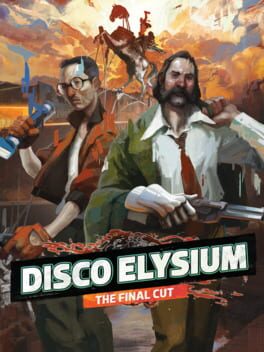
Top pick:Disco Elysium: The Final Cut is the single closest game to L.A. Noire's soul: a broken detective reconstructing a murder through painstaking interrogation, evidence analysis, and morally loaded choices in a richly atmospheric city dripping with corruption — the investigation loop is deeper here than anywhere else in gaming, and the neo-noir tone is unapologetic.
Some store buttons are affiliate links — we may earn a commission at no extra cost to you.
18 games like L.A. Noire
96%
Disco Elysium: The Final Cut 2021
Disco Elysium puts you in the shoes of a ruined detective piecing together a murder case through dialogue, skill checks, and environmental investigation. The neo-noir tone, morally complex NPCs, and interrogation-heavy gameplay are the closest any game has come to L.A. Noire's core loop.
Key difference: Turn-based RPG with no combat; entirely dialogue and skill systems.
Best for: Fans who loved interrogations and story depth over shooting.
Skip if: You need action or open-world exploration to stay engaged.
You investigate crime scenes, collect clues, profile suspects, and make deductive leaps to accuse the right person — the most mechanically direct analogue to L.A. Noire's investigation loop ever made.
Key difference: Victorian London setting; morality system lets you convict the wrong person.
Best for: Anyone who played L.A. Noire for the case-investigation mechanics.
Skip if: You need open-world exploration or action gameplay.
Heavy Rain is a murder-mystery thriller where you gather evidence, read suspects, and make branching decisions that shape the outcome of the case. The interrogation and deduction scenes feel like a spiritual cousin to L.A. Noire's interview mechanics.
Key difference: No open world; purely linear cinematic experience with QTE combat.
Best for: Players who loved the case narrative and suspect confrontations.
Skip if: You want free-roam exploration or traditional gameplay systems.
Mafia II is set in a fictionalized 1940s–50s American city and follows an organized-crime story with an almost identical historical aesthetic to L.A. Noire — period cars, period fashion, period music on the radio. The open world is dense with atmosphere even if the sandbox freedom is light.
Key difference: You play a mobster, not a detective; story is linear crime drama.
Best for: Players drawn to the 1940s setting and Rockstar-style production.
Skip if: You want investigation mechanics or moral ambiguity in your protagonist.
The Wolf Among Us is a Telltale noir detective game: you play a hard-boiled sheriff investigating murders, interviewing witnesses, and piecing together clues across episodic cases. The rain-slicked noir tone and morally loaded interrogations mirror L.A. Noire's best moments.
Key difference: Fairy-tale fantasy setting; point-and-click rather than open world.
Best for: Fans of the interrogation drama and hard-boiled detective atmosphere.
Skip if: You dislike heavily dialogue-driven, choice-based games.
A 1-bit mystery where you reconstruct the fates of a ship's entire crew by examining frozen death-scenes and cross-referencing evidence — pure deductive reasoning in game form.
Key difference: Puzzle-only, no action; extremely minimalist monochrome art style.
Best for: Players who loved connecting evidence to reach firm logical conclusions.
Skip if: You need third-person action or open-world freedom.
Murdered: Soul Suspect casts you as a dead detective haunting crime scenes, gathering spectral clues, and interrogating witnesses to solve your own murder. The investigation loop — scanning scenes, connecting evidence, confronting suspects — is almost identical to L.A. Noire's case structure.
Key difference: Lower production values and stealth-ghost segments break the pacing.
Best for: Players who want pure detective investigation with a supernatural twist.
Skip if: You expect polished combat or high production quality throughout.
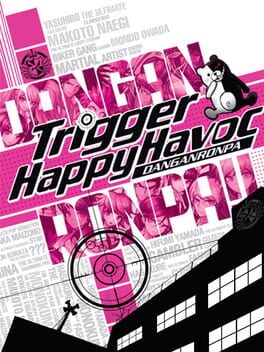
Danganronpa: Trigger Happy Havoc is a murder-mystery visual novel where you gather evidence at crime scenes and then battle through courtroom debates to expose the killer. The deduction and evidence-linking mechanics tap the same satisfaction as L.A. Noire's case resolutions.
Key difference: Anime visual-novel style; absurdist horror tone; no open world.
Best for: Fans of the logical deduction and suspect-confrontation gameplay.
Skip if: You need a realistic tone or third-person action to stay engaged.
A nonlinear murder investigation told entirely through police interview footage: you search a database, watch clips, and piece together the truth from contradictions in a suspect's testimony.
Key difference: No movement or action; entirely video-clip-database interaction.
Best for: Fans of the suspect-interrogation mechanics who want pure narrative deduction.
Skip if: You need traditional gameplay systems or open-world exploration.
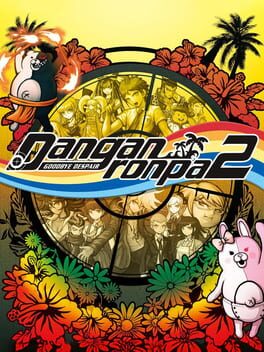
Danganronpa 2 iterates on the same murder-investigation and courtroom-debate loop as the first game, with even more elaborate crime scenes and twistier evidence chains. If you enjoy cross-referencing clues to catch a killer, this delivers more of that.
Key difference: Island survival-game wrapper; even more anime-absurdist than the original.
Best for: Players who finished Danganronpa 1 and want more case investigation.
Skip if: You bounced off the visual-novel format or need realistic settings.
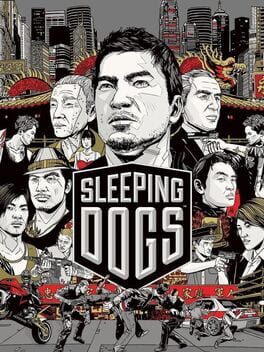
Sleeping Dogs drops you into Hong Kong as an undercover cop whose loyalty to law and to the Triads is constantly tested — structurally very close to L.A. Noire's "cop navigating a corrupt world" premise. The open world is dense with character and hand-to-hand combat is excellent.
Key difference: Kung-fu brawler focus; contemporary Hong Kong, not period Los Angeles.
Best for: Players who loved the moral tension of Cole Phelps's undercover arc.
Skip if: You dislike melee-heavy combat or modern settings.
A first-person crime-scene investigator hunts serial killers by scanning evidence with forensic tools, photographing clues, and following trails through decaying urban environments — dark and methodical.
Max Payne is drenched in neo-noir: rain-soaked New York, a damaged detective-type protagonist, pulpy crime narrative told in graphic-novel panels, and a story built around murder investigation and corruption. The tone is L.A. Noire's closest action cousin.
Key difference: Pure third-person shooter with bullet-time; minimal investigation or dialogue.
Best for: Fans of the noir aesthetic who prefer kinetic action to clue-gathering.
Skip if: You want investigation mechanics or open-world exploration.
A hand-illustrated historical murder mystery set in 16th-century Bavaria where you interview townsfolk, gather evidence, and make irreversible accusations that shape decades of story.
Key difference: Medieval manuscript art style; narrative RPG with no action whatsoever.
Best for: Fans of historical atmosphere and morally weighted investigative decisions.
Skip if: You need action mechanics or a modern visual presentation.
Persona 4 Golden is built around a murder-mystery investigation: a group of students gather evidence, canvas suspects, and unravel the truth behind serial killings in a small town. The detective-thriller core is wrapped in a JRPG social sim.
Key difference: JRPG turn-based combat and anime aesthetics; very different tone.
Best for: Fans of the mystery investigation who enjoy deep character relationships.
Skip if: You dislike JRPGs, anime aesthetics, or slow early-game pacing.
Grand Theft Auto IV is the grimly realistic Rockstar entry set in a crime-infested New York analogue, sharing L.A. Noire's moral weight and period-gritty presentation within the same publisher's sensibility. Niko's story is a genuine crime drama.
Key difference: Sandbox chaos focus; you're a criminal, not an investigator.
Best for: Players who loved L.A. Noire's Rockstar production values and crime world.
Skip if: You want structured cases, clue-finding, or detective gameplay.
Grim Fandango is a point-and-click noir mystery set in a stylized Land of the Dead, following a travel agent who uncovers a criminal conspiracy through dialogue puzzles and environmental investigation. The hard-boiled noir wit and mystery unraveling feel spiritually related.
Key difference: Surreal comedy tone; 1990s point-and-click puzzle adventure with no action.
Best for: Fans of the noir dialogue and mystery storytelling who enjoy classic adventures.
Skip if: You need modern open-world mechanics or action gameplay.
PC
58%💎 Gem
Vampire: The Masquerade - Bloodlines 2004
Vampire: The Masquerade – Bloodlines is a noir RPG set in 1990s Los Angeles where you investigate vampire conspiracies through dialogue, persuasion, and exploration of the city's dark underbelly. The corrupted-city atmosphere and morally compromised NPCs echo L.A. Noire's themes.
Key difference: Fantasy RPG with vampires; dated visuals and systems, very different combat.
Best for: Players who loved the corrupt-LA atmosphere and morally complex story.
Skip if: You need polished mechanics or realistic historical settings.
Pure third-person shooter with bullet-time; minimal investigation or dialogue.
Xbox, PlayStation, Mobile, PC
Pentiment
68%
Adventure, Historical
Medieval manuscript art style; narrative RPG with no action whatsoever.
Xbox, PlayStation, PC, Nintendo
Persona 4 Golden
66%
Adventure
JRPG turn-based combat and anime aesthetics; very different tone.
PlayStation
What makes a game genuinely feel like L.A. Noire?
Three mechanics define the L.A. Noire experience: active clue-gathering at crime scenes, reading and interrogating NPCs, and navigating a story where the truth is murky and your own institution may be rotten. Most open-world crime games share only the setting; the games that truly scratch the itch are the ones built around deduction. Disco Elysium nails interrogation and moral ambiguity better than almost anything. Heavy Rain replicates the crime-scene walkthrough and suspect-confrontation feel in cinematic form. Murdered: Soul Suspect is the most structurally similar — scan a scene, link clues, advance the case — even if the production can't match Rockstar's budget.
Beyond pure investigation, the noir mood matters: cynical voiceover, period atmosphere, a protagonist compromised by the world he polices. Max Payne and The Wolf Among Us deliver that hard-boiled tone in spades, and Mafia II recreates the same 1940s–50s American city aesthetic with remarkable fidelity.
If you loved the 1940s crime-world atmosphere specifically
Mafia II is the most direct period match: driving a period-correct car through a snow-dusted 1945–51 American city while Sinatra plays on the radio is almost indistinguishable in feel from patrolling L.A. Noire's open world. The storytelling is linear but the crime-drama writing holds up. Mafia (2002) reaches back even further to the 1930s and has the same unhurried pace and obsession with period authenticity. For a lighter, pulpier take on the same era, Grim Fandango's Raymond Chandler-pastiche dialogue is still unmatched in adventure gaming.
Hidden gems most 'games like L.A. Noire' lists miss
Murdered: Soul Suspect (2014) is the most overlooked direct match: it is structurally a L.A. Noire-style detective game, case after case of scanning crime scenes, interviewing ghost-witnesses, and connecting evidence threads — critics were too harsh on its production values and buried what is genuinely a good investigative experience. Sleeping Dogs is perpetually underrated as an L.A. Noire companion: the undercover-cop-torn-between-two-worlds premise, the open-world crime setting, and the morally compromised narrative hit the same emotional beats with excellent melee combat. Vampire: The Masquerade – Bloodlines plays in the same corrupt-Los-Angeles space with genuinely brilliant noir dialogue and NPC depth, if you can tolerate its rough edges.
Is there a game with the same interrogation mechanic as L.A. Noire?
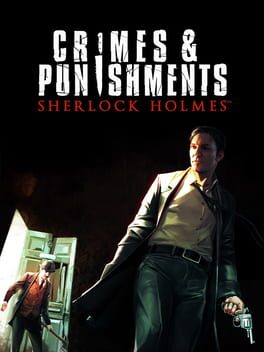
Sherlock Holmes: Crimes & Punishments (not in every candidate list) is the closest — you profile suspects, gather evidence, and make formal deductions. Disco Elysium translates the interrogation into deep dialogue skill-checks. Murdered: Soul Suspect replicates the crime-scene scanning loop most directly.
What game has the best neo-noir atmosphere similar to L.A. Noire?
Max Payne (2001) defined video-game neo-noir with its rain-soaked New York, hard-boiled monologue, and morally broken detective protagonist. The Wolf Among Us adapts the same Raymond Chandler sensibility into a murder-mystery adventure. Disco Elysium's unnamed city is perhaps the most thematically rich noir setting in any game.
Are there open-world games set in the 1940s or 1950s like L.A. Noire?
Mafia II is the closest match — a large open-world American city spanning 1945–1951 with period cars, clothing, and radio music. The original Mafia (2002) covers the 1930s. Beyond those two, the era is surprisingly underserved; most historical open-world games gravitate toward the American West or ancient history.
Is Disco Elysium really similar to L.A. Noire if it has no action?
Yes, arguably more so than most action games. Both are built around a damaged detective investigating a murder through conversations, environmental clues, and deductive leaps. Disco Elysium simply strips out the gunplay and replaces it with deeper RPG dialogue systems. If you loved L.A. Noire for its cases rather than its car chases, Disco Elysium is the better game.
What should I play after L.A. Noire if I want more Rockstar-style storytelling?
Red Dead Redemption 2 is Rockstar's most narratively ambitious game — a slow-burn historical open world with morally layered characters and extraordinary attention to period detail. Grand Theft Auto IV shares the gritty crime-drama tone, and Max Payne 3 was developed by Rockstar with the same cinematic production values and noir-crime subject matter.
 96%
96%