Infamous (2009) earns its following by nailing a specific fantasy: an ordinary person thrust into extraordinary circumstances, handed escalating superpowers, and dropped into a living open city to decide what kind of hero — or monster — to become. The third-person traversal, the electricity-powered combat that rewards chaining abilities together, and the binary karma system that actually reshapes cutscenes and upgrades make it feel personal in a way generic open-world games don't.
When players look for games like Infamous, they're usually chasing one or more of its three pillars: a superhero power set that grows over time, a dense urban open world built for vertical traversal, and some form of moral choice that makes the playthrough feel authored. The best recommendations here hit at least two of those pillars; the closest hits all three.
Top pick:Marvel's Spider-Man (2018) is the single closest match in feel: it shares Infamous's open Manhattan-scale city, its kinetic traversal-as-identity design, its third-person over-the-shoulder combat built around unlockable abilities, and its emotionally grounded single-player story — it simply swaps Cole's electricity for webs and ditches the karma fork, making it the most polished modern successor to what Sucker Punch built in 2009.
Some store buttons are affiliate links — we may earn a commission at no extra cost to you.
17 games like Infamous
95%
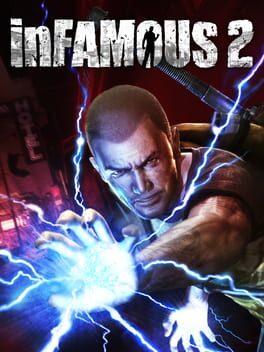
Infamous 2 2011
The direct sequel keeps Cole McGrath's electricity-powered open-world formula intact, adding new powers and a larger city to traverse. The moral choice system returns with branching karma paths that reshape the story's ending.
Key difference: Higher stakes story with a new city and two possible power sets.
Best for: Anyone who wants more Infamous immediately after finishing it.
Skip if: You've already played it or want a fresh setting.
Prototype is the closest analog to Infamous ever made: open-world Manhattan, a protagonist who wakes up with terrifying shapeshifting powers after a viral catastrophe, and a karma-adjacent web of moral decisions about how to use them. Released the same month as Infamous in 2009.
Key difference: More visceral, gory power fantasy; less nuanced moral system.
Best for: Players who want Infamous's formula but with even more destructive power.
Skip if: You prefer a polished, visually clean superhero aesthetic.
Marvel's Spider-Man puts you in an open urban map with superhero traversal — web-swinging stands in for Cole's electrical gliding — and a third-person combat system built around abilities and gadgets. Like Infamous, the city itself is the playground.
Key difference: No moral choice system; story is fixed as a hero narrative.
Best for: Players who loved Infamous's traversal above everything else.
Skip if: You dislike Spider-Man or want a darker, morally grey tone.
Batman: Arkham City is an open urban sandbox where you play a superhero with a traversal toolkit — grappling and gliding replace electricity — and a rich combat system built around unlockable gadgets and abilities. The tone is similarly gritty and the world dense with side content.
Key difference: Combat is melee-focused brawling rather than ranged powers.
Best for: Infamous fans who want tighter combat design and a bigger villain roster.
Skip if: You specifically want gunplay or power-leveling progression.
Arkham Knight expands the Arkham formula to a massive open-world Gotham with the same superhero traversal and gadget-driven combat Infamous fans appreciate. Powers feel similarly kinetic and visually spectacular.
Key difference: Adds a divisive Batmobile that dominates many missions.
Best for: Those who want the biggest, most polished Arkham experience.
Control gives you a protagonist who discovers supernatural telekinetic and levitation powers in a brutalist government building, fighting through a world unraveling around her. The third-person power fantasy loop — throw objects, float, blast enemies — mirrors Infamous's kinetic feel closely.
Key difference: Contained setting rather than an open city; more Metroidvania in structure.
Best for: Players drawn to Infamous's superpowers and weird lore over open-world size.
Skip if: You need open-world freedom or a traditional hero arc.
Arkham Asylum is semi-open with a superhero moveset and a stealth-plus-brawl combat system. Like Infamous, you are a powered individual in a deteriorating urban environment uncovering a conspiracy.
Key difference: More linear, contained map versus a full open city.
Best for: Those who want a tighter, more atmospheric superhero experience.
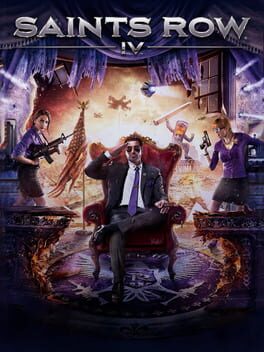
Saints Row IV gives the entire open world a superpowers overhaul: you sprint at super-speed, leap over buildings, and blast enemies with telekinesis in a full open-world city. It is the most chaotic take on the Infamous power fantasy.
Key difference: Absurdist comedy tone; much less serious than Infamous.
Best for: Players who want Infamous-style superpowers with a pure fun, silly wrapper.
Skip if: You want a grounded, emotionally serious story.
Arkham Origins brings the same open-city Arkham formula to a snowy Gotham with the same traversal and gadget-combat loop. Younger Batman means a character still discovering his limits, echoing Cole's arc.
Key difference: Lower production polish; side content thinner than Arkham City.
Best for: Arkham series completionists or those who want more of the same formula.
Skip if: You bounced off Arkham City's combat already.
Dishonored hands you a suite of supernatural powers — teleportation, time-stop, possession — in a crumbling city and asks whether you use them lethally or not. The moral choice system and power-set progression echo Infamous's karma mechanics directly.
Key difference: Semi-open hub levels rather than a continuous open world; first-person.
Best for: Players who loved Infamous's karma system and want it with stealth depth.
Skip if: You dislike first-person perspectives or stealth-based design.
Shadow of Mordor puts you in an open world where you gradually accumulate supernatural powers and combat abilities, using them against a hierarchical enemy faction. The power progression and open traversal rhyme with Infamous's arc from ordinary to extraordinary.
Key difference: Fantasy setting; Nemesis system is the core hook, not moral choice.
Best for: Those who want open-world power fantasy with strong enemy variety.
Skip if: You need a modern urban setting or a karma system.
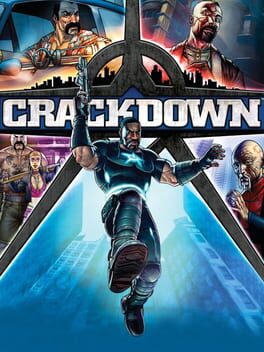
Crackdown hands you a super-agent in an open city and has you grow stronger by collecting glowing orbs scattered across rooftops, rewarding exploration with escalating strength, agility, and firepower. The loop of becoming gradually superhuman mirrors Infamous closely.
Key difference: Older, rougher game; progression tied to collectibles rather than narrative choices.
Best for: Those who love Infamous's progression arc and open-city vertical traversal.
Skip if: You need a modern production standard or a story-driven moral system.
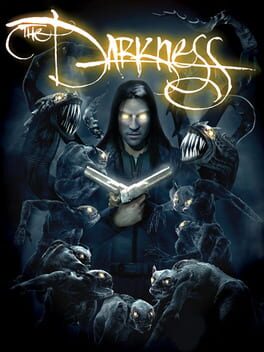
The Darkness puts you in the shoes of a mob hitman who acquires demonic tentacle powers, letting you tear through enemies in dark urban corridors. The tone is gritty and cinematic, and the supernatural power set scratches a similar itch to Cole's electricity.
Key difference: Linear levels, not open world; horror-adjacent tone.
Best for: Infamous fans who want a darker, more narrative-driven powers game.
Skip if: You need open-world freedom or a third-person camera.
Assassin's Creed II shares Infamous's open Renaissance city sandbox and fluid vertical traversal — parkour replaces electricity-powered climbing. Both games task you with moving through a detailed cityscape while uncovering a larger conspiracy.
Key difference: No superpowers; stealth-assassin design instead of action-shooter combat.
Best for: Those who loved Infamous's traversal and open urban world over its powers.
Skip if: You want ranged attacks and flashy power combat.
Days Gone is a third-person open-world action game in a post-apocalyptic Pacific Northwest where you upgrade skills and fight large enemy groups. The single-player open-world loop and gradual ability unlock parallel Infamous at a structural level.
Key difference: Survival horror with a motorcycle, not a superhero with powers.
Best for: Open-world single-player fans willing to swap powers for gritty survival.
Skip if: You're here specifically for the superpowers fantasy.
GTA V is the gold standard open-world urban sandbox — like Infamous it gives you a dense city to traverse freely and a third-person action framework. The DLC even adds superpowers (Gunrunning, Rockstar story missions).
Key difference: No inherent superpowers; crime drama rather than superhero narrative.
Best for: Players who want the biggest possible open-world playground.
Skip if: Infamous's powers and karma story are what drew you in.
Cyberpunk 2077 is a dense urban open world where V acquires cybernetic abilities that function like powers — hacking, sandevistan slow-mo, mantis blades — echoing the fantasy of an ordinary person becoming extraordinary.
Key difference: First-person RPG with dialogue trees rather than third-person action platformer.
Best for: Those who want a mature urban open world with a transforming protagonist.
Skip if: Third-person perspective and platforming movement are essential for you.
Higher stakes story with a new city and two possible power sets.
PlayStation
Prototype
95%
—
More visceral, gory power fantasy; less nuanced moral system.
PC
Marvel's Spider-Man
90%
Adventure, Action
No moral choice system; story is fixed as a hero narrative.
PlayStation
Batman: Arkham City
87%
Adventure, Action
Combat is melee-focused brawling rather than ranged powers.
PlayStation, PC, Xbox, Nintendo
Batman: Arkham Knight
85%
Adventure, Action
Adds a divisive Batmobile that dominates many missions.
PlayStation, PC, Xbox, Nintendo
Control
83%
Shooter, Adventure
Contained setting rather than an open city; more Metroidvania in structure.
Xbox, PlayStation, PC
Batman: Arkham Asylum
80%
Adventure, Action
More linear, contained map versus a full open city.
PlayStation, PC, Xbox, Nintendo
Saints Row IV
78%
Shooter, Adventure
Absurdist comedy tone; much less serious than Infamous.
PlayStation, PC, Xbox
Batman: Arkham Origins
77%
Adventure, Action
Lower production polish; side content thinner than Arkham City.
PlayStation, PC, Nintendo, Xbox
Dishonored
75%
Adventure, Action
Semi-open hub levels rather than a continuous open world; first-person.
PlayStation, PC, Xbox
Middle-earth: Shadow of Mordor
72%
Adventure, Action
Fantasy setting; Nemesis system is the core hook, not moral choice.
PlayStation, PC, Xbox
Crackdown
72%
Shooter, Adventure
Older, rougher game; progression tied to collectibles rather than narrative choices.
Xbox
The Darkness
70%
Shooter, Action
Linear levels, not open world; horror-adjacent tone.
PlayStation, Xbox
Assassin's Creed II
67%
Platform, Adventure
No superpowers; stealth-assassin design instead of action-shooter combat.
PlayStation, PC, Xbox
Days Gone
60%
Shooter, Adventure
Survival horror with a motorcycle, not a superhero with powers.
PlayStation, PC
What makes a game feel like Infamous?
The Infamous formula rests on three interlocking elements: an open urban world designed for vertical movement, a protagonist whose power set expands as you play, and a moral axis that changes the experience. Marvel's Spider-Man and the Batman: Arkham series (particularly Arkham City and Arkham Knight) nail the first two — both give you a superhero moveset, a dense city to glide across, and a combat system that rewards mastering your abilities. Control captures the third-person powers fantasy in a tighter, stranger space if you want something more surreal.
For the moral choice element specifically, Dishonored is the best alternative: its lethal/non-lethal power usage meaningfully branches the world around you in ways that closely mirror Infamous's good/evil karma paths, even if it wraps that system in first-person stealth rather than open-world action.
The canonical match the lists always miss: Prototype
Released the same week as Infamous in June 2009, Prototype (not in this pool but listed in our additional picks) is the closest game ever made to Infamous's formula: Alex Mercer wakes up in quarantined Manhattan with shapeshifting powers after a viral catastrophe, and you spend the game deciding how brutally to wield them against both military forces and infected. Where Infamous is slick and morally earnest, Prototype is messier and more gleefully violent — but the core open-world superpowers loop is virtually identical.
If you've already played Prototype, Control and Middle-earth: Shadow of Mordor from the candidate pool are the hidden-depth picks: Control for its telekinetic TPS action in a supernatural setting, and Shadow of Mordor for its satisfying open-world power progression and domination fantasy, even if both stray from the urban superhero aesthetic.
If you want the open world without the superpowers
Not every Infamous fan is there purely for Cole's electricity — some love the dense, mission-rich open city and the sense of being a one-man force of consequence in a crumbling urban environment. For those players, Grand Theft Auto V remains the benchmark open-world sandbox, offering a vast, reactive Los Angeles analogue with strong mission writing and enormous freedom. Cyberpunk 2077, meanwhile, provides the closest thematic echo — an ordinary person becoming extraordinary overnight in a dense neon city — even if its RPG and first-person structure diverge from Infamous's third-person action platforming.
Is Infamous 2 worth playing if I loved the first game?
Yes. Infamous 2 keeps the same core formula — Cole McGrath, electricity powers, open-world karma system — while adding a new bayou-inspired city, a larger power set, and two distinct story endings determined by your moral choices. It is essentially more Infamous with higher production values.
What is the game most similar to Infamous overall?
Prototype (2009) is the nearest equivalent in concept and mechanics: open-world city, a protagonist who gains catastrophic superpowers after a disaster, and chaotic third-person combat. Among games in this list, Marvel's Spider-Man is the closest modern match for feel and traversal quality.
Are there any games like Infamous where you can be evil?
Yes. Infamous itself has a full evil playthrough, and Dishonored rewards a lethal, high-chaos run with a darker city and different story beats. The Prototype series leans into destructive, morally unconstrained power use by default. Saints Row IV also lets you be destructively chaotic without a moral penalty.
What games like Infamous are available on PC?
Control, Dishonored, Middle-earth: Shadow of Mordor, Cyberpunk 2077, and Prototype (via emulation or older digital storefronts) are all strong PC options. Marvel's Spider-Man and the Batman Arkham series are also fully available on PC.
Is there a game like Infamous with a better story?
Batman: Arkham City and Control are frequently cited for stronger writing within the same superpowers action space. For pure narrative ambition, Dishonored's world-building and consequence system give the player's choices more story weight than Infamous does, even though it's a different genre blend.
 95%
95%