Vampire Survivors distilled the auto-attack horde survival roguelite into its purest form: you move, enemies die automatically, XP gems accumulate, and every level-up choice edges your build closer to glorious overpowered chaos. Its gothic horror setting, short self-contained runs, and the addictive dopamine loop of discovering broken ability synergies are what fans really fall in love with.
When players search for games like Vampire Survivors, they're chasing that same "one more run" compulsion — escalating enemy hordes, randomized build paths that suddenly click, and the satisfaction of watching hundreds of enemies evaporate from your snowballed power. The best matches share at least the roguelite run structure and horde-clearing intensity, even if combat isn't fully passive.
Top pick:Brotato is the single closest match on this list: an arena auto-attacker where you select weapons and stats between relentless waves, watch build synergies spiral out of control, and die in under 30 minutes before doing it all again — the Vampire Survivors formula with barely a seam showing.
Some store buttons are affiliate links — we may earn a commission at no extra cost to you.
19 games like Vampire Survivors
96%
Brotato 2023
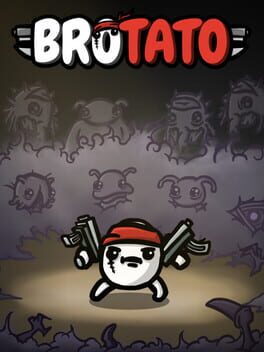
Brotato is practically Vampire Survivors' twin: a top-down arena auto-attacker where you pick upgrades between waves of escalating enemies and watch your build snowball into chaos. The roguelite loop — short run, pick weapon synergies, die and try again — is nearly identical in feel.
Key difference: You actively aim and move rather than purely dodge; builds skew more shooter-focused.
Best for: VS fans who want even more build variety and weapon combos.
Skip if: You hate frantic twin-stick shooting over passive auto-attack.
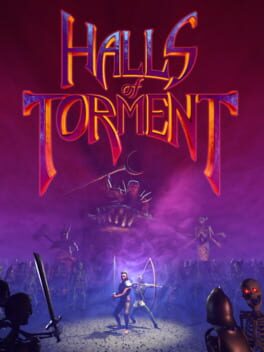
Halls of Torment is a direct Vampire Survivors-style auto-attack horde survivor with a Diablo-II-inspired dark gothic aesthetic, passive ability upgrades per level, and an escalating monster swarm that demands build synergy.
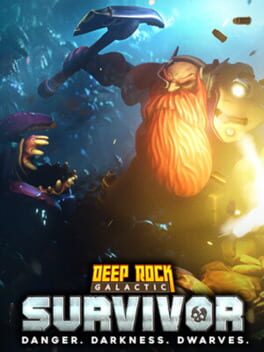
Deep Rock Galactic: Survivor translates VS's passive auto-attack survivor formula into a sci-fi bug-shooting setting, complete with XP pickups, level-up choices, and increasingly overwhelming enemy swarms. It mirrors VS's core loop almost exactly.
Key difference: Top-down mining mechanic adds terrain destruction between waves.
Best for: VS fans wanting a sci-fi skin and cooperative DRG fans.
Skip if: You dislike the mining/digging interruptions to combat flow.
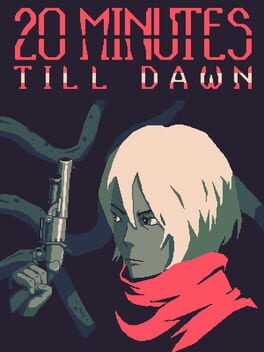
20 Minutes Till Dawn is a VS-adjacent wave survival game where you hold off monster hordes through the night, picking passive upgrades each level and combining rune synergies for wild builds. The gothic horror night-survival setting directly echoes VS's premise.
Key difference: You aim your shots manually rather than attacking fully automatically.
Best for: VS players who want slightly more active gunplay in the same genre.
Skip if: You want completely passive auto-attack gameplay.
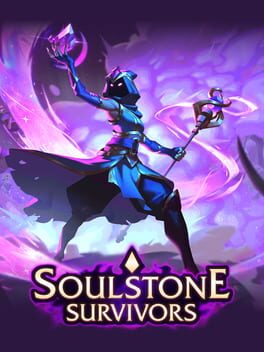
Soulstone Survivors is a top-down auto-attack horde survivor where you combine active and passive skills into snowballing builds against thousands of enemies — nearly identical in loop to Vampire Survivors with more spell variety.
Key difference: Hybrid active/passive skill system rather than fully passive auto-attack.
Best for: VS fans wanting more active skill choices mid-run.
Skip if: You want fully passive auto-attack with no button presses.
HoloCure is a free fan-made Vampire Survivors-like featuring VTuber characters, auto-attack horde survival, and deep weapon/item synergy building across short roguelite runs.
Key difference: Free fan game built around VTuber IP; lighter tone.
Best for: VS fans who also follow VTuber culture and want a free alternative.
Skip if: You have no interest in anime VTuber aesthetics.
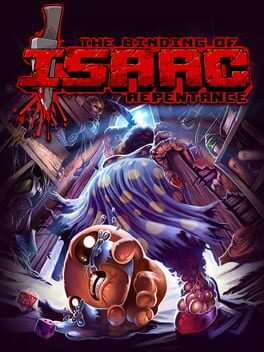
The Binding of Isaac: Repentance is the definitive edition of the roguelite that shares VS's top-down horde-clearing DNA, randomized item synergies that cascade into absurd power, and 'just one more run' compulsion. Both games reward deep knowledge of item interactions.
Key difference: You manually aim tears in a twin-stick style; rooms are discrete, not open arenas.
Best for: Players who want hundreds of hours of item-synergy depth.
Skip if: You dislike disturbing religious horror imagery.
Risk of Rain 2 is a third-person roguelite where enemies scale relentlessly as time passes — the same core tension as VS — and you stack passive items into overpowered build chains. The 'survive the escalating swarm' loop feels very familiar.
Key difference: Third-person 3D arena with active aim; longer, more complex runs.
Best for: VS players ready for more mechanical depth and co-op.
Skip if: You want quick 20-minute passive sessions.
Enter the Gungeon is a top-down roguelite that drowns you in enemy bullets and demands you collect synergistic gun upgrades to survive. The roguelite upgrade loop and overwhelming horde pressure hit a similar note to VS.
Key difference: Manual aiming and active dodge-roll make it far more skill-intensive.
Best for: VS fans who want tight twitch gunplay added to the roguelite loop.
Skip if: You prefer passive auto-attack over reaction-based shooting.
Nuclear Throne is a top-down roguelite shooter where you wade through dense enemy hordes, pick mutations between levels, and die trying to push further each run — the DNA is clearly shared with VS, just with manual aim.
Key difference: Very short, punishing runs with no meta-progression unlocks.
Best for: VS fans who want a harder, faster, more brutal loop.
Skip if: You need meta-progression rewards to stay motivated.
Hades wraps a tight hack-and-slash action roguelite in Greek mythology with outstanding writing and run-by-run power escalation. Like VS, each run is self-contained, boons stack into powerful synergies, and meta-progression slowly unlocks more content.
Key difference: Active directional combat with a strong narrative focus.
Best for: VS players who want story and voiced characters with their roguelite.
Skip if: You only want passive auto-attack horde survival.
Children of Morta is a family-driven action RPG roguelite where you hack through increasingly dense monster hordes across Gothic dungeon floors, leveling up characters with passive stat trees between runs. The fantasy horror aesthetic and horde-clearing feel echo VS closely.
Key difference: Strong narrative campaign with voiced family members and cutscenes.
Best for: VS fans who want story and character progression attached to horde runs.
Skip if: You want pure arcade runs without narrative interruption.
Dead Cells is a roguelite metroidvania with relentless enemy spawning, randomized weapon synergies, and builds that snowball into absurdity. The run structure and loot-upgrade compulsion mirror VS's feel, even if combat is more active.
Key difference: 2D metroidvania platformer with manual combo combat, not top-down arena.
Best for: VS fans who want a richer movement and combat system.
Skip if: You dislike precision platforming in your roguelites.
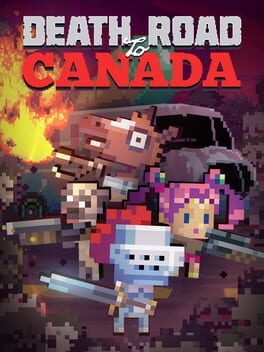
Death Road to Canada pits you against endless zombie hordes in a top-down roguelite road trip, where wave survival and randomized character traits produce chaotic emergent runs. The horde-clearing loop and absurd escalation share VS's DNA.
Key difference: Procedural text-adventure events between combat stages add humor and variety.
Best for: VS fans who want co-op couch play and quirky writing.
Skip if: You dislike randomized narrative interruptions between action stages.
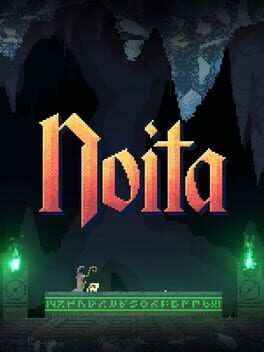
Noita is a physics-based roguelite where you build spell 'wands' that combine into catastrophically powerful — and self-destructive — configurations, echoing VS's synergy discovery joy. Horde pressure and enemy density match VS's intensity.
Key difference: Fully simulated pixel physics; wand crafting is cryptic and complex.
Best for: VS fans who love discovering broken weapon synergies and don't mind chaos.
Skip if: You want clear build paths and quick accessible runs.
Cult of the Lamb combines short roguelite combat runs — where you cut through dense enemy rooms and collect curses/tarot cards — with a cult base-building sim. The run structure and randomized power selection share VS's loop.
Key difference: Base-building layer between runs adds significant non-combat content.
Best for: VS fans who want to build and manage something between combat sessions.
Skip if: You dislike management/simulation layers interrupting action.
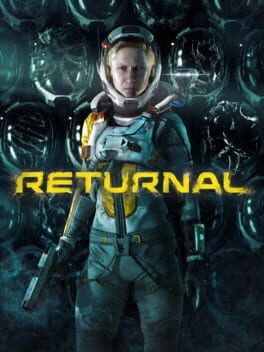
Returnal is a bullet-hell roguelite third-person shooter where you run through procedurally generated alien biomes, stack passive items, and face overwhelming enemy swarms. The bullet-hell dodge-and-survive tension is strong.
Key difference: Full 3D third-person shooter; extremely punishing difficulty curve.
Best for: VS fans on PS5 wanting a premium high-skill roguelite.
Skip if: You want a casual or relaxing roguelite experience.
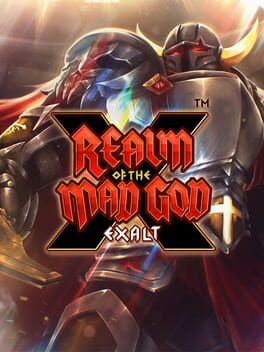
Realm of the Mad God is a free-to-play top-down bullet-hell MMO roguelite where you dodge dense projectile patterns from thousands of enemies and collect passive gear upgrades — the bullet-hell survival feel is very close to VS.
Key difference: Persistent online MMO with permadeath and other players visible.
Best for: VS fans wanting a social free-to-play bullet-hell with online co-op.
Skip if: You dislike online-only games or permadeath with no meta-progression.
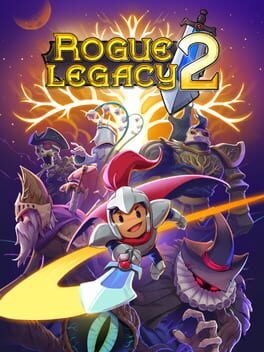
Rogue Legacy 2 is a roguelite platformer with deep meta-progression between runs, randomized traits, and escalating enemy density across procedural castles. The 'run, die, upgrade, repeat' loop is shared with VS.
Key difference: 2D precision platformer with active melee combat, not horde-arena.
Best for: VS fans who enjoy platformers and want heavier narrative/world context.
Skip if: You want top-down passive auto-attack horde gameplay.
Top-down mining mechanic adds terrain destruction between waves.
Xbox, Mobile, PC
20 Minutes Till Dawn
90%
Role-playing (RPG), Adventure
You aim your shots manually rather than attacking fully automatically.
Mobile, PC, Nintendo
Soulstone Survivors
90%
Role-playing (RPG), Indie
Hybrid active/passive skill system rather than fully passive auto-attack.
Xbox, PC, PlayStation
HoloCure: Save the Fans!
88%
Role-playing (RPG), Adventure
Free fan game built around VTuber IP; lighter tone.
PC
The Binding of Isaac: Repentance
87%
Role-playing (RPG), Adventure
You manually aim tears in a twin-stick style; rooms are discrete, not open arenas.
Xbox, PlayStation, PC
Risk of Rain 2
84%
Adventure, Indie
Third-person 3D arena with active aim; longer, more complex runs.
Xbox, PlayStation, PC, Nintendo
Enter the Gungeon
80%
Adventure, Indie
Manual aiming and active dodge-roll make it far more skill-intensive.
PlayStation, PC, Mobile, Xbox, Nintendo
Nuclear Throne
80%
Adventure, Indie
Very short, punishing runs with no meta-progression unlocks.
PlayStation, PC, Xbox, Nintendo
Hades
78%
Role-playing (RPG), Adventure
Active directional combat with a strong narrative focus.
Xbox, PlayStation, PC, Mobile, Nintendo
Children of Morta
75%
Role-playing (RPG), Adventure
Strong narrative campaign with voiced family members and cutscenes.
PlayStation, PC, Mobile, Xbox, Nintendo
Dead Cells
72%
Adventure, Indie
2D metroidvania platformer with manual combo combat, not top-down arena.
PlayStation, PC, Mobile, Xbox, Nintendo
Death Road to Canada
72%
Role-playing (RPG), Adventure
Procedural text-adventure events between combat stages add humor and variety.
PlayStation, PC, Mobile, Xbox, Nintendo
Noita
70%
Role-playing (RPG), Adventure
Fully simulated pixel physics; wand crafting is cryptic and complex.
PC
What makes a game truly feel like Vampire Survivors?
The core of VS is passive escalation: your character attacks automatically, enemies grow in number and speed, and your only job is choosing upgrades and staying alive. Games that nail this feel — Brotato, Deep Rock Galactic: Survivor, and 20 Minutes Till Dawn — all share that passive or semi-passive auto-attack structure against overwhelming swarms with randomized level-up choices. The roguelite meta-progression (unlocking new characters or starting items between runs) is almost as important as the run itself.
The bullet-hell evasion layer is the second pillar: VS's magic is that positioning matters enormously even when you're not pressing any attack buttons. Games like Enter the Gungeon and Nuclear Throne capture the same spatial tension from the opposite direction — you aim manually but the projectile density demands the same constant movement and threat-reading that VS demands from pure dodge positioning.
Best roguelite horde-survivors with deep build synergies
If synergy discovery is your drug, The Binding of Isaac: Repentance is the deepest well — thousands of item combinations produce wildly different runs, and uncovering a broken synergy feels identical to landing a perfect VS weapon evolution. Noita goes even further: wand spell combinations are almost infinitely expressive, and stumbling on a configuration that deletes every enemy on screen rivals VS's strongest late-game builds.
For something more structured, Hades and Hades II offer carefully designed boon synergies with the same run-by-run unlock and meta-progression feel — just with active combat replacing passive auto-attack. Risk of Rain 2 sits between the two extremes: item stacking produces the same absurd power curves as VS, but its third-person horde pressure keeps you constantly moving and reacting.
Hidden gem picks that most Vampire Survivors lists miss
20 Minutes Till Dawn is the most direct VS clone almost no one talks about — a gothic night-survival wave game with rune synergies and a similar 'survive until dawn' premise that even shares VS's thematic title structure. Children of Morta is a rarer call: its hack-and-slash roguelite runs produce the same dense horde-clearing satisfaction as VS while wrapping it in a genuinely touching family narrative that most pure-arcade survivor games never attempt.
Death Road to Canada deserves a mention for capturing VS's chaotic escalation energy in a zombie-horde top-down package, with hilarious procedural text events between stages that give runs personality. And Realm of the Mad God — free-to-play and often overlooked — delivers bullet-hell horde survival with the same XP-gem-magnet feel, just shared with an online world of other players also trying not to die.
Brotato and Deep Rock Galactic: Survivor are the closest mechanical twins — both are top-down auto-attack arena survivors where you pick upgrades between escalating enemy waves. Outside this candidate list, Halls of Torment and HoloCure are equally direct matches and are free or cheap to try.
Is Hades similar to Vampire Survivors?
Hades shares the roguelite run structure and meta-progression with Vampire Survivors, and both reward learning synergies across many runs. However, Hades uses active directional combat rather than passive auto-attack, so the second-to-second feel is quite different. It's a great next game if you love the roguelite loop but want more narrative and skill expression.
Are there any free games like Vampire Survivors?
Yes — HoloCure: Save the Fans! is a free fan-made VS-style survivor featuring VTuber characters and full weapon evolution systems. Realm of the Mad God is a free-to-play online bullet-hell roguelite with similar horde pressure. The base game of Vampire Survivors itself was free in early access before its full release and remains very cheap.
What should I play after finishing everything in Vampire Survivors?
The Binding of Isaac: Repentance offers hundreds of hours of deeper item-synergy roguelite content in a similar top-down format. Risk of Rain 2 and Brotato are natural next steps for horde survival escalation. If you want to stay in the exact VS genre, Halls of Torment and Soulstone Survivors extend the formula with new mechanics and aesthetics.
Is Vampire Survivors a bullet-hell game?
VS is adjacent to bullet-hell but inverts the genre: instead of you dodging enemy bullets, your character fires automatically and enemies are the ones trying to survive your projectile field. The density of on-screen objects and the need for constant spatial awareness are shared with bullet-hells like Touhou, which is why fans of both genres tend to enjoy VS.
 96%
96%