2048 earns its cult status through an almost cruel elegance: four arrow keys, a 4x4 grid, and the single rule that equal tiles merge into their sum. The result is a pure planning puzzle where every swipe collapses the board in a new direction and demands you think two or three moves ahead to avoid gridlock.
When players search for "games like 2048" they're really after one (or more) of its three signature qualities: minimalist grid-based mechanics, simple rules that generate deep strategy, and an addictive score-or-number-escalation loop playable in short bursts with zero preamble.
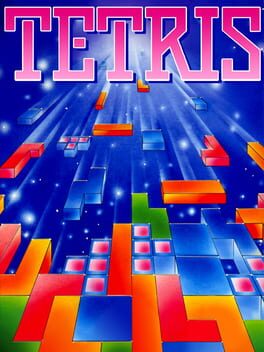
Top pick:Tetris is the single closest match in this list — it is the original falling-tile number-free grid puzzle, shares 2048's spatial planning, escalating pressure, and 'one more game' hold on players, and remains the gold standard for exactly the kind of minimalist arcade-puzzle experience that makes 2048 so compelling.
Some store buttons are affiliate links — we may earn a commission at no extra cost to you.
16 games like 2048
98%
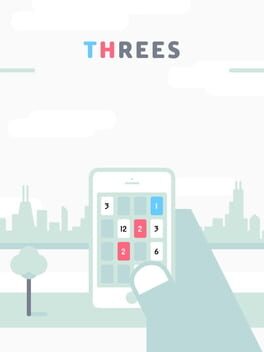
Threes! 2014
Threes! is the direct inspiration for 2048: you slide numbered tiles on a 4x4 grid, merging multiples of three, with tighter rules and more deliberate pacing than its derivative.
Tetris is the closest spiritual twin to 2048: blocks fall onto a grid and you manipulate them to clear lines, rewarding spatial pattern recognition and forward planning over many sessions. The same 'one more go' loop and escalating pace are front and centre.
Key difference: Pieces fall in real time; no merging numbers.
Best for: Players who want the same grid tension with reflex added.
Skip if: You prefer fully turn-based, unhurried puzzles.
Drop7 drops numbered discs onto a circular grid; discs clear when their number matches the count of discs in a row or column — a number-logic puzzle with 2048's same minimalist brain-burn.
Key difference: Numbered disc-drop with row/column count logic.
Best for: Players who loved 2048's number reasoning in a fresh format.
Skip if: You want tile sliding rather than dropping.
Mobile
76%
Dr. Mario 1990
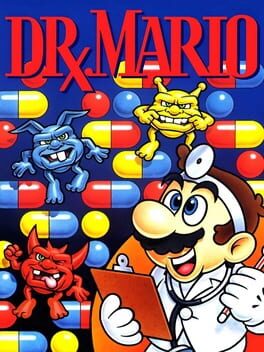
Dr. Mario drops coloured capsules onto a bottle grid and you match four of the same colour to clear viruses, sharing 2048's grid-based colour/number matching satisfaction and escalating difficulty.
Key difference: Colour-match elimination; no number progression.
Best for: Players who enjoyed 2048's grid logic in a Nintendo wrapper.
Skip if: You dislike real-time falling piece pressure.
Candy Crush Saga is a grid-based match-three puzzle game where you swap tiles to make colour combinations, sharing 2048's casual, addictive, short-session grid satisfaction.
Key difference: Match-three colour swapping on fixed levels with lives.
Best for: Players wanting colourful grid puzzles in short sessions.
Skip if: You dislike energy timers and mobile monetisation friction.
70%
Puyo Puyo Tetris 2014
Puyo Puyo Tetris merges two classic falling-tile puzzles — Puyo blob chains and Tetris stacking — giving grid-puzzle fans double the merging and clearing satisfaction.
Key difference: Real-time falling pieces with chain reactions; competitive.
Best for: Players who want tile-merging satisfaction with variety.
Skip if: You prefer slow, turn-based grid strategy.
Minesweeper is the quintessential browser-era logic puzzle played on a grid, using deduction to uncover safe squares — the same minimalist, no-fluff, pure-brain experience as 2048.
Key difference: Deductive mine-avoidance rather than tile merging.
Best for: Players who love grid puzzles solvable in short sessions.
Skip if: You want score progression and a clear numeric goal.
PC
65%
Bejeweled
Bejeweled has you swapping adjacent gem tiles on a grid to match three or more of the same colour, sharing 2048's intuitive grid-swap satisfaction and cascading chain reward.
Key difference: Colour-match swap mechanics; no number progression.
Best for: Casual players wanting a proven grid puzzle in short sessions.
Skip if: You want number/math logic rather than colour matching.
Nintendo
63%💎 Gem
Mini Metro 2015
Mini Metro tasks you with drawing subway lines between stations using a minimal aesthetic and elegantly simple rules that cascade into surprisingly deep decisions — the same 'clean rules, deep consequences' feeling 2048 delivers.
Key difference: Network-building strategy; no tile sliding.
Best for: Players craving minimalist puzzle strategy with real depth.
Skip if: You want short grid sessions, not growing systems.
Helltaker is a short, free grid-puzzle game where you slide a character across tiles with a limited move count to reach demon girls — the push-block sliding mechanic maps directly onto 2048's core movement logic.
Key difference: Story and character goals; fixed move-count levels.
Best for: 2048 fans wanting sliding-grid puzzles with charm.
World of Goo is a physics-puzzle game built around attaching goo balls to form structures, sharing 2048's approachable pick-up-and-play feel and indie minimalism with surprising mechanical depth.
Key difference: Physics construction rather than grid tile merging.
Best for: Puzzle fans wanting tactile indie craft without combat.
Skip if: You want abstract number or tile mechanics.
Plants vs. Zombies places towers on a grid row-by-row in real time, demanding the same spatial resource management on a fixed board that makes 2048 engaging — just with cartoon enemies.
Key difference: Real-time tower defence with units, not static tile merging.
Best for: Players who like grid strategy with a casual, colourful skin.
Skip if: You want pure turn-based, unhurried number logic.
Angry Birds is a casual physics puzzle where you slingshot birds at structures, sharing 2048's quick-session, pick-up-and-play puzzle loop that rewards pattern recognition without combat.
Key difference: Physics projectile puzzle; no grid or number merging.
Best for: Casual puzzle fans happy on mobile in short bursts.
Skip if: You want abstract tile or number mechanics.
Super Hexagon is a brutally minimalist arcade game about rotating through geometric patterns, sharing 2048's stripped-back aesthetic and addictive 'fail, retry, improve' loop.
Key difference: Real-time reflexes and music; no strategy or grid.
Best for: Players who love the pure score-chase and minimalist look.
Skip if: You want turn-based thinking rather than twitch skill.
Cookie Clicker is a browser idle game built entirely around watching numbers grow exponentially — it scratches the same number-escalation satisfaction and 'just a few more seconds' pull as 2048.
Key difference: Idle clicker with no spatial puzzle; largely passive.
Best for: Players who love the number-growth dopamine loop.
Skip if: You want active grid strategy and deliberate moves.
AdVenture Capitalist is a free idle game where you watch business numbers compound exponentially, echoing the powers-of-two satisfaction of watching 2048 tiles double.
Key difference: Fully passive idle; no skill or spatial reasoning.
Best for: Players craving number escalation with zero time pressure.
Skip if: You want active, skill-based puzzle solving.
Match-three colour swapping on fixed levels with lives.
—
Puyo Puyo Tetris
70%
Puzzle, Strategy
Real-time falling pieces with chain reactions; competitive.
PlayStation, Nintendo, PC, Xbox
Microsoft Minesweeper
66%
Puzzle
Deductive mine-avoidance rather than tile merging.
PC
Bejeweled
65%
Puzzle
Colour-match swap mechanics; no number progression.
Nintendo
Mini Metro
63%
Puzzle, Strategy
Network-building strategy; no tile sliding.
PlayStation, PC, Mobile, Nintendo
Helltaker
60%
Puzzle, Indie
Story and character goals; fixed move-count levels.
PC
World of Goo
54%
Puzzle, Strategy
Physics construction rather than grid tile merging.
PC, Nintendo, Mobile
Plants vs. Zombies
50%
Puzzle, Strategy
Real-time tower defence with units, not static tile merging.
PlayStation, PC, Mobile, Xbox, Nintendo
Angry Birds
46%
Puzzle, Strategy
Physics projectile puzzle; no grid or number merging.
PlayStation, PC, Mobile, Xbox
Super Hexagon
43%
Indie
Real-time reflexes and music; no strategy or grid.
PC, Mobile
Cookie Clicker
38%
Strategy, Indie
Idle clicker with no spatial puzzle; largely passive.
Xbox, PlayStation, PC, Mobile, Nintendo
What makes a puzzle feel like 2048?
The key ingredients are a fixed grid, simple movement or placement rules, and a feedback loop where each action reshapes the entire board in ways you must anticipate. Tetris and Tetris 99 nail all three: pieces cascade down a column grid, cleared lines are the 'merge', and the state of the board after each move demands immediate re-evaluation.
Dr. Mario and Plants vs. Zombies add colour or unit layers on top of the same grid logic, giving you a fresh visual skin while keeping the core spatial reasoning intact. If you want something even closer to 2048's browser-era minimalism, Threes! (in the 'additional' list) is the direct ancestor and is worth playing first.
Hidden gems that scratch the same itch
Mini Metro is the most underrated pick here: its hand-drawn train network grows from a handful of stations into a chaotic system you must prune and reroute, all governed by the same 'simple rules, cascading consequences' philosophy as 2048. Sessions last 10-20 minutes, it's free-to-try on PC, and almost nobody mentions it in 2048 recommendation lists.
Drop7 (in additional) is another hidden gem — numbered discs clear when they align with the count of discs in their row or column, creating a number-logic puzzle that feels unmistakably like 2048's brain-burn in a vertical format. Helltaker is a free grid-sliding puzzle with a strict move count that maps directly onto 2048's directional swipe logic, and takes about two hours to complete.
If you love 2048 on mobile
Threes! is the obvious first stop — it predates 2048, runs on iOS and Android, and is the more polished, intentionally designed version of the sliding-number concept. Candy Crush Saga and Bejeweled occupy the same casual-grid-puzzle niche on mobile with colour-matching instead of numbers, and Microsoft Minesweeper remains a free, ad-light grid logic game on every Windows device.
For something that captures the number escalation side of 2048 rather than the spatial side, Cookie Clicker and AdVenture Capitalist deliver the same exponential-growth satisfaction as a browser idle game — no installation required, just like the original.
2048 was directly inspired by Threes!, a paid sliding-number puzzle released by Asher Vollmer in February 2014. Gabriele Cirulli released 2048 about a month later as a free, open-source tribute.
Is there a harder version of 2048?
Yes — community variants include 4096 and 8192 editions on the same grid, and others use a 5x5 or 6x6 grid to dramatically extend play. Threes! is also considered harder than 2048 because tiles only merge in multiples of three, leaving less room for error.
What is the best free game similar to 2048?
Tetris Effect (paid) is the most polished, but the free browser version of classic Tetris, Microsoft Minesweeper, and the free-to-play Helltaker all scratch the same minimalist grid-puzzle itch at no cost.
Are there multiplayer games like 2048?
Tetris 99 is the closest: it is grid-based tile puzzle gameplay in a 99-player battle-royale format. Puyo Puyo Tetris also offers head-to-head tile-matching competition.
What should I play after finishing 2048?
Start with Threes! for the original experience, then try Drop7 for a number-logic twist. If you want more depth, Mini Metro offers the same 'simple rules, complex outcomes' design in a strategy-puzzle format.
 98%
98%