I'm on Observation Duty earns its tension through the most restrained possible design: you never move, never fight—you only watch. Cycling through static surveillance feeds and holding the layout of every room in your head, the game turns memory and attention into survival tools, punishing a lapse in concentration with something unspeakable stepping closer.
When players look for games like it, they're really chasing two things: the bureaucratic observation loop (notice anomaly → file report → keep calm) and the particular SCP-flavored dread of ordinary rooms being quietly, wrongly inhabited. The best alternatives either replicate the mechanic directly or nail the uncanny atmosphere of entities lurking just at the edge of your attention.
Top pick: The single closest match is Five Nights at Freddy's—not in the candidate pool but unmissable—because it pioneered the exact formula of sitting at a security desk, cycling camera feeds, and reporting threats before they reach you; if FNAF is already checked off, Papers, Please is the best pick from this list, transplanting the observe-and-file loop into a tense Cold War checkpoint where every missed anomaly has a cost.
Some store buttons are affiliate links — we may earn a commission at no extra cost to you.
18 games like I'm on Observation Duty
95%
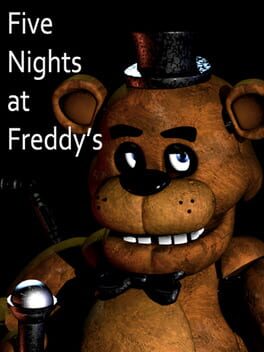
Five Nights at Freddy's 2014
FNAF is the closest game in existence to I'm on Observation Duty: you sit at a security desk monitoring live camera feeds across rooms, watching for animatronic anomalies moving through them, and must react before they reach you. The night-shift survival loop is nearly identical.
Papers, Please puts you at a checkpoint booth scrutinizing documents for anomalies and filing correct decisions under mounting pressure. The core loop—observe carefully, detect the wrong thing, report it—mirrors I'm on Observation Duty almost exactly, just with bureaucratic paperwork instead of paranormal rooms.
Key difference: Cold-war political setting replaces supernatural horror entirely.
Best for: Players who love the report-filing, procedure-following tension loop.
Skip if: You need jump-scare horror, not political dread.
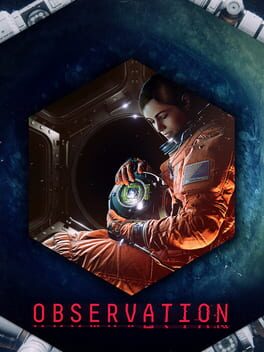
In Observation you play as an AI managing a space station's camera network, switching between feeds to observe rooms, gather information, and detect what has gone wrong—the surveillance-camera-as-gameplay-lens is virtually identical to IIOD's core.
Key difference: Sci-fi mystery narrative drives purpose; you are the AI, not the human watcher.
Best for: Players who want the camera-switching observation loop with a story.
Skip if: You want pure horror atmosphere over narrative sci-fi.
Rusty Lake Hotel is a short, eerie point-and-click puzzle set in a surreal lodge with unsettling secrets hidden in mundane rooms. Its atmosphere of wrongness lurking behind ordinary surfaces directly echoes the uncanny anomaly-spotting of Observation Duty.
Key difference: You actively navigate and interact rather than passively watch cameras.
Best for: Fans of the surreal SCP-adjacent horror aesthetic.
Skip if: You want reflex-based tension over quiet puzzle-solving.
Rusty Lake: Roots extends the same unsettling point-and-click formula across a family's cursed history, hiding grotesque anomalies in domestic settings. The sense of cataloguing wrongness room by room feels spiritually adjacent to monitoring surveillance feeds.
Key difference: Narrative family tree structure drives progression instead of night shifts.
Best for: Those who want more content in the Rusty Lake horror-puzzle style.
Skip if: You dislike traditional point-and-click inventory puzzles.
Control is set in a brutalist government bureau that contains paranormal objects and entities—an SCP Foundation analogue in all but name. If the anomalous-entity-in-monitored-rooms angle of Observation Duty appeals, Control delivers that world in action-adventure form.
SCP: Containment Breach drops you inside a facility trying to contain paranormal entities—the exact SCP-Foundation aesthetic that visibly inspired Observation Duty's anomalies—and forces you to use surveillance monitors scattered through the facility.
Key difference: Active first-person survival roguelite rather than stationary observation.
Best for: Players drawn to IIOD's SCP entity aesthetic who want more lore depth.
Skip if: You want polished production; this is a rough indie game.
Outlast tasks you with navigating a horror environment while only recording through a camcorder's night-vision lens—the camera is your only tool, and watching the world through its screen creates the same mediated-observation dread as IIOD's feeds.
Key difference: You move through environments in first-person rather than switching cameras.
Best for: Players who want active-stealth horror with the camera-as-lens feel.
Skip if: You prefer slow, static observation over chase sequences.
SOMA is a slow-burn sci-fi horror puzzle where you piece together what has gone wrong by examining your surroundings carefully, with existential dread replacing jump scares. The methodical attention to environmental detail resonates with Observation Duty's watchful tension.
Key difference: Linear narrative exploration replaces the report-filing loop.
Best for: Players who love quiet, cerebral horror over reactive gameplay.
Skip if: You want the specific surveillance-monitor format repeated.
Alien: Isolation forces you to watch motion trackers and camera systems obsessively, reading indirect evidence to locate a threat you cannot see directly. The prolonged tension of waiting and watching is the same instinct Observation Duty trains.
Key difference: You must physically hide and move rather than sit at a monitor.
Best for: Players wanting that same hair-trigger alertness in a AAA package.
Skip if: You dislike lengthy stealth segments and backtracking.
This anthology of short indie horror demos includes multiple entries that use observation, surveillance, and anomaly-detection mechanics, making it a natural sampler for fans of IIOD's niche.
Key difference: Anthology of varied short experiments rather than a single cohesive game.
Best for: Players wanting to explore the broader indie surveillance-horror space.
Skip if: You want one focused, polished experience.
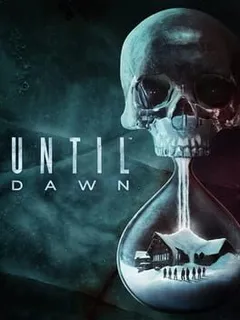
Until Dawn is a cinematic horror experience where careful observation of the environment and sharp attention to clues determines who survives. The game rewards players who notice what is off in a scene, much like spotting anomalies in a feed.
Key difference: Branching narrative drama drives progression, not real-time anomaly detection.
Best for: Players who want social horror with observational elements.
Skip if: You want the pure spot-the-difference loop with no story filler.
Silent Hill 2 builds dread through environments that feel persistently wrong—familiar spaces twisted by something unknowable—which matches the uncanny wrongness of anomalies appearing in Observation Duty's rooms.
Key difference: Full survival-horror adventure with combat, not a surveillance sim.
Best for: Those who want the deepest horror atmosphere after IIOD.
Skip if: You want mechanics over narrative immersion.
Firewatch casts you as a wilderness lookout literally watching for threats from a remote tower, radioing in reports. The observation-post fantasy and the encroaching sense that something is wrong share DNA with Observation Duty's night-watch premise.
Key difference: Walking-sim narrative adventure, no anomaly detection or horror entities.
Best for: Players drawn to the lonely-watchperson-in-isolation atmosphere.
Skip if: You need active horror tension and jump-scare payoffs.
What Remains of Edith Finch asks you to observe rooms and piece together what happened in them—a domestic archaeology that rewards the same careful eye for environmental detail Observation Duty demands.
Key difference: Warm narrative anthology format, no threat or real-time pressure.
Best for: Players who love examining rooms for meaning without stress.
Skip if: You want ongoing tension and survival stakes.
Don't Knock Twice is a first-person horror puzzle where you investigate rooms for supernatural signs in a haunted house setting. The emphasis on noticing what has changed or appeared matches Observation Duty's anomaly sensibility.
Key difference: You physically walk through the house rather than monitoring cameras.
Best for: Players wanting a short, cheap indie horror fix in the same vein.
Skip if: You need high production values or refined mechanics.
Apsulov: End of Gods is a Norse-mythology-meets-sci-fi first-person horror set in a research facility containing supernatural entities—thematically close to the SCP-flavored paranormal containment world of Observation Duty.
Key difference: You explore corridors in first-person; no camera-feed switching mechanic.
Best for: Observation Duty fans wanting a walking-horror with similar entity vibes.
Skip if: You want the pure surveillance mechanic preserved.
Infliction is a first-person horror where you investigate rooms of a haunted house while a presence hunts you, and the game relies on environmental storytelling and careful observation to uncover what went wrong.
Key difference: Active hide-and-seek threat replaces passive anomaly reporting.
Best for: Those who want a cheap indie horror with an observational puzzle twist.
Active first-person survival roguelite rather than stationary observation.
PC
Outlast
63%
Indie, Horror
You move through environments in first-person rather than switching cameras.
PlayStation, PC, Xbox, Nintendo
Soma
58%
Puzzle, Indie
Linear narrative exploration replaces the report-filing loop.
PlayStation, PC, Xbox, Nintendo
Alien: Isolation
55%
Horror
You must physically hide and move rather than sit at a monitor.
PlayStation, PC, Xbox, Nintendo
Dread X Collection
55%
Puzzle, Indie
Anthology of varied short experiments rather than a single cohesive game.
PC
Until Dawn
52%
Horror
Branching narrative drama drives progression, not real-time anomaly detection.
PlayStation
Silent Hill 2
50%
Puzzle, Horror
Full survival-horror adventure with combat, not a surveillance sim.
PlayStation
Firewatch
50%
Indie
Walking-sim narrative adventure, no anomaly detection or horror entities.
PlayStation, PC, Xbox, Nintendo
What Remains of Edith Finch
48%
Puzzle, Indie
Warm narrative anthology format, no threat or real-time pressure.
Xbox, PlayStation, PC, Mobile, Nintendo
What makes a game genuinely feel like I'm on Observation Duty?
The anchor's core is a memory test wrapped in horror: you must reconstruct the baseline state of every room and notice deviations in real time. Very few games replicate this exactly, but Papers, Please comes the closest by replacing rooms with documents—you learn the correct template, flag every deviation, and file a ruling under time pressure. Five Nights at Freddy's (not in the candidate pool but essential) is the other direct heir: same security desk, same camera cycling, same anomaly-reaches-you-if-you-miss-it stakes.
A second tier delivers the atmosphere of wrongness-in-monitored-space without copying the mechanic. Control gives you the SCP containment bureau as a full world to inhabit, while SOMA and Alien: Isolation recreate the prolonged tension of watching for a threat you cannot confront directly.
Best picks for the SCP and paranormal-containment vibe
I'm on Observation Duty draws heavily from SCP Foundation aesthetics—mundane settings, clinical reporting language, and entities that defy easy categorisation. Control is the highest-profile game to mine the same vein, setting you inside a brutalist federal bureau that catalogues and contains the impossible. For a rougher, more authentic SCP experience, SCP: Containment Breach (additional recommendation) drops you directly inside the fiction and even uses in-game surveillance monitors as gameplay tools.
The Rusty Lake series—Rusty Lake Hotel and Rusty Lake: Roots—occupies a weirder, more surrealist corner of the same sensibility: domestic rooms that feel subtly, systematically wrong, with a horror logic that rewards careful observation over brute force.
If you want passive observation horror rather than combat
For players who specifically value not fighting—the horror of helplessness behind a screen—Outlast preserves that dynamic better than any combat-heavy horror game: your camcorder is your only tool, and the footage it captures is the only power you hold. Firewatch takes the observation-post premise in a quieter direction; you are literally stationed in a watchtower radioing reports, and the growing sense that something is wrong unfolds entirely through watchfulness rather than action.
Observation (additional recommendation) is the most mechanically faithful alternative: you play as an AI switching between a space station's camera feeds, piecing together catastrophe through surveillance footage alone—the camera-cycling loop transplanted into a sci-fi mystery.
Is there a game exactly like I'm on Observation Duty but bigger?
Five Nights at Freddy's is the closest thing to a full franchise built on the same formula—security desk, live camera feeds, anomaly detection, survive the night. Its sequels expand the mechanic considerably. The 2019 game Observation also replicates the camera-switching loop in a longer sci-fi narrative package.
What game has the same SCP-style paranormal anomaly feeling?
Control is the most polished game to share that aesthetic—a federal bureau containing impossible objects and entities, told in clinical report language. SCP: Containment Breach is a rougher free indie that sits directly inside the SCP fiction and uses surveillance cameras as in-game tools.
Are there other games where you file reports or stamp documents as the core mechanic?
Papers, Please is the definitive example: you staff a border checkpoint, scrutinise documents for anomalies, and stamp approve or deny under time pressure. The observe-flag-report loop is functionally identical to I'm on Observation Duty, just in a Cold War political setting instead of a paranormal one.
Is I'm on Observation Duty related to Five Nights at Freddy's?
They share a concept—passive night-shift security monitor gameplay—but are independent games. FNAF (2014) popularised the format; I'm on Observation Duty (2018) strips out the animatronic mascot framing and replaces it with SCP-influenced anomalies. If you enjoy one, the other is a natural next step.
Are there any free games like I'm on Observation Duty?
SCP: Containment Breach is free-to-play and shares the paranormal-containment atmosphere. Several entries in the Dread X Collection anthology are very cheap and include short surveillance-horror concepts. The original Five Nights at Freddy's is low-cost and frequently on deep discount.
 95%
95%