Cookie Clicker's DNA is the idle/incremental loop: a single click spawns one resource, early purchases automate production, exponential scaling eventually makes numbers absurdly large, and a prestige reset erases progress in exchange for permanent multipliers — all wrapped in absurdist comedy that deepens the longer you play. There is no win state, only the satisfaction of watching automation compound.
When someone searches for "games like Cookie Clicker" they want that same compulsive accumulation rhythm — resources ticking up in the background, upgrade trees that always have one more purchase just out of reach, and a sense of escalating chaos hiding beneath a cheerful surface. Idle games, incremental games, and clicker games are the primary target; city-builders and management sims scratch a secondary itch for players who want active control over their production chains.
Top pick:Adventure Capitalist is the single closest pick: it shares Cookie Clicker's exact structure (manual clicking → automation purchases → prestige reset for multipliers) and wraps it in the same breezy comedy tone, making it the first stop for any Cookie Clicker fan looking for their next idle fix.
Some store buttons are affiliate links — we may earn a commission at no extra cost to you.
20 games like Cookie Clicker
92%
AdVenture Capitalist 2014
Adventure Capitalist is the closest structural twin to Cookie Clicker: buy businesses, hire managers to automate them, and watch cash compound across prestige resets — same loop, same comedy tone.
Key difference: Business-theme skin; no fantasy absurdism or grandmapocalypse.
Best for: Cookie Clicker fans who want the purest idle clicker on mobile.
Skip if: You want depth beyond number optimisation.
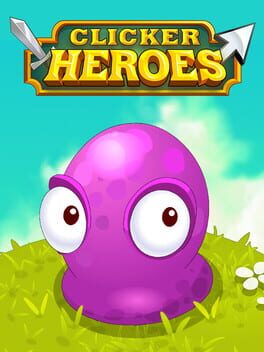
Clicker Heroes translates Cookie Clicker's formula into an RPG wrapper: click enemies, hire heroes that auto-fight, then ascend for permanent multipliers — near-identical core loop.
Key difference: Combat framing instead of baking; hero roster instead of buildings.
Best for: Players who want Cookie Clicker's prestige loop with an RPG coat.
Skip if: You prefer Cookie Clicker's surreal baking theme.
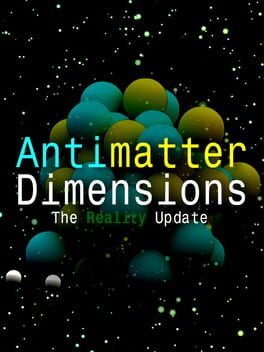
Antimatter Dimensions is a mathematically deep incremental game with layered dimension-buying, multiple prestige tiers, and numbers that grow to astronomical scales — Cookie Clicker for spreadsheet lovers.
Key difference: Abstract numbers-only presentation; no art or comedy.
Best for: Players who want the deepest possible prestige-loop optimisation.
Skip if: You need visual charm or a humorous theme.
Melvor Idle fuses idle clicking with RuneScape-style skill grinding — train dozens of skills passively while offline, buy upgrades, and watch stats compound over weeks.
Key difference: RPG skill system adds breadth; less absurdist, more systematic.
Best for: Cookie Clicker fans who want idle depth with RPG character growth.
Skip if: You want a single satisfying loop rather than many parallel ones.
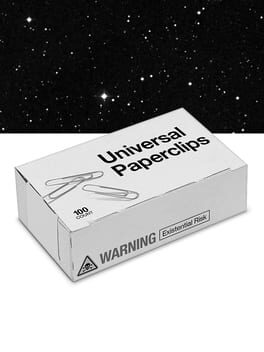
Universal Paperclips is a browser idle game where you automate paperclip production from a single click to a galaxy-spanning AI — sharing Cookie Clicker's escalating absurdist scope and prestige-like phase shifts.
Key difference: Single playthrough with an ending; no infinite loop.
Best for: Fans of Cookie Clicker's lore escalation and philosophical humour.
Skip if: You want an endless replayable idle loop.
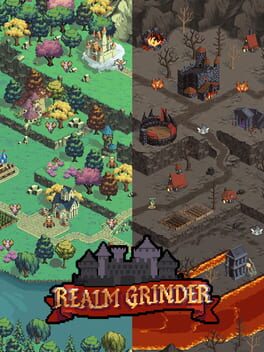
Realm Grinder offers Cookie Clicker-style building chains and upgrades across multiple faction paths, with one of the deepest prestige systems in the idle genre.
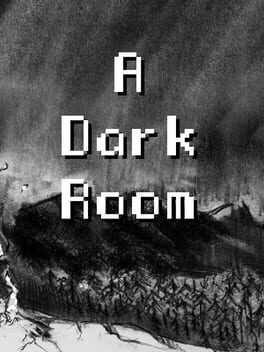
A Dark Room begins as a single button click and expands into a full survival idle narrative — directly inspired by the same minimalist browser tradition as Cookie Clicker.
Key difference: Narrative mystery unfolding beneath the idle layer; has an ending.
Best for: Players who want idle mechanics with atmospheric storytelling.
Skip if: You want pure number optimisation without a narrative.
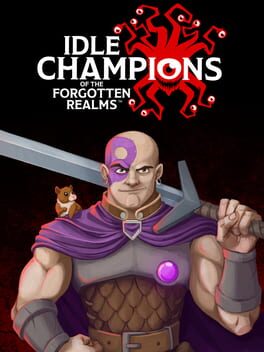
Idle Champions fuses D&D characters with a Cookie Clicker-style formation upgrade loop — place heroes, unlock abilities, and reset for permanent bonuses.
Stardew Valley builds a similar loop of earning resources, unlocking upgrades, and watching numbers compound over time. Its business and farming progression shares Cookie Clicker's addictive "just one more purchase" rhythm.
Key difference: Active real-time farming RPG, not a passive idle clicker.
Best for: Players who want idle-style progression with a story and world.
Skip if: You only want passive, hands-off number growth.
Animal Crossing: New Horizons layers incremental island development and daily resource collection into a loop that rewards checking in repeatedly — much like Cookie Clicker's persistent accumulation.
Key difference: Structured daily real-time calendar; far more social and exploratory.
Best for: Idle fans who want a gentle, living world to tend.
Skip if: You dislike waiting on real-world timers for progress.
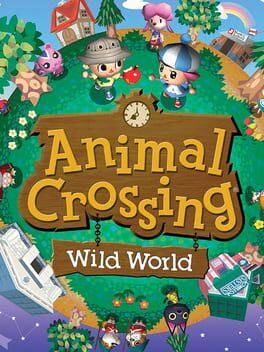
Animal Crossing: Wild World is the handheld predecessor of the same incremental collect-and-build loop, with bells (currency) accumulating and upgrades unlocking over time.
Key difference: DS hardware; older, smaller feature set than New Horizons.
Best for: Players who want the AC idle loop on a handheld classic.
Skip if: You need modern quality-of-life features.
Civilization V delivers the "one more turn" compulsion loop through exponentially scaling resource chains and tech-tree unlocks — structurally close to Cookie Clicker's upgrade ladder.
Key difference: Full 4X strategy with opponents, war, and diplomacy.
Best for: Idle fans craving deep strategic decisions behind the numbers.
Skip if: You want a single-resource loop without complexity.
Anno 1800 builds production chain networks where each new building feeds more automation — a satisfying equivalent to buying Grandmas, Factories, and Portals.
Key difference: Real-time city builder requiring active city layout management.
Best for: Players who love optimising automated resource pipelines.
Skip if: You want a purely passive clicking experience.
RimWorld has a colony-building loop where each new colonist and structure compounds your output, echoing Cookie Clicker's exponential scaling — but with emergent storytelling on top.
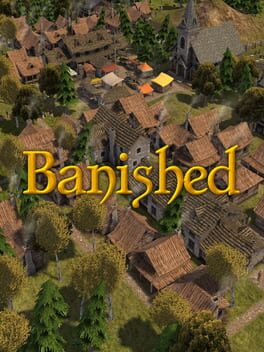
Banished tasks you with growing a medieval settlement by efficiently chaining resource producers — a quieter, slower equivalent to stacking Cookie Clicker buildings.
Key difference: No prestige or reset; permanent consequence for poor decisions.
Best for: Players who want a calm, contemplative resource sim.
Skip if: You need comedy, absurdism, or a "restart" loop.
Papers, Please is a repetitive clicking task turned into darkly comic commentary — sharing Cookie Clicker's loop of performing the same action over and over while the stakes quietly escalate.
Key difference: Narrative puzzle game; morally heavy, not lighthearted.
Best for: Idle fans who want clicking with meaning and consequence.
Skip if: You want numbers to go up without moral weight.
Dave the Diver wraps a business management loop — upgrading your sushi restaurant, unlocking new menu items, watching revenue grow — in a package that echoes Cookie Clicker's business-theme progression.
Key difference: Active diving gameplay splits time with the management layer.
Best for: Players who want idle business growth with action variety.
Skip if: You only want pure passive idle mechanics.
Pony Island is a meta browser-game-adjacent experience that breaks its own interface — much like Cookie Clicker's late-game self-aware humour and grandmapocalypse twists.
Key difference: Horror-tinged puzzle narrative; not an idle or clicker game.
Best for: Cookie Clicker fans who loved its fourth-wall-breaking absurdity.
Skip if: You want resource accumulation, not a puzzle story.
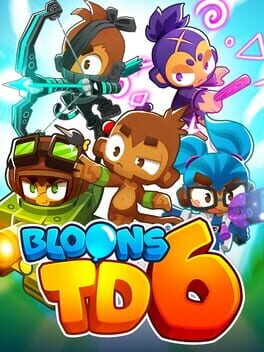
Bloons TD 6 has an incremental upgrade tree and the satisfaction of watching automated towers compound their output — loosely analogous to buying Cookie Clicker buildings.
Key difference: Active tower-defence game requiring map placement strategy.
Best for: Players who want idle-style upgrades with spatial puzzles.
Skip if: You want fully passive background progress.
FTL: Faster Than Light features resource management, crew and ship upgrades, and repeated runs that scale up your power — sharing Cookie Clicker's number-crunching and restart loop.
Key difference: Real-time roguelike with combat; runs end in failure or success.
Best for: Idle fans who want a tighter, skill-based progression loop.
Skip if: You want endless passive accumulation without game-overs.
No prestige or reset; permanent consequence for poor decisions.
PC
What makes a game truly feel like Cookie Clicker?
The defining feature is the three-stage idle loop: active clicking for early resources, building-based automation that lets the game run unattended, and a prestige or ascension mechanic that resets progress while granting permanent multipliers to make each run faster. Games like Adventure Capitalist and Clicker Heroes follow this template almost exactly. A secondary hallmark is absurdist tonal escalation — Cookie Clicker starts with baking and ends with time travel and grandma eldritch horrors, so games that share that self-aware comedy (like Universal Paperclips turning paperclip production into AI apocalypse) hit especially close.
Production-chain city builders like Anno 1800 and resource sims like Stardew Valley scratch the same itch for players drawn to the optimisation side of Cookie Clicker — the satisfaction of setting up a system that runs itself — even though they require active participation and lack a true idle layer.
Best idle alternatives for Cookie Clicker veterans seeking more depth
If you've milked every Cookie Clicker prestige and want more mechanical complexity, Antimatter Dimensions offers the deepest optimisation rabbit hole in the genre — its layered prestige tiers and abstract number systems will occupy veterans for hundreds of hours. Realm Grinder adds meaningful faction choices to each prestige run, making resets feel like strategic decisions rather than a routine. For an idle game with RPG breadth, Melvor Idle channels RuneScape's skill-grinding structure into a fully passive format.
For players who want the idle premise but with a narrative payoff, A Dark Room and Universal Paperclips are essential browser experiences that grow from a single button into something much stranger — exactly the flavour of escalation that Cookie Clicker fans love in the grandmapocalypse arc.
If you want Cookie Clicker's "just one more upgrade" feeling in a richer game world
From the broader candidate pool, Stardew Valley best replicates the compulsive upgrade ladder: every in-game day ends with you eyeing the next tool upgrade or greenhouse unlock the way Cookie Clicker players eye the next building tier. Civilization V delivers the same "one more turn" paralysis through tech trees and resource scaling that structurally mirror Cookie Clicker's upgrade chains. And RimWorld captures the joy of watching an automated system you built compound in complexity — colonists and machines replacing the cursor clicks — albeit with considerably more chaos and depth layered on top.
Is there a game exactly like Cookie Clicker but with different themes?
Adventure Capitalist (business theme) and Clicker Heroes (RPG/combat theme) are the closest structural clones — same click-to-automate-to-prestige loop, just reskinned. Universal Paperclips offers the same loop in a sci-fi narrative wrapper with a definitive ending.
What idle games can I play offline or in the background like Cookie Clicker?
Melvor Idle, Adventure Capitalist, and Clicker Heroes all have robust offline progress systems that calculate resources earned while the game is closed — a core feature Cookie Clicker also popularised.
Are there any "games like Cookie Clicker" on Steam?
Yes — Clicker Heroes, Realm Grinder, Melvor Idle, Idle Champions of the Forgotten Realms, and Antimatter Dimensions are all available on Steam and represent the best idle/incremental options on the platform.
What should I play if I liked Cookie Clicker's weird lore and grandmapocalypse?
Universal Paperclips mirrors that tonal escalation most closely, turning mundane production into existential sci-fi horror. Pony Island from the candidate list also shares the meta, fourth-wall-breaking humour of Cookie Clicker's darker secrets.
Is Stardew Valley similar to Cookie Clicker?
Loosely — both reward repeatedly checking in to spend accumulated resources on upgrades that generate more resources. But Stardew Valley is an active RPG requiring real-time input, while Cookie Clicker is a passive idle game. If you want the optimisation satisfaction with a living world, Stardew Valley is a great adjacent pick; if you want the pure idle loop, Adventure Capitalist is closer.
 92%
92%