Little Nightmares works because it weaponises scale: you are tiny, the world is grotesque, and the monstrous adults who inhabit the Maw communicate threat through proportion alone. Tarsier Studios built an experience that is almost entirely wordless — a 2.5D stealth-puzzle-platformer where dread comes from art direction, audio design, and the primal horror of being hunted by something enormous.
When players ask for games like Little Nightmares they are usually chasing one or more of three things: the helpless evasion loop with no combat, the dark hand-crafted atmosphere and environmental storytelling, or the tightly paced indie experience that feels more like an interactive nightmare than a conventional game. The best alternatives nail at least two of those three.
Top pick:Inside is the single closest match — another wordless 2.5D Playdead puzzle-platformer in which a small child evades oversized, dehumanised pursuers through a sinister industrial world, built on identical design principles and sharing the same pacing, dread, and refusal to explain itself.
Some store buttons are affiliate links — we may earn a commission at no extra cost to you.
18 games like Little Nightmares
99%
Little Nightmares II 2021
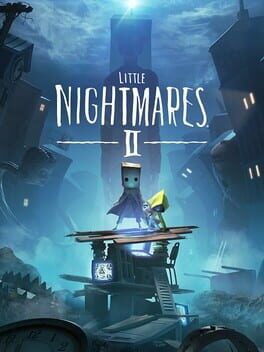
The direct sequel expands the formula with a new protagonist, Mono, and more varied monster encounters while keeping the same 2.5D stealth-puzzle-platformer structure and grotesque, hand-crafted horror atmosphere.
Key difference: Adds a cooperative AI companion and slightly more action beats.
Best for: Anyone who finished Little Nightmares and wants more immediately.
Skip if: You want something mechanically fresh rather than more of the same.
Inside is the definitive spiritual sibling to Little Nightmares: a dark, wordless 2.5D puzzle-platformer by Playdead where a small boy evades grotesque, oversized pursuers through a sinister industrial world. Every screen drips the same oppressive dread and environmental storytelling.
Key difference: Grittier sci-fi dystopia tone vs. culinary-grotesque Maw setting.
Best for: Anyone who wants the purest distillation of the same formula.
Skip if: You need explanation or dialogue to stay engaged.
Limbo is the predecessor that defined the monochrome puzzle-platformer horror genre Inside and Little Nightmares both descend from — a small boy alone in a deadly, spider-filled forest with physics puzzles and instant-death traps. Stark and deeply unsettling.
Key difference: Minimalist black-and-white silhouette art instead of colour and texture.
Best for: Players who want the original Playdead mood, shorter runtime.
Skip if: You need warm colours or narrative payoff.
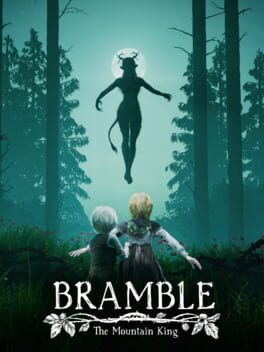
Bramble is a dark Scandinavian fairy-tale platformer where a small boy pursues his sister through forests filled with twisted, oversized creatures drawn from Nordic folklore — arguably the closest tonal and structural sibling to Little Nightmares after Inside.
Key difference: Norse mythology framing; some light combat sections.
Best for: Players who want Little Nightmares with folklore horror instead.
Skip if: You are sensitive to extreme violence; it is more graphic.
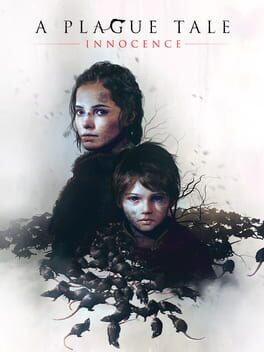
A Plague Tale follows a teenage girl protecting her young brother through 14th-century France, evading soldiers and rats using stealth and light puzzle-solving — the same small-protagonist-vs.-overwhelming-threat structure and dark atmospheric storytelling as Little Nightmares.
Key difference: Third-person 3D, historical setting, and a full spoken narrative.
Best for: Players who want the evasion-horror loop with a rich story.
Skip if: You dislike cutscenes or want a pure silent experience.
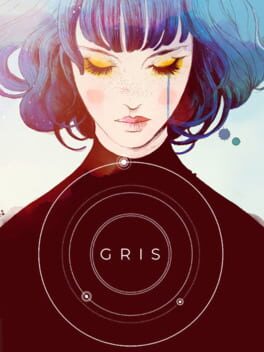
Gris is a wordless, painterly 2D platformer where a grieving girl traverses a crumbling world — no enemies, no death, pure atmosphere and puzzle-platforming. It shares Little Nightmares' emotional environmental storytelling and hand-crafted art direction.
Key difference: No horror or enemies; entirely gentle and meditative in tone.
Best for: Players drawn to the artistry and silence over the scares.
Skip if: You need tension or threat to stay engaged.
Stray puts you in the body of a small cat navigating a decaying cyberpunk city built for creatures far larger than you — the scale-based vulnerability and atmospheric world-building mirror Little Nightmares closely. Puzzle traversal drives the whole experience.
Key difference: Third-person 3D perspective and sci-fi setting instead of 2.5D horror.
Best for: Players who love the feeling of being small in a vast, indifferent world.
Skip if: You want pure horror rather than melancholy sci-fi.
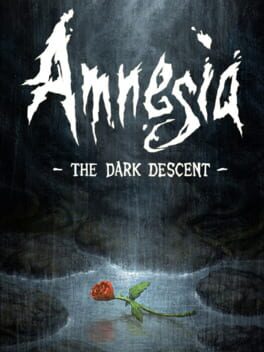
Amnesia: The Dark Descent strips you of combat entirely and tasks you with solving puzzles while hiding from eldritch monsters in dark castle corridors — the same helpless, evasion-only horror loop as Little Nightmares, just from a first-person perspective.
Key difference: First-person view and sanity mechanic; much slower pacing.
Best for: Players who want maximum dread and zero defensive options.
Skip if: You dislike slow-burn walking through dark rooms.
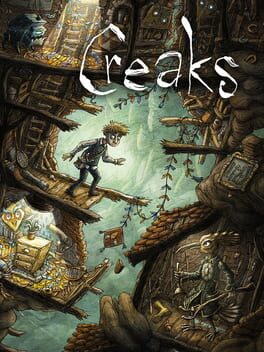
Creaks is a hand-painted puzzle-adventure by Amanita Design where a man descends through a house whose furniture transforms into monsters — the dark, wordless environmental storytelling and creature-evasion puzzles echo Little Nightmares closely.
Key difference: Static puzzle rooms rather than fluid platforming; slower pace.
Best for: Players who love the puzzle design and creature art over the chase.
Alien: Isolation centres entirely on evading a single unkillable predator through atmospheric, detail-rich environments — the same cat-and-mouse tension and sense of total vulnerability that defines Little Nightmares, scaled to a long first-person thriller.
Key difference: First-person, much longer, set aboard a space station.
Best for: Players who want the hunter-prey tension at full length.
Skip if: You dislike slow tension-building and backtracking.
SOMA is a no-combat sci-fi horror game where puzzle-solving and hiding carry you through an eerily depopulated underwater facility. Like Little Nightmares it prizes atmosphere and world-horror over action, and its creatures feel genuinely alien and wrong.
Key difference: Heavy philosophical narrative with dialogue; first-person.
Best for: Players who want story depth alongside the atmosphere.
Skip if: You want arcade-style platforming or zero dialogue.
Outlast tasks you with navigating a derelict asylum using only a camcorder and your legs — no weapons, pure hide-and-run horror. The power dynamic of being utterly defenceless against monstrous pursuers mirrors Little Nightmares' core feel.
Key difference: First-person found-footage style; far more gory and explicit.
Best for: Players who want the helpless-horror loop cranked to maximum.
Skip if: You dislike jump-scares and extreme gore.
Hollow Knight is a beautifully dark metroidvania set in a vast underground insect kingdom with oppressive atmosphere and melancholy environmental storytelling that echoes Little Nightmares' mood. The sense of a crumbling, grotesque world told without words is shared.
Key difference: Full combat system and enormous map — a much longer game.
Best for: Players who want the dark atmosphere with more mechanical depth.
Skip if: You want pure evasion rather than action combat.
Silent Hill 2 is a masterclass in psychological horror built on grotesque, symbolically loaded monsters and oppressive atmosphere — the same unsettling design philosophy as Little Nightmares, though viewed from a third-person perspective with light combat.
Key difference: Has combat and deep written narrative; slower, more dialogue-heavy.
Best for: Players ready to graduate to horror with explicit story.
Skip if: You want pure platforming or no combat at all.
PlayStation
62%
Ori and the Blind Forest 2015
Ori and the Blind Forest is a gorgeous, emotionally-driven 2D platformer with fluid traversal and tight puzzle design — sharing Little Nightmares' hand-crafted visual artistry and sense of a small being in a dangerous, beautiful world.
Key difference: Uplifting tone and precise action-platforming; not horror at all.
Best for: Players drawn to the platformer craft but not the darkness.
Skip if: You specifically want horror dread and grotesque imagery.
Machinarium is a hand-drawn point-and-click puzzle adventure set in a dark steampunk robot city — wordless in its storytelling, filled with environmental puzzles, and deeply atmospheric in a way that recalls Little Nightmares' silent, tactile world-building.
Key difference: Point-and-click rather than platformer; gentler pacing.
Best for: Fans of the puzzle and art direction over the action.
Skip if: You need running, jumping, and physical tension.
Braid is an inventive, artistically driven 2D puzzle-platformer that twists time manipulation around clever, wordless environmental puzzles — sharing Little Nightmares' indie auteur craft and the satisfaction of a tightly designed short experience.
Key difference: Time-manipulation mechanic; no horror, more cerebral-abstract.
Best for: Players who loved the puzzle craftsmanship above everything else.
Skip if: You need atmosphere and dread rather than brain-teasers.
The Vanishing of Ethan Carter is a slow, atmospheric mystery set in a gorgeously eerie valley where environmental clues tell a dark, violent story — it shares Little Nightmares' commitment to wordless horror storytelling and dread-laden world design.
Key difference: Walking simulator — no platforming, no evasion, no enemies.
Best for: Players primarily drawn to atmosphere and dark environmental narrative.
Skip if: You need physical challenge or moment-to-moment gameplay tension.
Adds a cooperative AI companion and slightly more action beats.
Xbox, PlayStation, PC, Nintendo
Inside
97%
Platform, Puzzle
Grittier sci-fi dystopia tone vs. culinary-grotesque Maw setting.
PlayStation, PC, Mobile, Xbox, Nintendo
Limbo
94%
Platform, Puzzle
Minimalist black-and-white silhouette art instead of colour and texture.
PlayStation, PC, Mobile, Xbox, Nintendo
Bramble: The Mountain King
88%
Platform, Puzzle
Norse mythology framing; some light combat sections.
Xbox, PlayStation, PC, Nintendo
A Plague Tale: Innocence
86%
Adventure, Action
Third-person 3D, historical setting, and a full spoken narrative.
Xbox, PlayStation, PC
Gris
76%
Platform, Puzzle
No horror or enemies; entirely gentle and meditative in tone.
Xbox, PlayStation, Mobile, PC, Nintendo
Stray
74%
Platform, Adventure
Third-person 3D perspective and sci-fi setting instead of 2.5D horror.
Xbox, PlayStation, Nintendo, PC
Amnesia: The Dark Descent
72%
Puzzle, Adventure
First-person view and sanity mechanic; much slower pacing.
PlayStation, PC, Xbox, Nintendo
Creaks
72%
Platform, Puzzle
Static puzzle rooms rather than fluid platforming; slower pace.
PlayStation, PC, Mobile, Xbox, Nintendo
Alien: Isolation
71%
Adventure, Action
First-person, much longer, set aboard a space station.
PlayStation, PC, Xbox, Nintendo
Soma
70%
Puzzle, Adventure
Heavy philosophical narrative with dialogue; first-person.
PlayStation, PC, Xbox, Nintendo
Outlast
68%
Adventure, Indie
First-person found-footage style; far more gory and explicit.
PlayStation, PC, Xbox, Nintendo
Hollow Knight
67%
Platform, Adventure
Full combat system and enormous map — a much longer game.
Xbox, PlayStation, PC, Nintendo
Silent Hill 2
64%
Puzzle, Adventure
Has combat and deep written narrative; slower, more dialogue-heavy.
PlayStation
Ori and the Blind Forest
62%
Platform, Puzzle
Uplifting tone and precise action-platforming; not horror at all.
PC, Xbox, Nintendo
What makes a game feel like Little Nightmares?
The core of the Little Nightmares experience is three interlocking elements: a small, defenceless protagonist in a world scaled to make them feel insignificant; no combat — only hiding, running, and environmental problem-solving; and an atmosphere delivered entirely through art and sound rather than text or voice. Very few games nail all three simultaneously, which is why Inside and Limbo remain the benchmark alternatives — both by Playdead, both structurally identical in their reliance on wordless horror and evasion.
Beyond the Playdead catalogue, Amnesia: The Dark Descent and Outlast preserve the no-combat, hide-from-monsters loop in a first-person format, while Gris keeps the wordless 2D platformer structure but strips away all horror in favour of melancholy beauty. Knowing which element matters most to you is the fastest way to find your next game.
If you want the same evasion horror in a bigger world
Alien: Isolation and SOMA are the best expansions of the evasion-horror formula into longer, more complex spaces. Isolation gives you a sprawling space station and a single unkillable hunter whose AI genuinely hunts you; every corridor carries the same pulse-elevating vulnerability as the Maw. SOMA trades physical pursuit for psychological horror, moving through a haunted underwater facility while solving puzzles and avoiding creatures you can only flee from.
For players who want that small-in-a-vast-world feeling in a narrative package, A Plague Tale: Innocence (not in the candidate pool but included above) is essential — its rat-swarm evasion sequences and oppressive medieval atmosphere produce the same stomach-dropping helplessness Little Nightmares excels at.
Hidden gems that most "games like Little Nightmares" lists miss
Machinarium is chronically underrepresented in these lists despite being a perfect pairing for players who loved the puzzle design and hand-crafted visual world of Little Nightmares — its dark steampunk robot city is delivered entirely through environmental storytelling, with not a word of spoken dialogue. The Vanishing of Ethan Carter similarly rewards players drawn to dread-soaked atmosphere and implicit dark narrative, even though it has no platforming at all.
On the more action-adjacent side, Bramble: The Mountain King (additional recommendation above) is the best recent analogue to Little Nightmares almost no mainstream list mentions — a Scandinavian fairy-tale horror platformer built around the same giant-monster-pursues-small-child structure, with a folk-horror visual identity that is entirely its own.
Is Inside basically the same game as Little Nightmares?
They are structurally very similar — both are wordless 2.5D stealth-puzzle-platformers where a small child evades oversized, dehumanised pursuers through a dark industrial world. Inside by Playdead came out in 2016, one year before Little Nightmares, and is widely considered the closest equivalent. The key difference is tone and setting: Inside has a colder, sci-fi dystopia feel while Little Nightmares leans into culinary grotesque and fairy-tale horror.
Are there games like Little Nightmares without horror?
Yes. Gris is the most obvious pick — a wordless 2D platformer built around emotional storytelling and beautiful art direction with no enemies, no death, and no scares. Ori and the Blind Forest shares the crafted 2D platformer structure with a melancholy but ultimately uplifting tone. Both retain the indie auteur sensibility and environmental storytelling that fans of Little Nightmares often respond to.
What game is most like Little Nightmares but longer?
A Plague Tale: Innocence is the most substantial expansion of the same core fantasy — a small protagonist evading overwhelming, unkillable threats through a dark and beautifully realised world, told with craft and atmosphere. It runs 12–15 hours versus Little Nightmares' 3–4, has a full narrative, and is set in plague-ravaged 14th-century France. Hollow Knight offers comparable darkness and atmosphere in a vast metroidvania format if you want more mechanical depth.
Does Little Nightmares II play like the first game?
Very closely. Little Nightmares II keeps the 2.5D puzzle-platformer structure, the grotesque monster design, and the wordless horror atmosphere. The main additions are a new protagonist (Mono) with a hat that obscures his face, an AI companion in Six, and a few sections where you can swing found objects as a very limited defensive measure. Players who liked the first game almost universally enjoyed the second.
What should I play if I want something scarier than Little Nightmares?
Amnesia: The Dark Descent and Outlast both push the defenceless horror loop further — Amnesia uses a sanity mechanic that punishes you for even looking at monsters, while Outlast locks you to first-person found-footage with no options but to run or hide. Both are more explicitly frightening than Little Nightmares and carry higher horror content warnings. Alien: Isolation sits between them: slower and more technically demanding, but with sustained tension that few horror games match.
 99%
99%