Overwatch's appeal comes from a specific and rare combination: a roster of wildly distinct heroes — each with a full ability kit, an ultimate, and a defined team role — locked into fast-paced objective-based 5v5 combat. The magic is in the counter-pick tension, the ult economy, and the way a well-assembled team feels like a single organism.
When players ask for games like Overwatch, they're really asking for one or more of those layers: hero ability diversity, class-role team coordination, competitive objective play, or the colorful, character-rich sci-fi tone. The best alternatives deliver at least two of those pillars simultaneously.
Top pick:Team Fortress 2 is the single closest pick in this list — it invented the class-based objective shooter formula that Overwatch refined, and its nine classes map almost directly onto Overwatch's role archetypes, down to the comedic personality, the sci-fi-meets-action aesthetic, and the payload escort modes that Overwatch fans know by heart.
Some store buttons are affiliate links — we may earn a commission at no extra cost to you.
19 games like Overwatch
92%
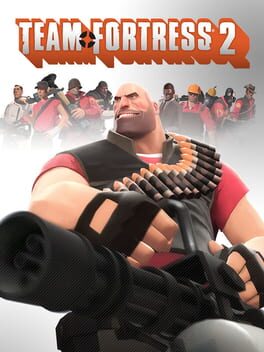
Team Fortress 2 2007
Team Fortress 2 is the direct spiritual ancestor of hero shooters: nine distinct classes each with unique weapons, abilities, and roles lock into tight objective-based team combat. The colorful art style, comedic personality, and emphasis on class synergy over raw aim mirror Overwatch almost exactly.
Key difference: No hero ultimates; balance updates have slowed since 2017.
Best for: Players who want a purer, slower-paced class shooter.
Skip if: You need regular content updates and a polished modern UI.
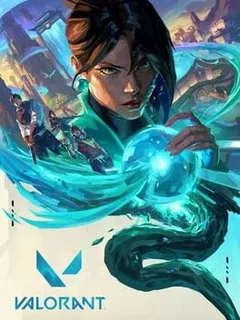
Valorant fuses Overwatch's hero-ability system with Counter-Strike's tactical one-life round structure — each Agent has unique signature and ultimate abilities that must be coordinated with team strategy in 5v5 attack/defend matches.
Key difference: One life per round; far more tactical and punishing than Overwatch.
Best for: Competitive Overwatch players who want a higher-stakes format.
Skip if: You dislike slow tactical play and permadeath rounds.
Apex Legends transplants Overwatch's hero-ability formula into a battle royale, giving each Legend a distinct kit — barriers, drone heals, recon scans — that rewards team composition thinking. The gunplay is fast and fluid with a vibrant sci-fi cast.
Key difference: Battle royale structure with no respawns until next match.
Best for: Overwatch fans who want more lethal, higher-stakes rounds.
Skip if: You dislike the randomness of loot-based survival games.
Destiny 2 is a class-based sci-fi shooter where each subclass wields distinctive superpowers and team synergies matter in both PvP and PvE. The colorful gunplay, eccentric characters, and ability-driven moment-to-moment action share Overwatch's DNA.
Key difference: Massive shared-world PvE loop dominates; PvP is secondary.
Best for: Overwatch players who want a persistent progression system.
Skip if: You want pure competitive matches without hours of PvE grind.
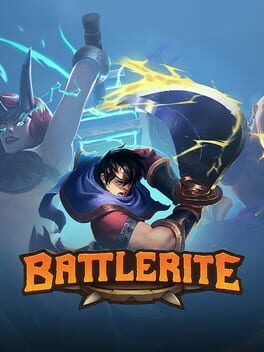
Battlerite is a top-down team arena brawler where each champion has a full kit of ability-based attacks mapped to the same concept as Overwatch heroes — every champion fills a distinct role and has a powerful ultimate. The team fight design is remarkably similar.
Key difference: Top-down arena brawler, not a first-person or third-person shooter.
Best for: Overwatch players who want pure ability-versus-ability team duels.
Skip if: You prefer shooter mechanics over brawler/MOBA-style play.
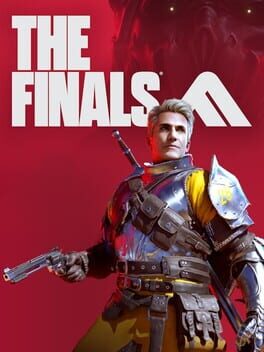
The Finals is a team-based competitive shooter with destructible arenas and specialist loadouts — each build fills a tank, healer, or damage role that maps almost directly onto Overwatch's role queue. The chaotic verticality and colorful spectacle feel very familiar.
Key difference: No character-locked heroes; roles are built through equipment.
Best for: Players who want Overwatch-style roles with more gunplay flexibility.
Skip if: You rely on iconic hero personalities and narrative lore.
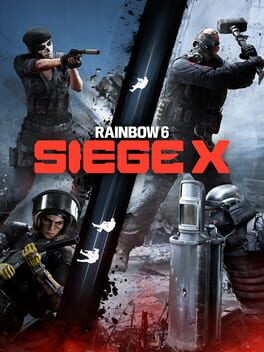
Rainbow Six Siege uses named Operators with unique gadgets — breach charges, healing drones, deployable shields — in tight 5v5 matches where team composition and ability synergy decide rounds. The operator-pick phase echoes Overwatch's hero-select tension.
Titanfall 2 has the most mechanically satisfying FPS movement in the genre — wall-running, grappling, and mech abilities create a kinetic feel that rivals Overwatch's hero traversal skills. The multiplayer modes include objective formats with distinct pilot roles.
Key difference: Smaller player base; best known for its singleplayer campaign.
Best for: Overwatch movement fans who also want a great story mode.
Skip if: You need an active competitive ranked scene.
Quake Champions grafts champion-specific active abilities and passive traits onto classic arena shooter mechanics — each champion has a different health/armor pool and a unique skill, creating a hero-pick layer over blazing fast deathmatch.
Key difference: Far faster, more individual skill-based, no team synergy focus.
Best for: Overwatch aim-trainers who want a pure arena challenge.
Skip if: You rely on team composition and coordinated abilities.
Borderlands 2 builds its co-op shooter around four distinct classes with skill trees and signature abilities — the same role-diversification logic as Overwatch, wrapped in irreverent sci-fi comedy and a vibrant cel-shaded art style.
Key difference: PvE campaign focus with loot progression, no competitive PvP.
Best for: Overwatch fans who prefer co-op with friends over competitive.
Skip if: You exclusively want PvP team-vs-team matches.
Warframe gives players a diverse roster of Warframes — each a playable character with four unique abilities — in fast, acrobatic sci-fi third-person shooting that rewards team compositions. The flashy ability usage and colourful character designs echo Overwatch's feel.
Key difference: Free-to-play PvE grind loop, PvP is niche and undercooked.
Best for: Ability-shooter fans who want hundreds of hours of PvE content.
Skip if: You want structured competitive matches with quick sessions.
Helldivers 2 is a team-based sci-fi co-op shooter where squad roles and coordinated ability use — calling in stratagems, covering flanks, reviving teammates — demand the same communication as Overwatch. The chaotic third-person firefights are highly satisfying.
Key difference: PvE only; no competitive hero-vs-hero modes.
Best for: Overwatch support players who love keeping teammates alive.
Skip if: You want competitive ranked play against other human teams.
Unreal Tournament 2004 is a pure arena shooter with distinct movement mechanics, objective modes like Onslaught and Assault, and blazing fast team combat. It established many of the design ideas hero shooters later refined.
Key difference: No hero abilities; success depends entirely on aim and map control.
Best for: Overwatch players who want a purist skill-ceiling arena experience.
Skip if: You need an active matchmaking player base.
Counter-Strike: Global Offensive is a competitive 5v5 team shooter built around side-specific asymmetric roles and tight objective play, sharing Overwatch's emphasis on team coordination and round economy. The tension of a coordinated push is very similar.
Key difference: No hero abilities; extremely aim-dependent tactical gunplay.
Best for: Players who want pure competitive team shooting with no ability variance.
Skip if: You dislike high mechanical aim requirements and long learning curves.
Halo 3 set the template for console competitive team shooters with balanced multiplayer modes like CTF, King of the Hill, and objective play that mirror Overwatch's payload and capture formats. The colorful sci-fi tone and co-op feel are comparable.
Key difference: No hero abilities; all players have identical base kits.
Best for: Console players who want classic objective team shooting.
Skip if: You specifically want character diversity and hero ultimates.
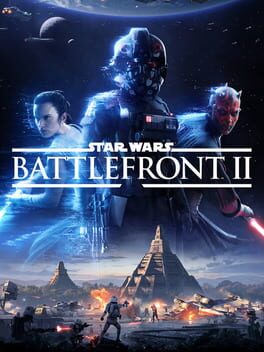
Star Wars Battlefront II (2017) features hero characters with distinct abilities fighting in large team-based objective modes across iconic sci-fi locations — a surface-level DNA match with Overwatch's diverse hero roster and capture-point formats.
Key difference: Heroes are unlocked mid-match as power rewards, not picked upfront.
Best for: Overwatch fans who want a Star Wars skin on team-based shooting.
Skip if: You want balanced hero drafting and ranked competitive modes.
Battlefield 1 is a class-based team shooter — Assault, Medic, Support, Scout — with strong emphasis on coordinated objective play on large maps. The class-role interdependence mirrors Overwatch's tank/healer/damage structure in a historical military wrapper.
Key difference: Far larger maps; emphasis on vehicle warfare and infantry scale.
Best for: Players who want class-role teamwork in a grounded military setting.
Skip if: You want quick-burst hero ability combat in small-scale arenas.
Ratchet & Clank (2016) is a vibrant sci-fi shooter with a huge arsenal of wildly creative weapons and gadgets, matching Overwatch's colorful aesthetic, comedic tone, and love of outlandish abilities. Though single-player, the moment-to-moment combat feel is comparable.
Key difference: Entirely single-player; no hero selection or competitive play.
Best for: Overwatch fans who want a relaxed, story-driven ability shooter.
Skip if: You need multiplayer or any competitive element.
League of Legends shares Overwatch's hero-pick/counter-pick meta, distinct character ultimates, and team-composition theory — if you love the strategic layer of Overwatch's hero select, the same thinking applies here. The colorful champion roster and role diversity are similar.
Key difference: Top-down MOBA, not a first-person shooter at all.
Best for: Overwatch strategy enthusiasts who want deeper draft mechanics.
Skip if: You want FPS or third-person shooting as the core mechanic.
Smaller player base; best known for its singleplayer campaign.
PlayStation, PC, Xbox
Quake Champions
72%
Shooter, Action
Far faster, more individual skill-based, no team synergy focus.
PC
Borderlands 2
70%
Shooter, Action
PvE campaign focus with loot progression, no competitive PvP.
PlayStation, PC, Mobile, Xbox, Nintendo
Warframe
68%
Shooter, Action
Free-to-play PvE grind loop, PvP is niche and undercooked.
Xbox, PlayStation, Nintendo, Mobile, PC
Helldivers 2
67%
Shooter, Action
PvE only; no competitive hero-vs-hero modes.
Xbox, PC, PlayStation
Unreal Tournament 2004
65%
Shooter, Action
No hero abilities; success depends entirely on aim and map control.
PC
Counter-Strike: Global Offensive
62%
Shooter, Action
No hero abilities; extremely aim-dependent tactical gunplay.
PlayStation, PC, Xbox
Halo 3
61%
Shooter, Action
No hero abilities; all players have identical base kits.
PC, Xbox
What makes a game truly feel like Overwatch?
The three pillars are: distinct heroes with cooldown-based abilities (not just different guns), a team-role system where tanks, healers, and damage dealers depend on each other, and competitive objective modes beyond simple deathmatch. Team Fortress 2 nails all three with nine classes in CTF, payload, and control-point modes. Apex Legends delivers the hero-ability and role-diversity pillars inside a battle royale shell — Lifeline's heals and Gibraltar's dome shield create the same team-comp thinking you'd apply to Overwatch's hero select.
Paladins: Champions of the Realm (in our additional picks) is the most structurally faithful alternative, replicating Overwatch's payload and siege modes, ultimate economy, and tank/healer/flanker trinity almost beat for beat, while adding a card customization layer for hero builds.
If you want tactical depth over reflex play
Valorant takes Overwatch's hero-ability system and bolts it onto Counter-Strike's one-life-per-round tactical skeleton — Agent abilities create the same counter-pick and composition debates, but every decision carries much higher stakes. Rainbow Six Siege goes even further into tactics: its Operators each carry a gadget that fundamentally changes how a round plays, and the pre-match ban/pick phase is pure Overwatch hero-select energy translated into a breach-and-clear format.
Best picks if you want co-op instead of competitive PvP
Helldivers 2 is the standout co-op recommendation: its squad roles — each player selects different stratagems that synergize with teammates — recreate Overwatch's team-composition conversations in a PvE wrapper where communication is just as vital. Destiny 2 is a longer-haul alternative, with Hunter, Titan, and Warlock subclasses that fill damage, tank, and support roles across strikes and raids, rewarding the same kind of team-coordinated ability use that makes Overwatch satisfying.
Paladins: Champions of the Realm is the closest structural match, replicating hero ultimates, role queue, and payload modes almost identically. Among games with larger active communities, Team Fortress 2 is the most spiritually similar, and Valorant is the closest competitive alternative with a thriving ranked scene.
Is Apex Legends similar to Overwatch?
Yes, meaningfully so. Both games center on a roster of heroes with distinct ability kits and ultimates, and both reward team-composition thinking. The key difference is format: Apex is a battle royale with up to 60 players per match and a scavenging loop, while Overwatch uses structured 5v5 objective modes with pre-match hero selection.
What should I play if I like Overwatch but want something more tactical?
Valorant is the most popular step up in tactical depth — it keeps Overwatch's agent-ability system but uses Counter-Strike's one-life-per-round format, making every ability use feel more consequential. Rainbow Six Siege is even more methodical, with slower room-clearing play and Operators whose gadgets can fundamentally reshape a round.
Are there any free-to-play games like Overwatch?
Several strong options are free to play. Paladins: Champions of the Realm is the most direct free alternative with a near-identical hero-shooter format. Apex Legends is free and delivers hero abilities in a battle royale. Warframe is free and offers a deep sci-fi action shooter with character-ability variety, though its focus is PvE.
Is Team Fortress 2 still worth playing as an Overwatch alternative?
Yes, especially for players who love class-based objective play. TF2's nine classes still offer excellent role diversity across payload, control-point, and CTF modes. The main caveats are a heavily bot-populated casual mode in 2024 and no hero ultimate system — but community servers and competitive modes remain active and genuinely fun.
 92%
92%