A Way Out is beloved for one defining quality: it is built entirely around two players, refusing to compromise. Every scene, every mechanic—from prison-yard distractions to car chases—is designed so that both people are always doing something meaningful at the same moment. The split-screen never turns off, and the story of Leo and Vincent's reluctant, escalating partnership carries genuine emotional weight alongside the action.
When players ask for "games like A Way Out," they're really asking for one or more of three things: a true co-op campaign where both players matter equally, a cinematic action-adventure with varied mechanics and a strong duo dynamic, or a gritty crime-drama narrative with real consequences. The best picks on this list deliver at least two of those three.
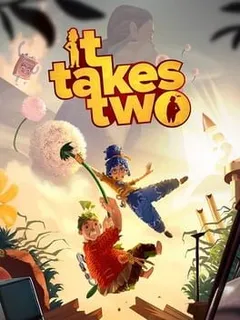
Top pick:It Takes Two is the single closest match—made by the same studio (Hazelight), with the same mandatory two-player co-op structure, the same philosophy of constantly reinventing its mechanics chapter by chapter, and an emotional character story at its core; if you loved A Way Out, It Takes Two is almost certainly the next game you should play.
Some store buttons are affiliate links — we may earn a commission at no extra cost to you.
It Takes Two is also a mandatory two-player co-op game from the same studio (Hazelight), built around a couple working through a relationship crisis. Every chapter reinvents its mechanics—just like A Way Out rotates between stealth, driving, and combat.
Key difference: No crime or prison; tone is fantastical and emotionally domestic.
Best for: Anyone who loved A Way Out's co-op variety and wants more of it.
Portal 2's co-op mode is a dedicated two-player experience where both players must communicate and coordinate to solve environmental puzzles, creating a genuine sense of shared accomplishment. The narrative is witty and cinematic throughout.
Key difference: Pure puzzle-platformer; no combat, stealth, or driving.
Best for: Pairs who want brain-teasing co-op over action.
Skip if: You disliked the puzzle segments and want action focus.
Brothers has two protagonists controlled simultaneously on one controller (or mapped to two players), solving environmental puzzles in a deeply emotional story—directly comparable to A Way Out's dual-protagonist co-op design.
Key difference: Fantasy fairy-tale world; puzzle-platformer rather than action-adventure.
Best for: Couples or friends wanting emotional two-character co-op.
Skip if: You want combat, shooting, or crime themes.
Unravel Two is a mandatory two-player co-op platformer (or solo with AI) where two yarn characters must work together physically, sharing A Way Out's philosophy that co-op cooperation should be baked into every mechanic.
Key difference: Gentle puzzle-platformer; no combat or narrative drama.
Best for: Casual co-op pairs who want low-stress teamwork.
Skip if: You want action, story weight, or adult tone.
Resident Evil 5 is built entirely around two-player co-op, with both players taking different roles and covering each other through action-heavy, narrative-driven chapters. The partner dependency mirrors A Way Out's design philosophy.
Key difference: Horror-survival tone; tighter, more combat-focused campaign.
Best for: Duos who want a longer co-op campaign with more tension.
Skip if: You dislike horror themes or repetitive third-person shooting.
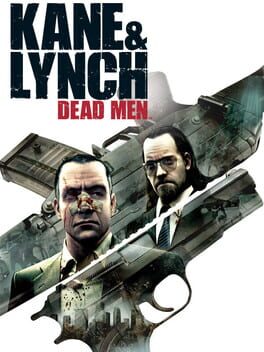
Kane & Lynch is a third-person co-op crime game about two violent criminals forced to work together across bank heists and firefights—essentially the spiritual predecessor to A Way Out's concept in tone and structure.
Key difference: Rougher production; less polished and more brutal in tone.
Best for: Players who specifically want the criminal-duo co-op crime fantasy.
Skip if: You want high production values or puzzle variety.
Gears of War has a two-player co-op campaign where both players take distinct roles in cover-based combat, with a cinematic military story driving things forward. The buddy-duo dynamic feels close to Leo and Vincent's dynamic.
Key difference: Military sci-fi setting; much heavier emphasis on cover shooting.
Best for: Action fans who want a longer co-op shooter campaign.
Skip if: You want narrative variety over pure firefight loop.
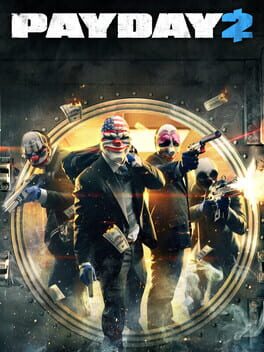
Payday 2 is a co-op heist game where a crew of criminals plans and executes elaborate jobs, blending stealth and loud gunplay—thematically the closest thing to A Way Out's criminal-protagonist angle in multiplayer.
Key difference: No narrative campaign; pure repeatable heist missions.
Best for: Those who loved the criminal heist vibes and want more co-op crime.
Skip if: You need a story and character arc to stay engaged.
The Last of Us nails the cinematic two-protagonist dynamic that A Way Out builds its story around—a reluctant partnership forged under pressure, mixing stealth, combat, and emotional narrative beats.
Key difference: Single-player only; no co-op mode in the main campaign.
Best for: Players who loved A Way Out's story and don't need a co-op partner.
Skip if: You specifically want to play with a friend.
Uncharted 4 is a cinematic action-adventure with varied mechanics—climbing, shooting, driving, stealth—and a strong character-driven narrative about two brothers navigating crime and consequence, echoing A Way Out's genre mixing.
Key difference: Single-player; no split-screen co-op outside of a separate multiplayer mode.
Best for: Solo players who want A Way Out's cinematic variety and quality.
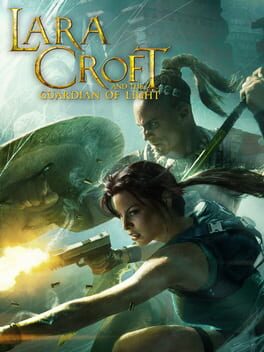
This spin-off is a top-down co-op action game where two players work through environmental puzzles and combat together, with mechanics designed specifically for two-player play—sharing A Way Out's cooperative-design-first philosophy.
Key difference: Isometric perspective; shorter and more arcade-style.
Best for: Those wanting tight co-op design on a shorter time budget.
Skip if: You want a cinematic, narrative-driven experience.
Uncharted 2 set the template for cinematic action-adventure with train sequences, rooftop chases, stealth, and explosive gunfights stitched together by a strong buddy dynamic.
Key difference: Solo campaign; lighter tone with Indiana Jones-style adventure.
Best for: Solo players after polished set-piece variety.
Heavy Rain is a cinematic narrative game where multiple characters' interlocking stories unfold simultaneously, with consequential choices and varied gameplay sequences—thematically close to A Way Out's dual-protagonist structure.
Key difference: Minimal action; almost entirely dialogue, QTEs, and investigation.
Best for: Players who loved A Way Out's story and want a purer narrative game.
Skip if: You dislike QTE-heavy, low-action gameplay.
Uncharted 3 continues the Uncharted formula with heavy set-piece variety and a deeper focus on the Drake–Sully partnership, which carries a similar emotional weight to Leo and Vincent's reluctant bond.
Key difference: Solo campaign; treasure-hunting adventure rather than crime escape.
Best for: Fans of A Way Out's duo dynamic in a solo context.
Skip if: You want co-op or a grounded crime narrative.
Telltale's The Walking Dead is a choice-driven narrative game about desperate people forming reluctant bonds under pressure—the same emotional engine that powers A Way Out's story, just without the action gameplay.
Key difference: Point-and-click adventure; almost no action mechanics.
Best for: Story-first players who want emotional impact over gameplay variety.
Skip if: You need shooting, stealth, or physical co-op.
L.A. Noire is a crime-drama set in 1940s Los Angeles where you play a detective uncovering layered criminal stories through investigation and interrogation, sharing A Way Out's cinematic crime-thriller atmosphere.
Key difference: Investigation-focused; no co-op, slower-paced than A Way Out.
Best for: Solo players who want a mature crime narrative.
Skip if: You want action variety or any co-op element.
Mafia II is a cinematic third-person crime story about two friends rising through the mob, sharing A Way Out's 1950s–60s aesthetic, crime drama narrative, and mix of driving and gunplay.
Key difference: Solo only; more linear open-world crime story, no co-op.
Best for: Players drawn to A Way Out's crime-drama setting and period feel.
Until Dawn puts multiple characters under pressure with branching choices and consequences—like A Way Out's narrative tension—though in a horror-movie context rather than a crime escape.
Key difference: Horror movie premise; minimal physical gameplay, no co-op.
Best for: Narrative fans who want high-stakes choices and twists.
Skip if: You want action, stealth, or co-op mechanics.
Sleeping Dogs blends cinematic crime storytelling with hand-to-hand combat, driving, and stealth in a third-person open world—sharing A Way Out's genre-mixing crime-protagonist feel in a solo package.
Key difference: Open-world Hong Kong; single-player undercover cop story.
Best for: Solo players who loved A Way Out's crime-action tone.
Skip if: You want co-op or a linear narrative structure.
No crime or prison; tone is fantastical and emotionally domestic.
Xbox, PlayStation, PC, Nintendo
Portal 2
80%
Adventure, Action
Pure puzzle-platformer; no combat, stealth, or driving.
PlayStation, PC, Xbox, Nintendo
Brothers: A Tale of Two Sons
80%
Adventure, Action
Fantasy fairy-tale world; puzzle-platformer rather than action-adventure.
PlayStation, PC, Mobile, Xbox, Nintendo
Unravel Two
74%
Adventure, Action
Gentle puzzle-platformer; no combat or narrative drama.
PlayStation, PC, Xbox, Nintendo
Resident Evil 5
72%
Adventure, Action
Horror-survival tone; tighter, more combat-focused campaign.
PlayStation, PC, Xbox
Kane & Lynch: Dead Men
72%
Action
Rougher production; less polished and more brutal in tone.
PlayStation, PC, Xbox
Gears of War
68%
Action
Military sci-fi setting; much heavier emphasis on cover shooting.
Xbox
Payday 2
65%
Action
No narrative campaign; pure repeatable heist missions.
PlayStation, PC, Xbox, Nintendo
The Last of Us
65%
Adventure, Action
Single-player only; no co-op mode in the main campaign.
PlayStation
Uncharted 4: A Thief's End
62%
Adventure, Action
Single-player; no split-screen co-op outside of a separate multiplayer mode.
PlayStation
Lara Croft and the Guardian of Light
60%
Adventure, Action
Isometric perspective; shorter and more arcade-style.
PlayStation, Mobile, PC, Xbox, Nintendo
Uncharted 2: Among Thieves
58%
Adventure, Action
Solo campaign; lighter tone with Indiana Jones-style adventure.
PlayStation
Heavy Rain
58%
Adventure, Action
Minimal action; almost entirely dialogue, QTEs, and investigation.
PlayStation, PC
Uncharted 3: Drake's Deception
56%
Adventure, Action
Solo campaign; treasure-hunting adventure rather than crime escape.
PlayStation
The Walking Dead
52%
Adventure, Action
Point-and-click adventure; almost no action mechanics.
PlayStation, PC, Mobile, Xbox, Nintendo
What makes a game truly feel like A Way Out?
The key ingredient isn't just co-op—it's purposeful co-op, where both players are given asymmetric roles in every situation rather than simply mirroring each other. It Takes Two nails this completely, with mechanics that physically require both players to act differently. Portal 2's co-op mode comes closest in puzzle form, with communication-dependent challenges that neither player can solve alone. Resident Evil 5 and the Gears of War series take the action-campaign route, designing entire encounters around two-player cover and support.
Beyond co-op, A Way Out's second pillar is mechanical variety—no two sections feel the same. For solo players chasing that same feeling of genre-blending set-pieces, Uncharted 4 and Uncharted 2 remain the gold standard, rotating between climbing, stealth, driving, and gunplay within a single cinematic story.
Best picks for the co-op crime and heist fantasy
If the prison-break and criminal-fugitive story is what hooked you, Payday 2 delivers the closest co-op crime fantasy—planning and executing jobs with a partner, toggling between stealth and loud chaos. The underrated Kane & Lynch: Dead Men (not in the main candidate pool) is the most tonally similar game ever made: two violent criminals forced into a partnership, with a co-op campaign that plays out like a crime movie.
Mafia II captures the same mid-century crime aesthetic and cinematic storytelling as A Way Out's later acts, though it's a solo experience. For crime drama with investigation rather than action, L.A. Noire offers the most mature crime-narrative atmosphere in the pool.
If your partner won't play—solo alternatives with the same duo dynamic
The Last of Us is the strongest solo substitute: its entire story is built around a reluctant partnership between two very different people who gradually come to trust each other under extreme pressure—exactly the emotional arc of Leo and Vincent. Heavy Rain offers a similarly cinematic multi-character narrative with branching consequences if you want less action and more story.
For emotional storytelling through cooperative character design, Brothers: A Tale of Two Sons (an "additional" pick not in the main pool) is a hidden gem that tells its entire story through the physical relationship between two brothers, and can even be played solo on one controller as a unique dual-protagonist experience.
Is there a game exactly like A Way Out but longer?
It Takes Two by the same developer is slightly longer and arguably more varied mechanically. Gears of War and its sequel offer longer co-op campaigns if you want more action. Borderlands 2 has a much longer co-op campaign if you don't mind a looter-shooter format.
Can you play A Way Out-style games solo?
A Way Out itself requires two players, but games like The Last of Us, Uncharted 4, and Heavy Rain deliver the same cinematic duo-driven narrative as a solo experience. Brothers: A Tale of Two Sons is a creative middle ground—it can be played solo on one controller, controlling both characters simultaneously.
What co-op games have a story as good as A Way Out?
It Takes Two has received near-universal praise for its story and co-op design. Portal 2's co-op mode has excellent writing. For narrative depth, The Walking Dead (Telltale) rivals A Way Out's emotional storytelling, though it's mostly point-and-click.
Are there co-op games like A Way Out on PC and console?
Yes—It Takes Two, Portal 2, Gears of War (via backwards compatibility or PC), and Resident Evil 5 are all available on both PC and modern consoles. It Takes Two even has a "Friend's Pass" letting one player invite someone who doesn't own the game, just like A Way Out.
What game should I play after finishing A Way Out?
Start with It Takes Two if you have a co-op partner—it's the spiritual successor from the same studio. If you're playing solo, The Last of Us is the strongest next choice for its character-driven crime-and-survival narrative and similar tonal range from quiet moments to intense action.
 98%
98%