Final Fantasy Tactics earns its legend through the intersection of three things done exceptionally well: a genuinely deep isometric grid-based tactical combat system built around job classes and transferable abilities, and a dark political narrative about dynastic betrayal, class warfare, and the way history is rewritten by the powerful. The War of the Lions feels adult in a way most games avoid.
When fans ask for "games like Final Fantasy Tactics," they're really asking for two things at once: that satisfying tactical grid puzzle where positioning, height, and ability sequencing matter, and a story with enough moral weight that the battles feel consequential. The best recommendations here deliver at least one of those, with the top picks delivering both.
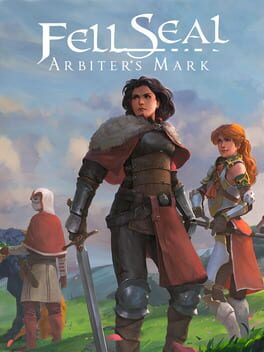
Top pick:Fell Seal: Arbiter's Mark (in "additional") is the single closest pick if you want a new FFT fix right now — it is literally designed as a spiritual successor, with transferable class abilities, isometric grid maps, and a dark political story — but from the candidate list, Fire Emblem Awakening is the tightest match: a polished SRPG with grid positioning, class promotion, ensemble character investment, and real narrative stakes baked into every map.
Some store buttons are affiliate links — we may earn a commission at no extra cost to you.
24 games like Final Fantasy Tactics
98%
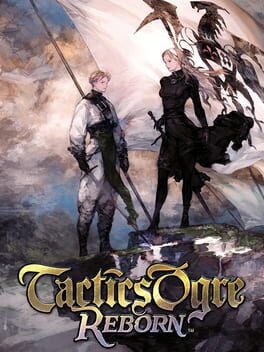
Tactics Ogre: Reborn 2022
Tactics Ogre shares FFT's director (Yasumi Matsuno) and is the direct spiritual predecessor: isometric grid combat, a deeply political war narrative, branching story paths based on moral choices, and an equally intricate class-and-skill system.
Key difference: Multiple branching story routes mean player choices alter who lives and dies.
Best for: Anyone who wants FFT but with even denser politics and narrative branches.
Skip if: You want a single linear story path without consequence-heavy choices.
Fire Emblem Awakening is the closest genre twin to FFT on this list: grid-based tactical combat where unit positioning and class advancement define every encounter. The political betrayal plot and permadeath stakes give it the same weight.
Key difference: Permadeath makes individual units irreplaceable across the campaign.
Best for: Fans who want pure SRPG grid combat with strong character bonds.
Skip if: You dislike anime aesthetics or relationship systems.
Fell Seal is an indie SRPG explicitly modeled on FFT: isometric grid maps, a deep multi-class job system where abilities transfer between classes, and a dark political story about corrupt institutions. It is the closest modern recreation of FFT's exact feel.
Key difference: Smaller indie scope and shorter campaign than FFT.
Best for: Anyone who wants new FFT-style content on modern hardware.
Skip if: You want AAA production values or a household-name title.
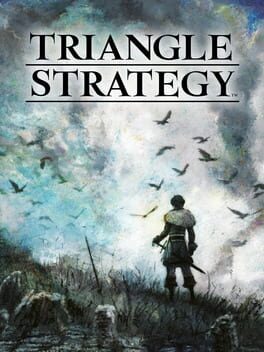
Triangle Strategy is a Nintendo SRPG with HD-2D pixel art, a political war-of-three-nations story driven by Conviction values, and deliberate grid-based tactical combat. Its moral-weight narrative structure is the closest modern AAA equivalent to FFT's story.
Key difference: Conviction system ties story paths to accumulated ideological choices.
Best for: FFT fans who want a modern premium SRPG with comparable narrative ambition.
Skip if: You want faster pacing; Triangle Strategy is very dialogue-heavy.
Baldur's Gate III uses a fully turn-based, elevation-aware tactical grid rooted in D&D rules, and its sprawling political storyline is filled with the same betrayal and moral ambiguity FFT fans love. Party composition and action-economy decisions feel genuinely deep.
Key difference: Far more dialogue agency and a fully 3D open world to explore.
Best for: Players who want FFT's tactics depth with modern production values.
Skip if: You want a linear, story-driven campaign with no open exploration.
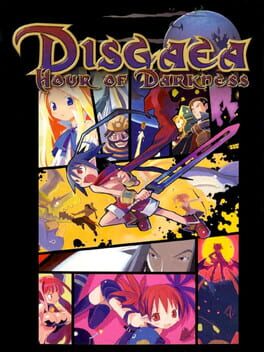
Disgaea uses the same isometric grid, job classes, and ability-stacking as FFT but pushes the numbers to absurd extremes, letting characters reach level 9999. Its demon-realm fantasy story mixes dark lore with self-aware comedy.
Key difference: Comedy-first tone and obscene stat inflation replace FFT's grimness.
Best for: FFT fans who want deeper mechanics and hundreds of hours of content.
Skip if: You disliked FFT's complexity; this goes far further.
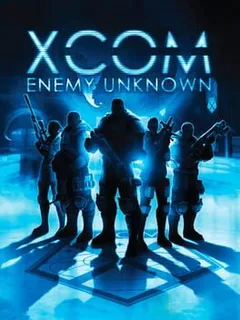
XCOM: Enemy Unknown is a squad-level tactical turn-based game on a grid with flanking, overwatch, and permanent character death—sharing FFT's core loop of managing limited, irreplaceable soldiers. The upgrade tree and class system echo FFT's job system.
Key difference: Sci-fi setting and base-management meta-layer replace story-driven chapters.
Best for: Those who love FFT's tactical grid but want a strategy-game framing.
Skip if: You need a narrative RPG with complex characters and lore.
Divinity: Original Sin 2 features a turn-based tactical grid with environmental hazards, elevation, and status combos that rival FFT's depth. Its dark fantasy political story involves gods, betrayal, and godhood—ambitious in scope.
Key difference: Western isometric RPG with heavy elemental-surface interaction rather than FFT's ability-focused grid.
Best for: FFT fans who want rich tactical depth and mature co-op options.
Skip if: You want a single-character story rather than an ensemble RPG.
Dragon Age: Origins is a dark-fantasy tactical RPG with pause-based combat that demands the same formation and ability-sequencing thinking as FFT. Its political story of betrayal among noble houses mirrors Ivalice's dynastic intrigue almost beat for beat.
Key difference: Real-time-with-pause combat rather than strict turn-based grid.
Best for: FFT fans who want a darker, more dialogue-rich western SRPG.
Skip if: You strictly need grid-based, tile-movement combat.
Jeanne d'Arc is a PSP tactical RPG by Level-5 using an isometric grid with a Burn Boost combo system, set in a fantastical reimagining of the Hundred Years' War. Its political drama and ensemble cast echo FFT closely.
Key difference: More accessible, shorter campaign; lighter tone than FFT.
Best for: FFT fans seeking a handheld SRPG gem with historical fantasy setting.
Skip if: You need modern hardware support or high production values.
PlayStation
78%
Baldur's Gate II: Shadows of Amn 2000
Baldur's Gate II's party-based combat and sprawling dark-fantasy narrative put it in the same spiritual space as FFT. Deep class systems, ability planning, and morally complex companions reward the same kind of careful thinking.
Key difference: Real-time-with-pause; no grid movement or tactical terrain.
Best for: Fans of FFT's lore depth and party-building over pure tactics.
Skip if: Real-time combat pacing with micromanagement frustrates you.
PC
78%💎 Gem
Ogre Battle 64: Person of Lordly Caliber 1999
From the same lineage as FFT (Yasumi Matsuno's Ogre Battle saga), this N64 entry features real-time battalion tactics, a deep political narrative of class war and revolution, and morality-driven branching. Its dark tone is unmistakably kindred.
Key difference: Battles are real-time troop formations rather than a strict turn grid.
Best for: FFT fans who want the Ogre saga's political storytelling in a larger-scale format.
Skip if: You want strict turn-by-turn grid control over each unit.
KOTOR uses a turn-based-derived combat system built on D&D rules, a party of distinct characters with branching skill growth, and a politically layered story with a famous betrayal reveal. The dark/light moral axis echoes FFT's ethical complexity.
Key difference: Science-fantasy setting; story betrayal is the main twist rather than systemic war.
Best for: FFT players who want a narrative-first RPG with tactical underpinnings.
Skip if: You want isometric grid maps rather than real-time arenas.
Final Fantasy X shares FFT's turn-based party tactics and Conditional Turn-Based Battle system that rewards careful resource management. Its emotional ensemble story and political-religious corruption themes feel cut from the same cloth.
Key difference: No grid movement; battles are linear formation encounters.
Best for: FFT fans who want a JRPG with similar themes in the mainline FF style.
Skip if: You want grid-based tactical positioning as the central mechanic.
Dragon Age: Inquisition expands Origins' tactical approach with a dedicated overhead Tactics Camera and a story about power, faith, and political manipulation that channels FFT's ambitions. Class and ability planning feed a similar theorycrafting itch.
Key difference: Open-world zones dilute tactical focus compared to FFT's structured battles.
Best for: FFT fans who want large-scale world-and-faction RPG scope.
Skip if: You want tightly focused maps rather than large open zones.
Planescape: Torment's philosophical, morally ambiguous narrative dives as deep as FFT's political story—arguably deeper. Its party-based RPG mechanics and exploration of identity and betrayal make it feel like FFT's literary cousin.
Key difference: Narrative and dialogue-driven; combat is almost secondary.
Best for: FFT fans who prize story and world-building above tactical combat.
Skip if: You play primarily for the grid combat rather than the lore.
Persona 5 uses a strict turn-based combat system with a detailed progression layer and an ensemble cast navigating systemic corruption and betrayal—thematic beats that resonate strongly with FFT. The Confidant system rewards investing in every party member.
Key difference: No grid maps; turn order and elemental weaknesses replace terrain strategy.
Best for: FFT fans drawn to its complex cast and social/political storytelling.
Skip if: You want positional, grid-based tactical depth over menu-driven turns.
Persona 4 Golden shares Persona 5's turn-based depth with a tighter, character-focused mystery narrative full of dramatic reveals. Its dungeon-crawling and social simulation provide a similar loop of planning and payoff.
Key difference: Cozy small-town mystery framing rather than dark political war.
Best for: Players wanting FFT's ensemble JRPG depth in a lighter-toned package.
Skip if: You want military/political drama and battlefield tactics.
Final Fantasy VI (listed as III here on SNES) is the closest mainline FF to FFT's storytelling darkness—an ensemble cast, political revolution, genocide, and a villain with genuine menace. Its ATB combat is less tactical but the narrative quality matches.
Key difference: No tactical grid; the depth is in story and character arcs.
Best for: FFT fans who want the best narrative Final Fantasy has to offer.
Skip if: You need isometric grid combat as the core loop.
Chrono Trigger's turn-based JRPG combat and time-spanning political epic give it spiritual overlap with FFT. Its battle system uses positional placement for combo techs, gesturing toward tactical thinking.
Key difference: Lighthearted tone and combo-based ATB rather than grid tactics.
Best for: FFT fans who want classic SNES-era JRPG craftsmanship and story.
Skip if: You want a dark, mature tone and grid-level tactical control.
Final Fantasy VII shares FFT's world—Ivalice lore aside, both are dark political parables inside Square's golden era, with Materia progression echoing FFT's job-ability system.
Key difference: Real-time ATB combat; no tactical grid or positioning.
Best for: FFT fans who love its Square-era storytelling and materia-style builds.
Skip if: You came to FFT specifically for tactical grid gameplay.
Disco Elysium is a deeply political RPG where factions, ideology, and betrayal drive every scene. While combat is almost entirely absent, the investigative skill-check system rewards the same careful resource allocation FFT players know.
Key difference: No combat at all; the game is pure narrative and skill-check roleplay.
Best for: FFT fans who loved its political story more than its battles.
Skip if: You play FFT for tactical grid combat and wouldn't enjoy a text-heavy RPG.
Civilization V is a turn-based strategy game demanding careful tactical thinking per unit on hexagonal tiles, and its political/historical depth scratches a similar planning itch to FFT's war-of-succession backdrop.
Key difference: 4X empire-building grand strategy with no RPG story or characters.
Best for: FFT fans who want pure TBS depth without any RPG story framing.
Skip if: You want character-driven narrative alongside tactical combat.
Final Fantasy XII is set in the same Ivalice as FFT and features the same political intrigue—a prince, rebels, and empire in a power struggle. Its Gambit system lets you program party AI for tactically satisfying automation.
Key difference: Real-time Gambit-driven combat rather than grid-based turn-by-turn play.
Best for: FFT fans who specifically love Ivalice lore and world-building.
Skip if: You want the strict turn-based grid of FFT rather than MMORPG-paced combat.
Multiple branching story routes mean player choices alter who lives and dies.
PlayStation, PC, Nintendo
Fire Emblem Awakening
96%
Role-playing (RPG), Fantasy
Permadeath makes individual units irreplaceable across the campaign.
Nintendo
Fell Seal: Arbiter's Mark
95%
Role-playing (RPG), Turn-based strategy (TBS)
Smaller indie scope and shorter campaign than FFT.
PlayStation, PC, Xbox, Nintendo
Triangle Strategy
90%
Role-playing (RPG), Turn-based strategy (TBS)
Conviction system ties story paths to accumulated ideological choices.
—
Baldur's Gate III
89%
Role-playing (RPG), Turn-based strategy (TBS)
Far more dialogue agency and a fully 3D open world to explore.
Xbox, PC, PlayStation
Disgaea: Hour of Darkness
88%
Role-playing (RPG), Tactical
Comedy-first tone and obscene stat inflation replace FFT's grimness.
PlayStation
XCOM: Enemy Unknown
86%
Role-playing (RPG), Turn-based strategy (TBS)
Sci-fi setting and base-management meta-layer replace story-driven chapters.
PlayStation, PC, Mobile, Xbox
Divinity: Original Sin 2 - Divine Ascension
84%
Role-playing (RPG), Turn-based strategy (TBS)
Western isometric RPG with heavy elemental-surface interaction rather than FFT's ability-focused grid.
PC
Dragon Age: Origins
80%
Role-playing (RPG), Fantasy
Real-time-with-pause combat rather than strict turn-based grid.
PlayStation, PC, Xbox
Jeanne d'Arc
80%
Role-playing (RPG), Tactical
More accessible, shorter campaign; lighter tone than FFT.
PlayStation
Baldur's Gate II: Shadows of Amn
78%
Role-playing (RPG), Fantasy
Real-time-with-pause; no grid movement or tactical terrain.
PC
Ogre Battle 64: Person of Lordly Caliber
78%
Role-playing (RPG), Fantasy
Battles are real-time troop formations rather than a strict turn grid.
Nintendo
Star Wars: Knights of the Old Republic
76%
Role-playing (RPG)
Science-fantasy setting; story betrayal is the main twist rather than systemic war.
Xbox, Mobile, PC, Nintendo
Final Fantasy X
76%
Role-playing (RPG), Fantasy
No grid movement; battles are linear formation encounters.
PlayStation
Dragon Age: Inquisition
73%
Role-playing (RPG), Tactical
Open-world zones dilute tactical focus compared to FFT's structured battles.
PlayStation, PC, Xbox
What makes a game truly feel like Final Fantasy Tactics?
The core loop of FFT is a tactical grid puzzle wrapped in a political RPG. The hallmarks are: isometric or overhead tile maps where height and facing matter, a class/job system that lets you build bespoke characters by mixing and matching abilities, and a story that treats its world's power structures seriously. Fire Emblem Awakening nails the first two, while Tactics Ogre: Reborn (see "additional") nails all three — it shares the same director and was literally the template FFT iterated upon.
If the political story is your priority, Triangle Strategy (additional) and Dragon Age: Origins both deliver sophisticated faction politics and betrayal. If the tactical depth matters most, XCOM: Enemy Unknown and Baldur's Gate III push positional grid strategy as hard as any game on this list.
Best picks for fans of FFT's dark political storytelling
FFT's narrative is unusually bleak for a 1997 JRPG: the good guys lose, history is falsified, and the Church is the villain. If that's what hooked you, Disco Elysium is the most intellectually comparable game on the list — a murder mystery that becomes a treatise on ideology, capitalism, and self-destruction, driven entirely by skill checks and dialogue. Planescape: Torment is its spiritual ancestor, asking the same kind of heavy questions through a party-based RPG lens.
For fans who want that dark political weight in a tactical format, Tactics Ogre: Reborn (additional) is the essential play: its branching story literally makes you choose which side of a civil war's massacre to carry out, and the consequences follow you for the rest of the game.
If you want co-op or modern-platform FFT alternatives
Divinity: Original Sin 2 (additional) is the best multiplayer option — its turn-based grid combat supports up to four players simultaneously, and the environmental-combination tactics (ignite oil slicks, electrify wet enemies) add a layer of reactive puzzle-solving that FFT fans who love clever setups will immediately appreciate. On modern consoles, Triangle Strategy and Baldur's Gate III are the two strongest premium options that genuinely compete with FFT's ambitions in 2024, with BG3 offering the deeper tactical ruleset and Triangle Strategy offering the more FFT-like story gravitas.
Is there a modern game that plays exactly like Final Fantasy Tactics?
Fell Seal: Arbiter's Mark is the closest modern equivalent — an indie SRPG that deliberately recreates FFT's isometric grid, multi-class job system with transferable abilities, and dark political narrative. Triangle Strategy (Nintendo Switch/PC) is the best AAA option with comparable narrative weight.
What is the connection between Final Fantasy Tactics and Tactics Ogre?
Both games were directed by Yasumi Matsuno. Tactics Ogre: Let Us Cling Together (1995) came first and established the political war narrative and isometric grid combat that FFT (1997) refined and brought to a global audience. Tactics Ogre: Reborn (2022) is the modern remaster and is the single most essential play for FFT fans.
Is XCOM like Final Fantasy Tactics?
In terms of pure mechanical feel — turn-based, grid-based, with squad-level positioning and character-level investment — yes, XCOM: Enemy Unknown is a strong structural match. The major difference is that XCOM is a strategy game with no RPG story or political narrative; it's the tactical puzzle of FFT without the War of the Lions drama.
Does Dragon Age: Origins scratch the FFT itch?
Partially. Dragon Age: Origins shares FFT's dark political fantasy story and deep class/ability system, and its Tactics Camera lets you micromanage your party in formation. However, combat is real-time-with-pause rather than strict turn-based grid play, so it satisfies the story and character-building urges more than the tactical positioning ones.
What Final Fantasy game is most like Final Fantasy Tactics?
Final Fantasy XII is set in the same Ivalice universe and shares the same political tone (empire versus resistance, power and corruption), making it the lore-closest mainline entry. For gameplay feel, Final Fantasy X's Conditional Turn-Based Battle system — where you can see and manipulate turn order — is the mainline FF combat closest to FFT's deliberate, resource-aware style.
 98%
98%