Magic: The Gathering (1997) for PC is beloved for wrapping the full MtG card-game ruleset — hand management, mana curves, creature combat, instants on the stack — inside a freeform adventure overworld called Shandalar, where winning duels earns you cards to strengthen your deck. It blends the intellectual puzzle of deck construction with the wandering-hero fantasy of a light RPG.
When fans ask for games like MtG, they are usually chasing one or more of three things: the deck-building collection loop, the turn-based duel structure of cards versus cards, or the adventure overworld where exploration funds strategic progression. The best alternatives deliver at least one of these sharply.
Top pick:Hearthstone is the single closest pick for most players — it replicates MtG's core duel structure (mana, minions, spells, hand management) in a polished digital form, and its card-collection progression hits the same reward loop as hunting for cards on Shandalar; if you want the adventure overworld too, pair it with Slay the Spire, which brings deck-building into a compelling solo roguelike journey.
Some store buttons are affiliate links — we may earn a commission at no extra cost to you.
18 games like Magic: The Gathering
93%
Hearthstone 2014
Hearthstone is a digital collectible card game built on the same turn-based duel structure as MtG, with mana curves, creature combat, and spell cards all intact. Like the 1997 MicroProse game, you build decks from collected cards and face off against opponents in a fantasy setting.
Key difference: No adventure overworld; pure card duel lobby game.
Best for: Players who want pure CCG dueling with a polished UI.
Skip if: You want the RPG exploration of Shandalar.
Slay the Spire is a deck-building roguelike where every run has you constructing a card deck from scratch and playing cards in turn-based combat against monsters, directly evoking MtG's core loop of hand management, resource planning, and synergy building.
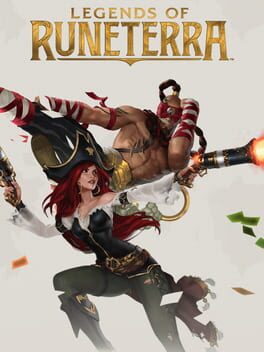
Legends of Runeterra is a digital CCG with a reactive spell stack and unit combat system very close to MtG's — both players can respond on each other's turns, and deck construction around champion synergies mirrors MtG's color identity system.
Key difference: Tied to League of Legends IP; more generous free-to-play economy.
Best for: MtG Arena players looking for a free, mechanically faithful alternative.
Skip if: You dislike the League of Legends aesthetic.
Gwent is a strategic card game spun out of The Witcher universe, featuring lane-based tactical play, deck construction, and card collection reminiscent of MtG's resource management. Duels reward reading opponent patterns and hand management.
Key difference: Lane-based board instead of MtG-style zones; no mana system.
Best for: MtG fans who also love a rich lore-heavy fantasy world.
Skip if: You dislike grinding for card collection.
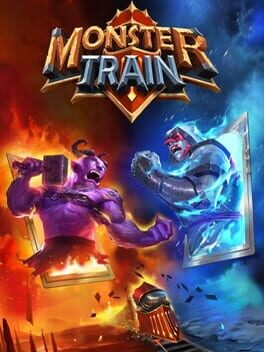
Monster Train is a multi-lane deck-building roguelike where you build a card deck across a vertical train and defend against waves, sharing MtG's creature-on-board synergy thinking and the same satisfaction of assembling a broken combo deck.
Key difference: Tower-defense lane structure rather than one-on-one dueling.
Best for: MtG combo players who enjoy assembling powerful synergy engines.
Skip if: You want direct head-to-head opponent dueling.
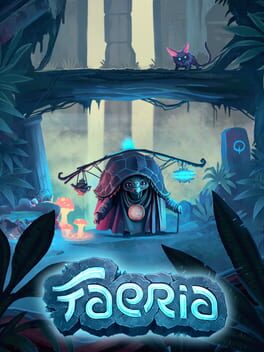
Faeria combines a living board that players build hex by hex with a card-game combat system — you harvest mana across the board before playing creatures and spells, creating a unique blend of MtG's resource management and board-game spatial thinking.
Heroes of Might and Magic III: The Restoration of Erathia 1999
Heroes of Might and Magic III puts you on an adventure overworld very similar to Shandalar's exploration loop — traveling, collecting resources, and fighting enemies — then resolves combat in a turn-based tactical layer. The fantasy theme and strategic depth are closely aligned.
Key difference: Hex-grid army battles replace card duels entirely.
Best for: Fans of MtG's Shandalar overworld mode more than the card duels.
Skip if: You want actual card-game mechanics.
PC
72%💎 Gem
Hand of Fate 2015
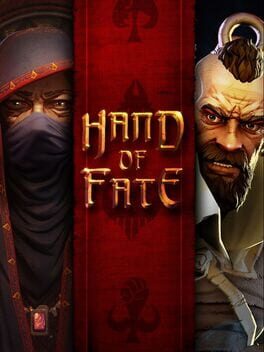
Hand of Fate is a card-driven adventure game where a dealer lays out cards that generate encounters, dungeons, and events — combining MtG's card-reveal excitement with a Shandalar-like overworld adventure loop in dark fantasy packaging.
Key difference: Cards generate 3D action combat encounters, not card-vs-card duels.
Best for: MtG Shandalar fans who want more adventure and less pure dueling.
Skip if: You want strategic card duels as the primary mechanic.
Final Fantasy Tactics shares MtG's turn-based tactical combat in a deep fantasy world, where resource management and unit composition mirror deck-building thinking. Strategic planning before and during each encounter is central.
Key difference: Grid-based chess-like battles, no deck building or card collection.
Best for: MtG players who love tactical depth in a story-rich fantasy.
Skip if: You need the card-collecting loop to stay engaged.
PlayStation
60%
Baldur's Gate III 2023
Baldur's Gate III uses D&D 5e rules in a turn-based tactical format set in a rich fantasy world, sharing MtG's love for rule-dense interactions and strategic spell/ability sequencing. Resource management per encounter echoes MtG's mana planning.
Key difference: Deep narrative RPG focus; no cards or collection loop.
Best for: MtG players who love rules-heavy fantasy systems.
Skip if: You want quick duels rather than a 100-hour campaign.
Fire Emblem: Three Houses combines turn-based tactical combat with a school-life overworld, mirroring MtG's mix of strategy and world exploration. Unit synergies and preparation between battles reward the same forward-thinking mindset MtG demands.
Key difference: No card mechanics; anime JRPG style with heavy story content.
Best for: MtG strategists who enjoy turn-based unit management.
Skip if: You dislike anime aesthetics or story-heavy games.
Baldur's Gate II implements AD&D rules in a fantasy RPG where spell sequencing and resource planning across encounters mirrors MtG's stack-based thinking. Like the MicroProse game, it blends exploration with rule-dense tactical encounters.
Key difference: Real-time-with-pause combat, no card game layer.
Best for: MtG fans who love D&D rulesets and deep fantasy lore.
Skip if: You need a card-game core loop to stay hooked.
PC
52%
Final Fantasy VIII 1999
Final Fantasy VIII features Triple Triad, a fully fleshed-out collectable card game built into its world — players win cards from NPCs and build decks, mirroring MtG's card-collection progression. The regional rule variants even echo MtG's format diversity.
Key difference: Card game is a side activity within a full linear JRPG.
Best for: MtG card-collectors who also want a classic story RPG.
Skip if: You want card duels to be the entire game.
PlayStation
48%💎 Gem
Planescape: Torment 1999
Planescape: Torment is set in a bizarre multiplanar fantasy world that feels cosmologically close to MtG's plane-hopping lore, with rule-bending mechanics and esoteric factions. Its deep encounter strategy and dialogue-as-resource management appeal to the same analytical mindset.
Key difference: No card game; almost purely a narrative RPG.
Best for: MtG Planescape-lore fans who want a rich companion game.
Skip if: You want active combat or card mechanics.
Neverwinter Nights uses D&D rules — the same mechanical ancestry as MtG's design philosophy — in a fantasy RPG with modular adventures. Its toolkit also spawned countless community modules mimicking card-game and tactical play styles.
Key difference: Real-time 3D combat, no card collecting.
Best for: MtG fans interested in D&D ruleset exploration.
Skip if: You need deck-building or collection to stay engaged.
Civilization V is a deep turn-based strategy game in a fantasy-tinged historical world where resource management and long-horizon planning mirror MtG's strategic demands. Technology and policy cards even echo deck-like choices.
Dragon Age: Origins blends tactical pause-and-play combat with deep fantasy lore and party resource management, appealing to players who love MtG's rule-density and fantasy world-building. Spell combo sequencing echoes MtG's stack interactions.
Key difference: Party-based narrative RPG with no card or deck systems.
Best for: MtG fans who want a story-driven fantasy tactical game.
Skip if: You need a card collection loop or quick play sessions.
Warcraft III shares MtG's fantasy color-faction system — each race has distinct playstyles resembling MtG's five colors — and rewards the same kind of resource-conscious decision-making, albeit in real-time strategy format.
Key difference: Real-time army management, not turn-based card duels.
Best for: MtG players drawn to faction asymmetry and fantasy warfare.
Skip if: You want turn-based play or card game mechanics.
No adventure overworld; pure card duel lobby game.
Mobile, PC
Slay the Spire
92%
Strategy, Turn-based strategy (TBS)
Roguelike runs replace persistent deck ownership; no opponent-controlled deck.
PlayStation, PC, Mobile, Xbox, Nintendo
Legends of Runeterra
88%
Strategy, Turn-based strategy (TBS)
Tied to League of Legends IP; more generous free-to-play economy.
Mobile, PC
Gwent: The Witcher Card Game
87%
Strategy, Card & Board Game
Lane-based board instead of MtG-style zones; no mana system.
PlayStation, Mobile, PC, Xbox
Monster Train
82%
Strategy, Turn-based strategy (TBS)
Tower-defense lane structure rather than one-on-one dueling.
Xbox, PC, Mobile, PlayStation, Nintendo
Faeria
80%
Strategy, Turn-based strategy (TBS)
Dynamic hex board adds positional strategy absent in MtG.
PlayStation, PC, Mobile, Xbox, Nintendo
Heroes of Might and Magic III: The Restoration of Erathia
75%
Strategy, Turn-based strategy (TBS)
Hex-grid army battles replace card duels entirely.
PC
Hand of Fate
72%
Strategy, Turn-based strategy (TBS)
Cards generate 3D action combat encounters, not card-vs-card duels.
PlayStation, PC, Xbox
Final Fantasy Tactics
65%
Turn-based strategy (TBS), Tactical
Grid-based chess-like battles, no deck building or card collection.
PlayStation
Baldur's Gate III
60%
Strategy, Turn-based strategy (TBS)
Deep narrative RPG focus; no cards or collection loop.
Xbox, PC, PlayStation
Fire Emblem: Three Houses
58%
Strategy, Turn-based strategy (TBS)
No card mechanics; anime JRPG style with heavy story content.
Nintendo
Baldur's Gate II: Shadows of Amn
58%
Fantasy
Real-time-with-pause combat, no card game layer.
PC
Final Fantasy VIII
52%
Card & Board Game, Fantasy
Card game is a side activity within a full linear JRPG.
PlayStation
Planescape: Torment
48%
Strategy, Fantasy
No card game; almost purely a narrative RPG.
PC, Mobile
Neverwinter Nights
46%
Fantasy
Real-time 3D combat, no card collecting.
PC
What makes a game feel like Magic: The Gathering?
The MicroProse MtG game has three interlocking pillars: a card-based combat system where each card is a discrete rule-object that interacts with others, a resource curve (mana) that forces meaningful choices each turn, and a collection/progression loop where winning earns you new cards. Games that nail all three feel the most like MtG — Hearthstone and Legends of Runeterra come closest on the dueling side, while Slay the Spire and Monster Train capture the deck-building and collection satisfaction in a solo roguelike format.
The Shandalar overworld adds a fourth pillar: adventure-RPG exploration that feeds back into deck power. Heroes of Might and Magic III is the strongest candidate in the pool for that feel — you explore a fantasy map, fight encounters, and accumulate resources between strategic battles, which mirrors how Shandalar progression works even though no cards are involved.
Best picks if you love the tactical turn-based strategy side
Beyond card games, MtG's turn-based, rule-dense encounter design has the most overlap with deep tactical RPGs. Final Fantasy Tactics and Final Fantasy Tactics Advance reward the same pre-battle preparation and in-turn sequencing that MtG demands, with complex ability interactions standing in for spell stacks. Fire Emblem: Three Houses adds an overworld management loop between battles that feels structurally similar to Shandalar's exploration.
For players who love the D&D rules ancestry behind MtG's design, Baldur's Gate III and the older Baldur's Gate II implement AD&D and D&D 5e rules in fully turn-based formats — the spell-slot economy and reaction system in BG3 especially echoes MtG's instant-speed decision points.
Hidden gems and lesser-known alternatives
Faeria (in the additional list) is the most overlooked near-match: it is a genuine card game where you also build a hex board across the table, adding spatial strategy that MtG's land-zone system only hints at. Its fantasy aesthetic and deck construction are directly MtG-adjacent, yet it rarely appears on recommendation lists. Similarly, Hand of Fate captures the Shandalar spirit more than any other non-card-game title — a mysterious dealer lays cards that generate encounters and loot in a dark fantasy world, giving you the same sense of card-driven fate shaping your adventure.
Among the candidates, Planescape: Torment is the hidden gem for MtG lore enthusiasts: its multiplanar cosmology, faction politics, and esoteric rules-bending narrative feel like wandering the planes between MtG sets, even though it contains no card mechanics whatsoever.
Is there a modern game exactly like Magic: The Gathering 1997 with both the card duels and the Shandalar overworld?
No single modern game replicates the exact Shandalar formula, but Magic: The Gathering Online and Magic: The Gathering Arena handle the card-duel side faithfully. For the adventure overworld combined with deck-building, Hand of Fate and Slay the Spire come closest in spirit, though neither uses the MtG ruleset.
What is the best free alternative to Magic: The Gathering for PC?
Legends of Runeterra and Hearthstone are both free-to-play digital card games with deep deck construction and turn-based dueling. Gwent is also free and has a more strategic, deliberate pacing. All three have generous enough free card acquisition to build competitive decks without spending money.
Are there card games like MtG with a single-player campaign or story mode?
Yes — Slay the Spire and Monster Train are both single-player deck-building games with full roguelike campaign structures. Hand of Fate wraps card draws inside a narrative adventure. For the closest MtG rules experience with solo play, Magic: The Gathering Arena has a story mode and puzzle challenges.
What turn-based strategy games share the feel of MtG if I don't want a card game?
Heroes of Might and Magic III is the strongest match from a classic library — it has the same turn-based overworld exploration and strategic encounter design. Final Fantasy Tactics and Fire Emblem: Three Houses capture the deep tactical planning and unit-synergy thinking that MtG players tend to enjoy.
What made the MicroProse Magic: The Gathering game unique compared to later digital MtG games?
The 1997 MicroProse game added an RPG adventure layer — the plane of Shandalar — where you walked an overworld map, fought random wizard encounters for cards, and had to prevent any one color of magic from gaining dominance before facing the five arch-wizards and Arzakon. Later official digital versions (MtG Online, MtG Arena) focus purely on the card-game lobby experience without this exploration and progression layer.
 93%
93%