Cities: Skylines won over millions of players with its layered, feedback-rich city-building loop: drawing road networks, zoning land, routing transit, balancing tax income against service costs, and watching a simulated population respond to every decision. Its open sandbox structure — bolstered by Steam Workshop mods — means the game is as much a creative tool as a strategy title.
When players look for "games like Cities: Skylines," they're typically chasing one or more of three things: the satisfaction of building and growing a complex system from scratch, the challenge of balancing interconnected infrastructure and budgets, or the calm creative pleasure of designing a living space and watching it breathe. The best alternatives hit at least one of those pillars hard.
Top pick: The single closest pick is SimCity 4 — the direct predecessor that shares Cities: Skylines' entire design philosophy: zoning, transit, budget management, and a living simulated population reacting to your decisions, all wrapped in a region-based city canvas that still holds up today.
Some store buttons are affiliate links — we may earn a commission at no extra cost to you.
22 games like Cities: Skylines
92%
SimCity 4 2003
SimCity 4 is the direct spiritual predecessor to Cities: Skylines — zoning residential, commercial, and industrial areas, building road networks and transit, and balancing municipal budgets across interconnected region cities.
Key difference: Older engine limits; region play connects multiple smaller city tiles.
Best for: Anyone who wants the purest classic city-builder experience.
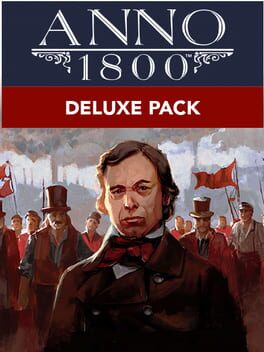
Anno 1800 is the gold standard for layered city-building: you plan complex production chains, zone residential areas, manage citizen happiness tiers, and build transport networks across multiple islands — the same satisfaction loop as Cities: Skylines with a gorgeous industrial-era aesthetic.
Key difference: Production chains and island logistics replace roads and transit.
Best for: Skylines fans who want resource chains layered onto city-building.
Skip if: You dislike managing supply and production dependencies.
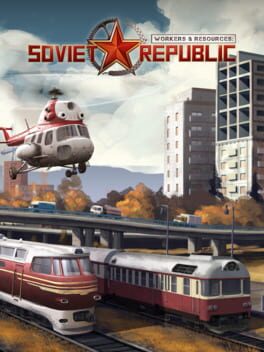
Workers & Resources is one of the most detailed city-building sims ever made — you plan roads, lay pipes, connect power grids, manage supply chains, and develop a Soviet republic from village to industrial nation, with depth that surpasses Cities: Skylines.
Key difference: Extremely hardcore simulation with steep learning curve.
Best for: Hardcore Skylines fans who have exhausted everything and want maximum depth.
Skip if: You prefer approachable, streamlined city-builders.
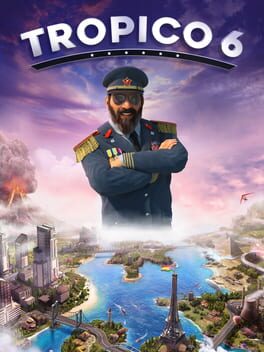
Tropico 6 blends city-building with humorous political management — you zone districts, build infrastructure, manage budgets, and satisfy competing factions on a tropical island, with the same traffic and utility concerns as Cities: Skylines.
Key difference: Satirical political layer with faction balancing and campaign missions.
Best for: Skylines fans wanting personality, humour, and political pressure.
Skip if: You want a purely neutral sandbox with no political systems.
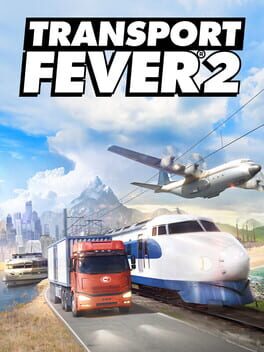
Transport Fever 2 focuses on the transit and infrastructure side of city-building — you design road, rail, and waterway networks that shape how cities grow, directly rewarding the same transport-planning instincts Cities: Skylines players love most.
Key difference: You build the transport network, not the city itself; cities grow autonomously.
Best for: Skylines fans obsessed with transit optimization and route design.
Skip if: You want full control over zoning and city layout.
Frostpunk combines city-building with survival crisis management — you plan a circular city layout, build heating infrastructure, and make brutal society-shaping laws, all under constant resource pressure that echoes Cities: Skylines' budget urgency.
Key difference: Survival horror tone with life-or-death stakes and moral choices.
Best for: Players who want city-building with intense emotional weight.
Skip if: You prefer a relaxed sandbox without existential pressure.
Banished is a quiet, focused city-survival game where you grow a medieval village by managing food, housing, trade routes, and population health — the same holistic resident-welfare simulation as Cities: Skylines but stripped to essentials.
Key difference: Small village scale with brutal resource scarcity and no modding ecosystem.
Best for: Skylines fans who want intimate, human-scale city management.
Skip if: You want large modern cities with transit networks.
Surviving Mars tasks you with planning and expanding a colony from scratch — placing domes, routing power and water networks, and managing population needs — a sci-fi riff on the same infrastructure-placement satisfaction found in Cities: Skylines.
Key difference: Survival constraints and resource scarcity replace pure city aesthetics.
Best for: Skylines fans who want city-building in a harsh frontier setting.
Skip if: You dislike resource-scarcity tension overlaid on building.
Civilization VI shares the sandbox city-growth loop of Cities: Skylines — you zone districts, manage infrastructure, and balance a growing economy across multiple cities. The district system introduced here maps closely to zoning separate areas for campuses, harbors, and commercial hubs.
Key difference: Turn-based 4X with diplomacy, warfare, and rival civilizations.
Best for: Skylines fans who want geopolitical strategy layered onto city-building.
Skip if: You want pure city-building without military conflict.
Civilization V puts you in charge of founding and developing cities through careful placement of districts, buildings, and infrastructure, with a long progression arc that unlocks new structures as your population grows — echoing Cities: Skylines' unlock system.
Key difference: 4X empire scope with combat; cities are nodes, not detailed layouts.
Best for: Fans who love long-term planning and economic balancing over a campaign.
Skip if: You want free-form road-drawing and granular urban design.
Fallout Shelter is a resource-management sim where you design and expand an underground vault room by room, assign citizens to jobs, and balance power, water, food, and happiness — the same core juggle as Cities: Skylines' service balance.
Key difference: Tiny mobile-scale shelter instead of sprawling open city.
Best for: Skylines fans wanting a compact management fix on the go.
Skip if: You need the satisfaction of large-scale road and transit networks.
The Sims 4 shares Cities: Skylines' sandbox simulation DNA — you shape living spaces, meet the needs of inhabitants, and watch systems interact. The build mode has genuine depth for layout lovers.
Key difference: Focus is on individual household life, not urban infrastructure.
Best for: Players who prefer social simulation over macro city management.
Skip if: You want zoning, traffic, and public transport puzzles.
The Sims 3's open-world neighborhood feels closer to a living city than its successor, with residents moving around autonomously and neighbourhood-wide systems like careers and public spaces creating an emergent urban feel.
Key difference: Individual life simulation, no macro infrastructure planning.
Best for: Those who want to experience city life from the citizen's perspective.
Skip if: You want top-down planning and traffic flow management.
Animal Crossing: New Horizons puts you in charge of developing an island from scratch — placing buildings, designing paths, zoning areas, and managing community satisfaction — a very gentle version of Cities: Skylines' town-building arc.
Key difference: No budgets, no traffic; progression is slow and social rather than systemic.
Best for: Relaxed builders who want low-stakes urban beautification.
Skip if: You want complex transit or economic simulation.
Stardew Valley's farm management — budgeting, infrastructure upgrades, unlocking new buildings, and balancing production chains — echoes the incremental unlocking feel of Cities: Skylines, though the scale is a single farm rather than a metropolis.
Key difference: Rural farm RPG rather than urban infrastructure management.
Best for: Skylines fans craving a relaxed, rewarding long-term builder.
Skip if: You need large-scale zoning and transport network puzzles.
Minecraft's creative mode is a blank-canvas city-builder at heart — players construct roads, buildings, and entire urban layouts from scratch. With mods it can simulate redstone-powered infrastructure. The sandbox freedom mirrors Cities: Skylines.
Key difference: No simulation of citizens, traffic, or economic systems.
Best for: Creative builders who want total freedom with no systemic constraints.
Skip if: You need the feedback loop of population growth and budget management.
Age of Empires II requires you to build and expand a functioning city — gathering resources, constructing production buildings, managing economies, and planning layouts — before pivoting to military conquest. The build-phase scratches a similar itch.
Key difference: Real-time military strategy dominates once your base is established.
Best for: Fans who want to combine city-building with competitive RTS.
Skip if: You want peaceful city management with no combat pressure.
Euro Truck Simulator 2 shares Cities: Skylines' unusual appeal of calm, systems-driven sandbox management: you run a growing transport business, hire drivers, plan routes, and balance finances — a logistics sim that rewards methodical thinking.
Key difference: Transport business management, not city layout or zoning.
Best for: Players who loved Cities: Skylines' transit and route-planning side.
Skip if: You want to design and build physical city infrastructure.
Spore passes through a city-building phase where you design and expand a settlement, place buildings, and manage production before ascending to a galactic 4X — the closest analogue to city-building in this pool, even if brief.
Key difference: City phase is short; game pivots to space exploration.
Best for: Players who want a whimsical creative sandbox across multiple scales.
Skip if: You want deep, sustained city-management systems.
XCOM: Enemy Unknown adds a base-building layer where you design and expand your HQ room by room, allocate resources, manage research, and balance global crisis — a compact version of the infrastructure-management satisfaction in Cities: Skylines.
Key difference: Core gameplay is turn-based tactical combat, not city construction.
Best for: Skylines fans who want base management wrapped in a strategy-thriller.
Skip if: You dislike combat as the primary activity.
Garry's Mod is pure sandbox construction without rules — players build elaborate structures, machines, and city-like environments using Source engine physics. With community maps and tools it becomes an unofficial city playground.
Key difference: No simulation systems; it is a physics construction toy.
Best for: Technically curious players who want to engineer without guardrails.
Skip if: You want guided progression and living simulation systems.
Papers, Please is a bureaucratic management sim where you enforce immigration rules at a border checkpoint — its appeal to systemic thinkers who enjoy balancing rules, budgets, and consequences overlaps with the civic management pull of Cities: Skylines.
Key difference: Tiny desk-job perspective; no building or spatial planning.
Best for: Players drawn to Cities: Skylines' civic systems and moral trade-offs.
Skip if: You want large-scale visual city construction.
Older engine limits; region play connects multiple smaller city tiles.
PC
Anno 1800: Deluxe Pack
88%
Simulator, Strategy
Production chains and island logistics replace roads and transit.
PC
Workers & Resources: Soviet Republic
85%
Simulator, Strategy
Extremely hardcore simulation with steep learning curve.
PC
Tropico 6
83%
Simulator, Strategy
Satirical political layer with faction balancing and campaign missions.
Xbox, PlayStation, PC, Nintendo
Transport Fever 2
82%
Simulator, Strategy
You build the transport network, not the city itself; cities grow autonomously.
PC
Frostpunk
80%
Simulator, Strategy
Survival horror tone with life-or-death stakes and moral choices.
PlayStation, PC, Xbox
Banished
78%
—
Small village scale with brutal resource scarcity and no modding ecosystem.
Nintendo
Surviving Mars
75%
Simulator, Strategy
Survival constraints and resource scarcity replace pure city aesthetics.
PlayStation, PC, Xbox
Sid Meier's Civilization VI
62%
Simulator, Strategy
Turn-based 4X with diplomacy, warfare, and rival civilizations.
PlayStation, PC, Mobile, Xbox, Nintendo
Sid Meier's Civilization V
58%
Simulator, Strategy
4X empire scope with combat; cities are nodes, not detailed layouts.
PC
Fallout Shelter
52%
Simulator, Strategy
Tiny mobile-scale shelter instead of sprawling open city.
PlayStation, Mobile, PC, Xbox, Nintendo
The Sims 4
48%
Simulator, Sandbox
Focus is on individual household life, not urban infrastructure.
PlayStation, PC, Xbox
The Sims 3
46%
Simulator, Strategy
Individual life simulation, no macro infrastructure planning.
PC
Animal Crossing: New Horizons
46%
Simulator, Sandbox
No budgets, no traffic; progression is slow and social rather than systemic.
Nintendo
Stardew Valley
44%
Simulator, Strategy
Rural farm RPG rather than urban infrastructure management.
PlayStation, PC, Nintendo, Mobile, Xbox
What makes a game feel like Cities: Skylines?
The core of Cities: Skylines is a systemic feedback loop: you place infrastructure, citizens move in, their behavior creates new problems (traffic jams, pollution, insufficient services), and you solve those problems with more infrastructure. Games that replicate this feel must have interconnected systems where one decision creates downstream consequences — not just a construction sandbox. Anno 1800 and Workers & Resources: Soviet Republic do this best among city-building alternatives, the former through production chain logistics, the latter through exhaustive utility simulation.
Frostpunk and Surviving Mars bring a survival-crisis twist to the same loop: every road placed and every building zoned has life-or-death implications, which swaps Cities: Skylines' meditative pacing for something more urgent without abandoning the infrastructure puzzle.
Best alternatives if you love the transit and infrastructure side
Cities: Skylines players often say the road-drawing and public transit systems are the most satisfying parts of the game. If that resonates, Transport Fever 2 turns that element into an entire game: you design bus, tram, rail, ship, and air networks that organically shape how cities develop around them. From the candidate pool, Euro Truck Simulator 2 scratches a related itch — its logistics and route management tap the same calm, systems-driven planning instinct, even though you're running a trucking business rather than building a city.
Relaxed city-building alternatives and hidden gems
Not every Cities: Skylines session is about optimizing traffic — sometimes it's about the pleasure of a well-laid-out neighbourhood. For that relaxed creative mood, Animal Crossing: New Horizons (from the candidate pool) offers genuine island-design satisfaction without budgets or crises, while Banished is a standout hidden gem: its small-village survival simulation has no military or combat, just the quiet puzzle of keeping a population fed, housed, and healthy through careful planning. Workers & Resources: Soviet Republic is the hidden gem for hardcore builders — obscure outside enthusiast circles but arguably the deepest city-builder ever made.
Is there a game exactly like Cities: Skylines but with a different setting?
Surviving Mars replicates the infrastructure-placement loop in a sci-fi colony setting, while Tropico 6 does it on a Caribbean island with political satire layered on top. For a medieval flavour, Banished strips city-building back to a village survival sim with no combat.
What came before Cities: Skylines?
SimCity 4 (2003) is the direct ancestor — it pioneered the zoning, transit, and budget-management model that Cities: Skylines refined and expanded. Many Cities: Skylines designers were inspired by SimCity 4, and the games share essentially the same design DNA.
Are there city-building games with more economic depth than Cities: Skylines?
Anno 1800 and Workers & Resources: Soviet Republic both go deeper on economic systems. Anno 1800 layers complex production chains across multiple islands, while Workers & Resources simulates supply chains, worker commutes, and utility networks at an almost engineering-simulation level of detail.
What city-builder is best for players who found Cities: Skylines too complex?
Tropico 6 is more guided with campaign missions and a lighter tone, while Animal Crossing: New Horizons offers island development with no failure states at all. Frostpunk is similarly accessible at the start, though its difficulty escalates quickly.
Does Civilization VI count as a city-builder?
Partly — Civilization VI's district system, where you physically place specialised zones across city tiles to reflect their function, is the closest any 4X game comes to Cities: Skylines' zoning feel. But the surrounding game is about diplomacy, warfare, and global empire rather than urban planning, so it satisfies a different primary itch.
 92%
92%