Monopoly's appeal rests on a specific formula: dice-driven turn order, the thrill of snapping up properties before rivals do, the slow stranglehold of rent on opponents, and the social drama of trades and deals between real people. The 2024 Engine Software edition wraps all of that in a vivid animated 3D city while keeping every rule faithful to the classic board game.
When players search for games like Monopoly, they're usually after one or more of these pillars: a digital board-game adaptation with clear rules and a definitive winner, a business or property management loop, a party-multiplayer experience accessible to all ages, or a turn-based competitive structure built on resource negotiation. The best alternatives nail at least two of those pillars.
Top pick:Fortune Street is the single closest match — it is literally a property-buying, rent-collecting, opponent-bankrupting board game with stocks layered on top, and its Nintendo characters make it just as accessible as Monopoly for any group.
Some store buttons are affiliate links — we may earn a commission at no extra cost to you.
18 games like Monopoly
82%💎 Gem
Fortune Street 2011
Fortune Street (Itadaki Street Wii) is essentially Nintendo's take on Monopoly: players buy properties, collect rent from rivals, and race to hit a target net worth on board-game-style maps featuring Mario and Dragon Quest characters. It's the closest game in existence to Monopoly.
Key difference: Stock market investment layer on top of property ownership.
Best for: Monopoly fans wanting a Nintendo-flavoured twist.
Skip if: You can't stand even longer game sessions than Monopoly.
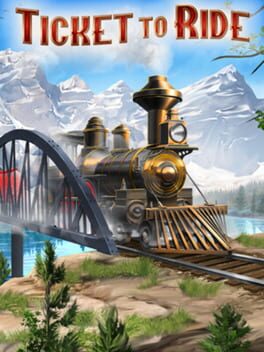
Ticket to Ride is one of the best digital board game adaptations available — players compete to claim railway routes (akin to Monopoly's properties) across a shared map, blocking rivals and managing a hand of cards each turn.
Key difference: Route-building instead of property buying; no money trading.
Best for: Monopoly fans wanting a cleaner, shorter board game.
Skip if: You want the classic Hasbro brand and property auctions.
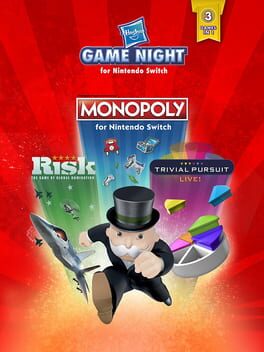
Hasbro Game Night bundles digital versions of Monopoly, Scrabble, Risk, and other Hasbro classics in one package, letting you switch between official board game adaptations with friends in local or online multiplayer.
Key difference: Multi-game anthology rather than a deep single experience.
Best for: Families wanting several board games in one purchase.
Skip if: You want the most polished standalone Monopoly version.
Catan Universe brings the classic Settlers of Catan to digital form: players roll dice, collect resources, trade with each other, and build settlements on a shared hex board — a direct spiritual cousin to Monopoly's negotiation and expansion loop.
Key difference: Resource trading and building rather than property ownership.
Best for: Monopoly lovers who want deeper trading and negotiation.
Tabletop Simulator lets you play Monopoly and hundreds of other board games in a physics-based 3D virtual table — supporting online multiplayer with the exact board-game structure and piece-flipping chaos you know.
Key difference: A sandbox tool, not a stand-alone game experience.
Best for: Anyone who wants a huge library of board games in one place.
Skip if: You want a polished single-game UI and tutorial.
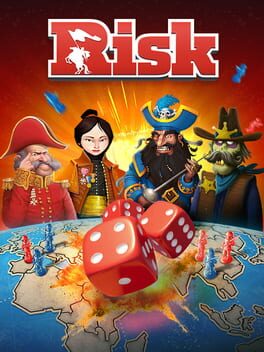
Risk: Global Domination is the official digital adaptation of the classic territory-control board game, featuring online and pass-and-play multiplayer, dice-based combat, and the same long-session strategic rivalry Monopoly delivers.
Key difference: Military territory conquest rather than property economics.
Best for: Monopoly fans who love the world-domination power fantasy.
Skip if: You hate long games that end friendships.
Hearthstone is a polished digital card-and-board game that distills competitive turn-based play into short, structured matches against opponents. Like Monopoly, it thrives on reading your opponent, managing resources, and pressing advantages within a ruleset you learn by playing.
Key difference: Pure card-battler with no property buying or dice rolls.
Best for: Fans of Monopoly who want a competitive digital board-game fix.
Skip if: You need physical board-game feel or hate card games.
Cities: Skylines places you in the role of city developer — buying land, zoning properties, managing budgets and cash flow — which is the closest management sim cousin to Monopoly's property empire building. Both reward long-term planning over a shared map.
Key difference: Single-player city builder, no opponents to ruin your plans.
Best for: Monopoly fans who love the property/business layer most.
Skip if: You want competitive head-to-head multiplayer.
Slay the Spire is tagged as a Card & Board Game and builds its runs around deck construction and turn-by-turn decision-making — the same careful, incremental strategy that Monopoly rewards. Each run is self-contained, like a single game night session.
Key difference: Single-player roguelike, no multiplayer competition.
Best for: Solo players who love strategic decision trees.
Skip if: You specifically want multiplayer social rivalry.
Civilization V is a turn-based empire builder where you expand territory, trade resources, and outmanoeuvre rivals economically — all pillars Monopoly shares. The tile-based map even echoes the feel of a board layout.
Key difference: Grand 4X strategy with wars, science, and culture tracks.
Best for: Players who want deeper strategy beyond the board.
Skip if: You want a quick party game session under an hour.
Civilization VI refines the same turn-based, territory-and-trade formula as Civ V with a more colourful, district-based map that feels even closer to a physical board game. Business and diplomacy drive victory as much as military might.
Key difference: Deep 4X layers; games run many hours.
Best for: Strategy fans wanting the longest possible economic campaign.
Skip if: You want a light family-friendly session.
Among Us is a social multiplayer party game built around reading other players, bluffing, and short rounds with friends or strangers — the same social-sabotage energy that makes Monopoly a household staple. It scales well from 4 to 15 players.
Key difference: Social deduction with no board, no money, no property.
Best for: Monopoly fans who love the backstabbing social element.
Skip if: You dislike hidden-role bluffing mechanics.
Mario Kart 8 Deluxe is the gold-standard couch party game for families and friend groups, built for short competitive rounds with random chaos elements — just like Monopoly nights. The Kids and Party themes are a direct DNA match.
Key difference: Racing game; no economy, property, or trading.
Best for: Family game nights looking for an easy all-ages pick.
Skip if: You want strategy and economic decision-making.
Super Smash Bros. Ultimate is the definitive multiplayer party brawler — short, chaotic rounds, huge character roster, and accessible enough for kids while deep enough for veterans, mirroring Monopoly's broad demographic appeal.
Key difference: Fighting game; no economy or board-game structure.
Best for: Party nights needing quick-fire competitive fun.
Skip if: You want calm turn-based strategy, not twitch reflexes.
Fall Guys delivers colourful, chaotic multiplayer minigame rounds with a Kids/Party tag and an emphasis on luck mixed with skill — evoking the unpredictable swings Monopoly is famous for. Easy to pick up with any group.
Key difference: Real-time platformer gauntlet, no strategy or trading.
Best for: Families wanting quick, laugh-out-loud multiplayer.
Skip if: You dislike randomised elimination formats.
Stardew Valley shares Monopoly's Business theme and its satisfying loop of buying, upgrading, and growing an economic operation. The steady accumulation of money and property upgrades scratches a similar itch.
Key difference: Quiet solo farming RPG, no competitive opponents.
Best for: Players who love the wealth-building side of Monopoly.
Skip if: You need fast-paced multiplayer conflict.
Wii Sports is a simple, family-friendly party package where any age group can jump in and compete over short sessions — exactly the social ritual Monopoly fulfils on game night. Its Party genre tag is a direct overlap.
Key difference: Motion-controlled sports minigames, no board or money.
Best for: Mixed-age households wanting zero barrier to entry.
The Sims 4 puts you in charge of a household's finances, property, and social life — a single-player sandbox that echoes Monopoly's fantasy of owning everything on the block. The business and sandbox themes align closely.
Key difference: Open-ended life simulator, no opponents or win condition.
Best for: Players obsessed with the property-ownership fantasy.
Skip if: You need competitive multiplayer or a defined end-game.
Stock market investment layer on top of property ownership.
Nintendo
Ticket to Ride
80%
Simulator, Strategy
Route-building instead of property buying; no money trading.
Xbox, PlayStation, Mobile, PC, Nintendo
Hasbro Game Night for Nintendo Switch
78%
Party
Multi-game anthology rather than a deep single experience.
Nintendo
Catan Universe
75%
Strategy, Card & Board Game
Resource trading and building rather than property ownership.
PC, Mobile, Nintendo
Tabletop Simulator
72%
Simulator, Strategy
A sandbox tool, not a stand-alone game experience.
PC
Risk: Global Domination
68%
Strategy, Card & Board Game
Military territory conquest rather than property economics.
Mobile, PC
Hearthstone
62%
Strategy, Card & Board Game
Pure card-battler with no property buying or dice rolls.
Mobile, PC
Cities: Skylines
55%
Simulator, Strategy
Single-player city builder, no opponents to ruin your plans.
PC
Slay the Spire
50%
Strategy, Card & Board Game
Single-player roguelike, no multiplayer competition.
PlayStation, PC, Mobile, Xbox, Nintendo
Sid Meier's Civilization V
48%
Simulator, Strategy
Grand 4X strategy with wars, science, and culture tracks.
PC
Sid Meier's Civilization VI
47%
Simulator, Strategy
Deep 4X layers; games run many hours.
PlayStation, PC, Mobile, Xbox, Nintendo
Among Us
42%
Strategy, Party
Social deduction with no board, no money, no property.
Xbox, PlayStation, Mobile, PC, Nintendo
Mario Kart 8 Deluxe
40%
Kids, Party
Racing game; no economy, property, or trading.
Nintendo
Super Smash Bros. Ultimate
38%
Party
Fighting game; no economy or board-game structure.
Nintendo
Fall Guys
36%
Party
Real-time platformer gauntlet, no strategy or trading.
Xbox, PlayStation, Mobile, PC, Nintendo
What makes a game feel like Monopoly?
Three things define the Monopoly feel: a shared board where every player's decisions directly affect everyone else, an economy of buying and holding resources (properties, cards, cash) that compounds over time, and a social layer of negotiation, deals, and occasional betrayal. Catan Universe and Ticket to Ride nail all three — they are digital adaptations of well-loved board games built around trading and route/territory control among competing players.
Hearthstone captures the competitive digital board-game experience from a different angle: structured turn-based duels where reading your opponent and managing limited resources each round mirrors the decision tension of a Monopoly property auction.
Best party and family alternatives to Monopoly
If what you love most is getting a group of mixed-age players around a screen for chaotic, laugh-filled sessions, Mario Kart 8 Deluxe and Fall Guys are the most accessible picks — both share Monopoly's Kids and Party DNA and require no prior game knowledge to enjoy. Among Us is worth highlighting for groups who relish the social backstabbing: the bluffing and alliance-breaking at its core is pure Monopoly energy, just without the board.
If you want the property and business management side
For players drawn to Monopoly's fantasy of owning the whole board and watching income roll in, Cities: Skylines is the deepest purely single-player alternative — you buy land, zone properties, and manage a growing city economy with real budget pressure. Stardew Valley offers a gentler version of the same wealth-accumulation loop, slowly expanding a farm-and-business empire on your own schedule. Neither has opponents to beat, but both reward the patient, acquisitive mindset that wins at Monopoly.
What is the closest board game video game to Monopoly?
Fortune Street (also released as Itadaki Street Wii) is the closest direct equivalent — it uses the same buy-properties, collect-rent, bankrupt-opponents structure as Monopoly but adds a stock market layer and features Mario and Dragon Quest characters. Catan Universe and Ticket to Ride are also excellent digital board game adaptations with strong trading and territory mechanics.
Are there any free games like Monopoly?
Among Us has a free mobile version and captures Monopoly's social-rivalry energy, while Hearthstone is free-to-play and delivers competitive turn-based board-game structure. For literal Monopoly-style gameplay, Monopoly GO (mobile) is free but heavily monetised.
What strategy games are similar to Monopoly for PC?
Sid Meier's Civilization VI and Cities: Skylines both share Monopoly's core of expanding an economic footprint turn by turn on a shared map. For a truer board-game feel on PC, Tabletop Simulator lets you play Monopoly itself alongside hundreds of other board games online.
Is there a Monopoly-like game that's better for solo play?
Cities: Skylines and Stardew Valley both capture Monopoly's property-and-business management loop in a single-player context with no time pressure. Slay the Spire's card-based strategic structure also appeals to the same methodical, turn-by-turn thinker that enjoys Monopoly.
What multiplayer party games have the same family-friendly feel as Monopoly?
Mario Kart 8 Deluxe and Super Smash Bros. Ultimate are the gold standard for family multiplayer on Nintendo Switch, sharing Monopoly's Kids and Party themes and its broad age accessibility. Fall Guys works similarly across PC and console with no prior gaming skill required.
 82%💎 Gem