Final Fantasy (1987) defined the JRPG template: choose a party of four Warriors of Light, assign them jobs, traverse a world map linking towns and dungeons, grind random encounters for levels and gear, and face a escalating chain of bosses to save a crystal-powered world. The appeal is the satisfying loop of preparation, exploration, and turn-based tactical combat in a high-fantasy setting.
When players ask for "games like Final Fantasy," they are hunting for that specific combination — command-menu turn-based combat, a party with distinct roles, a world to explore hub by hub, and a sense of growth as numbers climb. The setting is almost always fantasy, and the structure almost always towns-dungeon-boss-repeat.
Top pick:Chrono Trigger is the single closest match: built by Final Fantasy's own creators (Hironobu Sakaguchi, Nobuo Uematsu, Yuji Horii, and Akira Toriyama), it runs the same ATB command-menu combat, party of distinct characters, world map exploration, and dungeon loop as Final Fantasy — while delivering one of the most acclaimed stories and soundtracks in RPG history.
Some store buttons are affiliate links — we may earn a commission at no extra cost to you.
22 games like Final Fantasy
98%
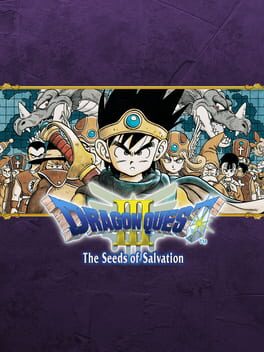
Dragon Quest III: The Seeds of Salvation 2009
Dragon Quest III is the closest game in existence to Final Fantasy (1987): party of four, job/class selection at the start, world map exploration, random encounters, towns, and dungeons in high fantasy. Its structure is almost identical.
Key difference: Dragon Quest's distinct monster design and simpler tone vs FF's operatic flair.
Best for: Anyone who wants the purest possible 'games like Final Fantasy 1' experience.
Skip if: You dislike grinding or retro JRPG pacing.
Final Fantasy III (known as VI in Japan) is a direct continuation of the series' classic formula: a large party of characters with distinct jobs, world map exploration, random encounters, and a rich fantasy setting. It refines every system from FFI while adding a sweeping narrative.
Key difference: Much larger cast and a dramatically deeper story than FFI.
Best for: Fans who want the purest, most evolved classic FF experience.
Skip if: You dislike 16-bit SNES-era pacing and graphics.
Chrono Trigger is a turn-based JRPG built by many of the same creators as Final Fantasy, sharing the party system, world map, towns, and dungeon structure. Its ATB-style combat and multiple endings make it the closest spiritual sibling to early Final Fantasy.
Key difference: Time-travel narrative replaces a straightforward save-the-world quest.
Best for: Anyone who wants FFI's feel with a tighter, more celebrated story.
Skip if: You dislike games without a job/class system.
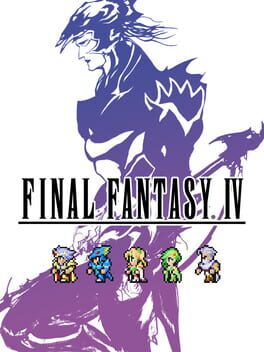
Final Fantasy IV introduced the Active Time Battle system while keeping the world map, party of characters with fixed jobs, towns, and dungeon structure of the original. It is the first truly narrative-driven entry in the series.
Key difference: Fixed character classes instead of player-chosen jobs; stronger story focus.
Best for: FFI players who want the series evolve into dramatic storytelling.
Skip if: You dislike ATB pressure during combat menus.
Final Fantasy VII retains the series' party-based turn-based combat, random encounters, world map, towns, and materia system acting as a class-like customization layer. It is the most famous entry in the franchise and a natural next step from FFI.
Key difference: Fully 3-D (PS1), sci-fi/fantasy hybrid setting instead of pure high fantasy.
Best for: FFI players ready for a cinematic, story-driven leap forward.
Skip if: You prefer the class system or purely medieval fantasy tone.
Final Fantasy IX is a deliberate love letter to the earliest Final Fantasy games, bringing back four-character parties, a job-like ability system, airship world-map travel, and a classic high-fantasy setting reminiscent of FFI's aesthetic.
Key difference: More narrative-heavy and emotional compared to FFI's sparse story.
Best for: FFI fans craving a modern polish on the original formula.
Skip if: You dislike slower pacing and longer cutscenes.
Clair Obscur: Expedition 33 is a 2025 turn-based RPG with a party system, command-based combat, and a fantasy world to explore — clearly in the lineage of classic JRPGs like Final Fantasy. Its fresh setting and reactive timed combat modernize the formula.
Key difference: Real-time parry/dodge inputs layered onto traditional turn-based structure.
Best for: FFI fans who want a modern, high-production classic-JRPG feel.
Skip if: You want pure menu combat with no reflex element.
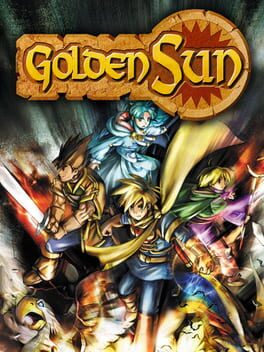
Golden Sun is a GBA turn-based JRPG with a four-member party, world map traversal, towns, dungeons, random encounters, and a Djinn-based class system that directly echoes Final Fantasy's job mechanics. It is criminally underplayed.
Key difference: Puzzle-heavy dungeon design using Psynergy abilities on the overworld.
Best for: FFI fans wanting a hidden gem that captures the exact classic formula.
Skip if: You want a game with mature or dark themes.
Final Fantasy VIII continues the series tradition of party-based turn-based combat and world-map exploration with a Junction magic system that replaces traditional jobs. Its setting blends fantasy with science fiction in a way the series began exploring with FFI's sequels.
Key difference: Junction system replaces the job/class system; more romance-focused story.
Best for: FFI completionists wanting to follow the entire mainline series.
Skip if: You dislike character-stat-farming gameplay loops.
Final Fantasy Tactics uses the same job system, world map, and fantasy lore as Final Fantasy but reframes combat as a tactical grid strategy game. Party composition and class synergy are central in both.
Key difference: Grid-based tactical combat replaces standard turn-based encounters.
Best for: FFI fans who want deeper strategic depth in party management.
Skip if: You dislike slow, chess-like tactical combat.
PlayStation
82%
Persona 5 2016
Persona 5 is a turn-based JRPG with a party of distinct characters, command-based combat exploiting elemental weaknesses, and dungeon crawling — mechanics that share direct DNA with Final Fantasy's core loop. Its demon-negotiation replaces random encounter loot drops.
Key difference: Set in modern-day Tokyo with social sim mechanics between dungeons.
Best for: FFI fans who want a story-rich JRPG with a stylish modern skin.
Skip if: You dislike time-management social links or anime aesthetics.
EarthBound is a turn-based JRPG with a four-member party, world map travel between towns, random encounters, and a class-less progression system — the same skeleton as Final Fantasy transported into a quirky contemporary American setting.
Key difference: Comedy/surreal modern-world setting instead of high fantasy.
Best for: FFI fans who enjoy offbeat humor alongside classic JRPG structure.
Skip if: You need a serious fantasy tone or high production values.
Nintendo
80%
Persona 4 Golden 2012
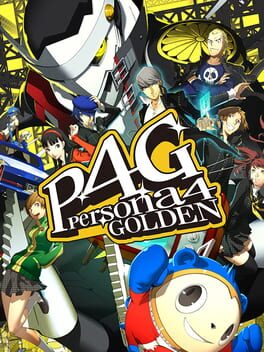
Persona 4 Golden is a turn-based JRPG with dungeon exploration, party management, and elemental weakness exploitation that shares Final Fantasy's combat philosophy. Its murder-mystery narrative and social system add considerable depth around the core loop.
Key difference: Heavy social sim layer; set in a small Japanese town.
Best for: Players who want FFI-style combat wrapped in a mystery story.
Skip if: You want pure dungeon crawling without life-sim segments.
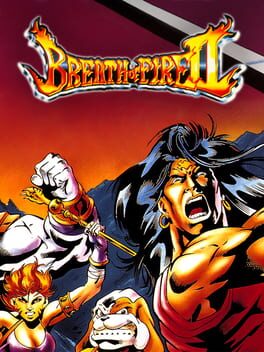
Breath of Fire II is a 16-bit turn-based JRPG with a four-character party, world map, towns, random encounters, and a classic fantasy quest structure modeled closely on early Final Fantasy games.
Key difference: Dragon transformation mechanic unique to the Breath of Fire series.
Best for: Retro JRPG fans who've exhausted the FF back catalog.
Skip if: You want modern production values or 3-D graphics.
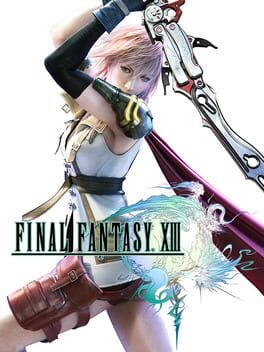
Final Fantasy XIII carries the series' party-based command-driven combat and linear dungeon progression into HD, with a Paradigm system replacing traditional jobs. It retains the sweeping fantasy narrative and summons of the classic series.
Key difference: Extremely linear level design with almost no open world map.
Best for: Series completionists or those who enjoy story-focused linear JRPGs.
Skip if: You value exploration and town interaction; FFXIII has almost none.
Knights of the Old Republic uses a d20-based turn-based combat system, a party of companions with distinct abilities, and an overworld of planets acting like towns and dungeons — paralleling Final Fantasy's structure in a Star Wars skin.
Key difference: Western RPG with dialogue choices and moral alignment; sci-fi setting.
Best for: FFI fans who enjoy party strategy and want a deep narrative RPG.
Skip if: You dislike Star Wars or Western RPG dialogue trees.
Planescape: Torment is an isometric party-based RPG with turn-based combat, dungeon exploration, and a richly detailed fantasy world — sharing Final Fantasy's commitment to party synergy and world-building depth. Its narrative is widely considered among the best in RPG history.
Key difference: Overwhelmingly dialogue-and-story-focused with minimal combat emphasis.
Best for: FFI players who want the deepest possible RPG writing and lore.
Skip if: You play JRPGs primarily for combat systems or grinding.
Baldur's Gate III is a turn-based party RPG with character classes, dungeon exploration, and a fantasy world navigated via distinct hub zones — echoing Final Fantasy's structural DNA in a modern high-fidelity package built on D&D rules.
Key difference: Full 3-D open-ended Western RPG with co-op; D&D ruleset, not JRPG.
Best for: FFI fans ready for a massive, modern party-based RPG with tactical depth.
Skip if: You want a quick JRPG experience; BG3 demands 100+ hours.
Pokémon Red shares Final Fantasy's core structure almost exactly: build a party, traverse a world map between towns, explore dungeons, fight random encounters in turn-based combat, and face bosses. It simply replaces classes with creature collecting.
Key difference: Catch-and-collect monster system instead of human character classes.
Best for: Younger players or anyone who wants FFI's loop in a friendlier package.
Skip if: You dislike collecting games or want a dramatic narrative.
South Park: The Stick of Truth is a turn-based RPG with a party system, ability management, and dungeon-like environments drawn directly from classic JRPG conventions including Final Fantasy — wrapped in crude comedy.
Key difference: Comedic South Park satire replaces serious fantasy; short game (~12 hrs).
Best for: FFI fans who want a familiar JRPG loop with irreverent humor.
Skip if: You are offended by crude comedy or dislike the South Park brand.
Dragon Age: Origins is a party-based fantasy RPG with character classes, tactical combat, and a world built around dungeon hubs — sharing Final Fantasy's party management and fantasy worldbuilding, though its combat is real-time-with-pause rather than turn-based.
Key difference: Real-time-with-pause combat; Western RPG dialogue and moral choices.
Best for: FFI fans who want party tactics and deep lore in a darker fantasy world.
Skip if: You require strictly turn-based combat or a Japanese aesthetic.
Undertale is a pixelart RPG with random encounters, a battle command menu, and a party-adjacent system, consciously built as a tribute and deconstruction of classic JRPGs like Final Fantasy. Its bullet-hell dodge mechanic subverts the turn-based formula.
Key difference: Active dodge mechanic in combat; meta-narrative deconstructing RPG tropes.
Best for: FFI fans who want a short, emotionally resonant indie that loves the genre.
Skip if: You want a traditional stat-heavy RPG without meta humor.
Dragon Quest's distinct monster design and simpler tone vs FF's operatic flair.
PlayStation, Nintendo, Mobile
Final Fantasy III
97%
Role-playing (RPG), Adventure
Much larger cast and a dramatically deeper story than FFI.
Nintendo
Chrono Trigger
95%
Role-playing (RPG), Fantasy
Time-travel narrative replaces a straightforward save-the-world quest.
Nintendo
Final Fantasy IV
94%
Role-playing (RPG), Adventure
Fixed character classes instead of player-chosen jobs; stronger story focus.
Xbox, PlayStation, Mobile, PC, Nintendo
Final Fantasy VII
93%
Role-playing (RPG), Adventure
Fully 3-D (PS1), sci-fi/fantasy hybrid setting instead of pure high fantasy.
PlayStation
Final Fantasy IX
92%
Role-playing (RPG), Adventure
More narrative-heavy and emotional compared to FFI's sparse story.
PlayStation
Clair Obscur: Expedition 33
88%
Role-playing (RPG), Adventure
Real-time parry/dodge inputs layered onto traditional turn-based structure.
Xbox, PC, PlayStation
Golden Sun
88%
Role-playing (RPG), Adventure
Puzzle-heavy dungeon design using Psynergy abilities on the overworld.
Nintendo
Final Fantasy VIII
87%
Role-playing (RPG), Adventure
Junction system replaces the job/class system; more romance-focused story.
PlayStation
Final Fantasy Tactics
83%
Role-playing (RPG), Fantasy
Grid-based tactical combat replaces standard turn-based encounters.
PlayStation
Persona 5
82%
Role-playing (RPG), Adventure
Set in modern-day Tokyo with social sim mechanics between dungeons.
PlayStation
EarthBound
82%
Role-playing (RPG), Adventure
Comedy/surreal modern-world setting instead of high fantasy.
Nintendo
Persona 4 Golden
80%
Role-playing (RPG), Adventure
Heavy social sim layer; set in a small Japanese town.
PlayStation
Breath of Fire II
80%
Role-playing (RPG), Adventure
Dragon transformation mechanic unique to the Breath of Fire series.
Nintendo
Final Fantasy XIII
75%
Role-playing (RPG), Adventure
Extremely linear level design with almost no open world map.
PlayStation, PC, Xbox
What makes a game feel like Final Fantasy (1987)?
The original Final Fantasy has four defining pillars: a party with class roles (Fighter, Black Mage, White Mage, etc.), a world map connecting towns and dungeons, random encounter turn-based combat with command menus, and a high-fantasy save-the-world narrative. Games that replicate all four pillars are the truest matches.
Chrono Trigger and Dragon Quest III nail every pillar. Later entries in the Final Fantasy series itself — especially Final Fantasy III (VI), Final Fantasy IX, and Final Fantasy IV — refine the formula while staying true to its roots. If you want a modern successor, Clair Obscur: Expedition 33 revives command-based turn-based combat in a lavish 2025 package.
Best JRPGs like Final Fantasy for modern players
If you loved FFI but want something with today's production quality, Persona 5 Royal offers the richest turn-based party RPG experience available on current hardware — elemental weaknesses, dungeon crawling, and character building are all central. Baldur's Gate III translates the party-and-class structure into a visually stunning D&D ruleset with full turn-based combat.
For a middle ground, Final Fantasy VII is the franchise's first major leap in storytelling and still uses ATB command-menu combat familiar to FFI veterans. And Clair Obscur: Expedition 33 is the newest game that most directly channels the spirit of the 1987 original for a 2025 audience.
Hidden gems that scratch the Final Fantasy itch
Golden Sun (GBA) is the most underrated recommendation on any "games like Final Fantasy" list: four-character party, job-like Djinn class system, world map, towns, dungeons, and random encounters — essentially Final Fantasy transposed to Nintendo's handheld with puzzles layered in. Planescape: Torment takes the party-based RPG structure and wraps it in what many consider the greatest written narrative in the genre.
EarthBound is another cult classic that runs the exact same four-person party turn-based formula as Final Fantasy, just set in a hilarious 1990s America rather than a medieval kingdom — and its humor masks genuinely deep mechanics. Breath of Fire II is the most direct retro analog to FFI that most players never tried.
What game is most similar to the original Final Fantasy?
Dragon Quest III is structurally the closest match — four-character party, job selection, world map, towns, dungeons, and random turn-based encounters. Among the Final Fantasy series itself, Final Fantasy III (released as III in the West, VI in Japan) is the most celebrated evolution of the original formula.
Are the other Final Fantasy games similar to the first one?
Yes, especially the SNES-era entries. Final Fantasy IV, Final Fantasy III (VI), and Final Fantasy IX all share the party system, world map, dungeon structure, and turn-based ATB combat. Later entries like Final Fantasy XIII and XV shift toward more action-oriented systems and linear design.
What modern games feel like classic Final Fantasy?
Clair Obscur: Expedition 33 (2025) is the most recent game explicitly designed around classic Final Fantasy command-menu combat. Persona 5 Royal and Baldur's Gate III both deliver rich party-based turn-based RPG experiences with modern production values.
Is Chrono Trigger similar to Final Fantasy?
Extremely so — Chrono Trigger was made by the same core team (Hironobu Sakaguchi, Yuji Horii, Nobuo Uematsu) and uses the same ATB battle system, party of distinct characters, and world map as Final Fantasy. Many consider it the best single-player RPG ever made and the true sibling of early Final Fantasy.
What should I play after Final Fantasy if I want more turn-based RPGs?
Start with Chrono Trigger, then move to Final Fantasy IV or Final Fantasy VI (III). After that, Dragon Quest III, Golden Sun, EarthBound, and Persona 4 Golden all deliver the same core loop — turn-based party combat, dungeon exploration, and a fantasy world to save.
 98%
98%