A Link Between Worlds earns its devoted following by combining the satisfying top-down Zelda formula with two bold design choices: a wall-merging mechanic that turns the familiar Hyrule map into a three-dimensional puzzle playground, and a genuinely open item-rental system that lets you tackle dungeons in almost any order from the start. The result is a game where exploration and puzzle-solving are inseparable—every corner of the overworld hides a challenge, not just the dungeons.
When fans ask for games like A Link Between Worlds, they're really looking for that same blend of freely explorable fantasy worlds, clever item-based puzzle rooms, and a central gimmick that makes you see familiar spaces in a new way. The best picks below prioritize that specific itch—not just any open-world adventure or action game.
Top pick: The single closest pick is The Legend of Zelda: A Link to the Past—it is literally the game A Link Between Worlds was designed as a sequel to, set in the same Hyrule with the same dungeon-puzzle DNA, and playing it makes every design choice in ALBW click into place; if you somehow haven't played it, that is where to go first.
Some store buttons are affiliate links — we may earn a commission at no extra cost to you.
23 games like The Legend of Zelda: A Link Between Worlds
98%
The Legend of Zelda: A Link to the Past 1991
A Link Between Worlds is literally a sequel set in the same Hyrule, so A Link to the Past is the direct ancestor of almost every mechanic you enjoyed—top-down exploration, dungeon-item progression, and a dark-world parallel map. The puzzle density and overworld structure are nearly identical.
Key difference: Linear dungeon order; no wall-merging mechanic.
Best for: Anyone who wants the original blueprint ALBW was built on.
Skip if: You want modern visuals or the item-rental freedom.
The Minish Cap is the closest top-down Zelda in feel to A Link Between Worlds—compact, puzzle-rich dungeons, a GBA overworld full of secrets, and a size-shifting gimmick that mirrors ALBW's wall-merging in how it recontextualizes the same map. Tight and brilliantly designed.
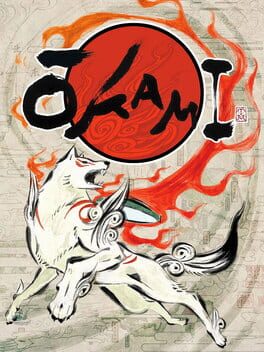
Okami is the closest large-scale action-adventure to A Link Between Worlds outside the Zelda series itself—you explore a vast Japanese-mythology overworld, unlock abilities to solve environmental puzzles, and clear themed dungeons with distinct item gimmicks. The Celestial Brush mechanic is as transformative as wall-merging.
Key difference: Painting-based mechanic; PS2/Wii-era 3D not top-down.
Best for: ALBW fans wanting a full-length Zelda-like with a unique art style.
Tunic is a top-down isometric action-adventure about a small fox uncovering a lost manual page by page—its dungeon structure, item-gated exploration, and puzzle-heavy world design are the closest modern echo of A Link Between Worlds. Secrets reward methodical exploration.
Key difference: Much harder combat; knowledge-based mystery replaces clear narrative.
Best for: ALBW fans wanting a challenging modern top-down Zelda-like.
Skip if: You want a straightforward adventure without cryptic design.
Majora's Mask shares ALBW's top-down-adjacent puzzle dungeons (in 3D) and a non-linear, exploration-first structure where you can tackle content in varied order. Its transformation masks parallel ALBW's ability-swapping wall mechanic.
Key difference: Time-loop mechanics dominate; much darker tone.
Best for: Fans who want Zelda with deeper systemic complexity.
Skip if: You dislike time pressure or melancholic atmospheres.
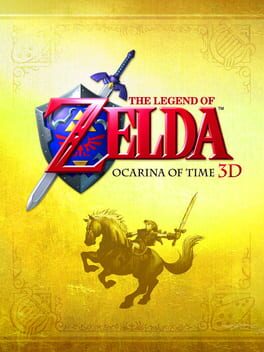
Ocarina of Time 3D runs on the same hardware as A Link Between Worlds and uses stereoscopic 3D to enhance spatial puzzle-solving just like ALBW does. It's the foundational 3D Zelda, packed with dungeon puzzles and overworld exploration.
Key difference: 3D perspective; linear dungeon gating early game.
Best for: ALBW players seeking a 3DS Zelda with more story.
Skip if: You strongly prefer top-down perspective.
Twilight Princess delivers the same item-gated dungeon loop and fantasy Hyrule exploration as ALBW, with a darker aesthetic and highly polished puzzle rooms. Its dual Light/Twilight world mirrors ALBW's Hyrule/Lorule duality.
Key difference: Much longer, slower paced; linear early progression.
Best for: Those who want the grandest, most cinematic classic Zelda.
Skip if: You want nonlinear freedom from the start.
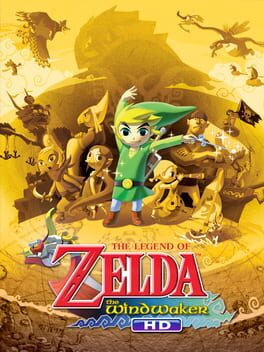
Wind Waker HD shares ALBW's bright visual palette, top-down-ish puzzle dungeons (in 3D), and a love of exploration—sailing between islands mirrors ALBW's free-roaming overworld feel. Puzzle rooms are inventive and the item set is satisfying.
The original Ocarina of Time set the template for 3D Zelda's dungeon-puzzle structure that ALBW explicitly references and evolved. Its item-based puzzle rooms, overworld secrets, and dual-timeline world mirror ALBW's Hyrule/Lorule duality in spirit.
Key difference: 3D perspective; linear story gating early dungeons.
Best for: Players who want the seminal 3D Zelda on original hardware.
Skip if: You prefer the handheld/3DS OOT3D version with better visuals.
Skyward Sword is built around environmental and dungeon puzzles more than any other 3D Zelda—every room requires using items cleverly, echoing ALBW's puzzle focus. The segmented overworld and stamina system add fresh structure.
Key difference: Motion controls; most linear Zelda overworld.
Best for: Players who want the deepest puzzle dungeons in 3D Zelda.
Skip if: You disliked motion controls or want open exploration.
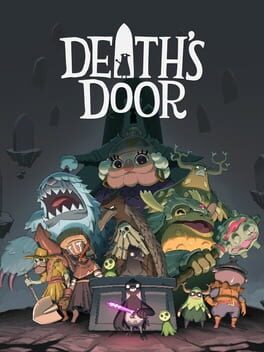
Death's Door is a top-down action-adventure where a crow reaper traverses interconnected worlds solving puzzles and clearing dungeon-like boss arenas—the compact overworld, item unlocks, and environmental puzzle rooms feel like a refined tribute to classic Zelda.
Key difference: Soulslike difficulty and darker tone; isometric 3D.
Best for: ALBW fans who want tighter, harder top-down action-adventure.
Skip if: You want lighter difficulty or a large open world.
Breath of the Wild shares ALBW's non-linear dungeon approach and a philosophy of letting players tackle content in any order from nearly the start. Its physics-driven puzzle shrines echo ALBW's bite-sized puzzle chambers scattered across the world.
Key difference: Fully 3D open world; survival systems replace item-gating.
Best for: ALBW fans ready for the modern open-world Zelda evolution.
Skip if: You want classic item-progression dungeons over physics puzzles.
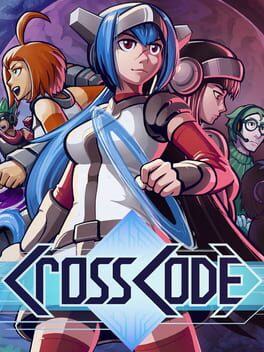
CrossCode is a top-down action RPG with some of the most intricate puzzle dungeons in the genre—each room is a spatial logic challenge requiring precise use of a ball-throwing mechanic, directly evoking how ALBW makes you use items creatively in every room.
Key difference: Science-fiction MMO framing; much longer and dialogue-heavy.
Best for: ALBW fans craving the deepest puzzle dungeons in any Zelda-like.
Skip if: You want a short or purely fantasy experience.
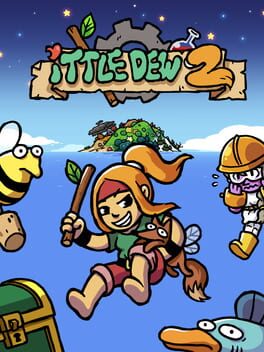
Ittle Dew 2 is explicitly inspired by A Link Between Worlds—a top-down adventure where you can tackle dungeons in any order, find items inside them, and use those items to solve overworld puzzles. Even the non-linear rental spirit is echoed here.
Key difference: Much shorter; indie production values and self-aware humor.
Best for: ALBW fans wanting the purest direct mechanical tribute.
Skip if: You need high production values or a long runtime.
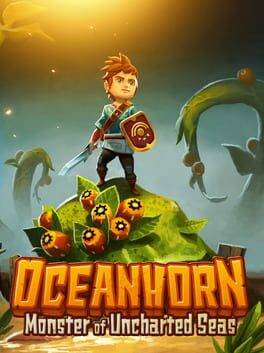
Oceanhorn is a direct Zelda homage—top-down island exploration, chest-unlocked items used to clear dungeon puzzles, and a sailing overworld inspired by Wind Waker. It scratches the classic Zelda itch with an accessible mobile-to-console design.
Key difference: Shorter and simpler; Wind Waker-inspired sailing traversal.
Best for: ALBW fans who want a portable, breezy Zelda clone.
Skip if: You want the mechanical depth or polish of a Nintendo first-party title.
Hollow Knight is a labyrinthine underground kingdom filled with interconnected zones, boss-gated progression, and hidden secrets that rewards careful exploration—the same exploration-and-discovery itch as ALBW. Combat is precise and satisfying.
Key difference: Metroidvania side-scrolling, not top-down; much harder.
Best for: ALBW fans craving deeper, darker exploration and challenge.
Skip if: You want lighter tone or straightforward dungeon structure.
Fez centers on a single perspective-shifting mechanic—rotating 3D space to reveal hidden 2D paths—that directly parallels ALBW's wall-merging gimmick: both games make you see the same map in a completely new dimension to solve puzzles. The overworld is freely explorable from the start.
Key difference: Pure puzzle-platformer; no combat or action.
Best for: Players who loved ALBW's spatial/dimensional puzzle concept most.
Skip if: You need combat or classic Zelda dungeon structure.
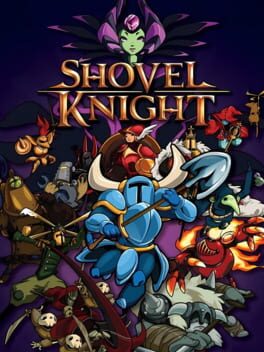
Shovel Knight channels classic top-down and side-scrolling adventure with discrete stages full of secrets, collectibles, and boss fights—each Knight boss requiring specific strategies that recall Zelda dungeon bosses. It has ALBW's Nintendo-polish feel.
Key difference: Stage-based platformer, not open overworld; retro difficulty.
Best for: ALBW fans who want a shorter, action-forward indie successor.
Skip if: You dislike precision platforming or retro aesthetics.
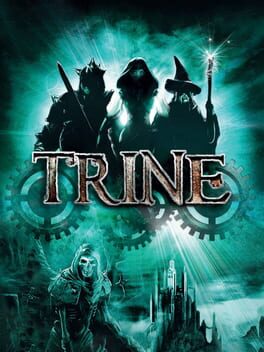
Trine is a side-scrolling puzzle-adventure in a hand-painted fantasy world where you switch between three characters with distinct abilities—each puzzle requires the right tool, mirroring ALBW's item-based puzzle design. Co-op adds a layer ALBW lacks.
Key difference: Physics-based side-scrolling; character-swapping over items.
Best for: ALBW fans wanting co-op fantasy puzzle-adventure.
Skip if: You want top-down exploration or a large open world.
Paper Mario: The Thousand-Year Door shares ALBW's charming fantasy tone, puzzle-room dungeons, and a mix of light combat with clever environmental challenges. Its chapter structure gives each area a distinct gimmick, similar to ALBW's dungeon theming.
Key difference: Turn-based RPG combat; Mario universe, not Zelda-style action.
Best for: ALBW fans who want more story, humor, and RPG depth.
Skip if: You dislike turn-based systems or want real-time combat.
Ori and the Blind Forest is a gorgeous fantasy platformer with tight ability-gated exploration and a strong sense of a world that opens up as you unlock new movement tools—similar to how ALBW's item set unlocks new areas. The atmosphere is richly crafted.
Key difference: Emotional narrative platformer; no dungeon or puzzle rooms.
Best for: ALBW fans who value atmosphere and exploration above combat.
Skip if: You want top-down view or puzzle-heavy dungeons.
Brothers: A Tale of Two Sons is a compact puzzle-adventure in a Nordic fantasy world where each analog stick controls one brother—a dual-input mechanic as novel as ALBW's wall-merging. Environmental puzzles are inventive and the world is full of quiet wonder.
Key difference: Short (~3h), linear narrative; no combat or overworld.
Best for: ALBW fans who love a clever one-mechanic puzzle journey.
Skip if: You want replayability, combat, or a long adventure.
Undertale is a puzzle-RPG adventure in a fantasy underground world where every room presents a problem to solve—combat itself becomes a puzzle, echoing ALBW's philosophy of making every encounter require thought. The world rewards thorough exploration.
Key difference: Retro bullet-hell combat; meta humor and pacifist themes dominate.
Best for: ALBW fans who want a short, subversive puzzle-adventure with heart.
Skip if: You want action combat, open overworld, or classic Zelda tone.
3D perspective; linear story gating early dungeons.
Nintendo
The Legend of Zelda: Skyward Sword
82%
Puzzle, Adventure
Motion controls; most linear Zelda overworld.
Nintendo
Death's Door
82%
Adventure, Action
Soulslike difficulty and darker tone; isometric 3D.
Xbox, PlayStation, Mobile, PC, Nintendo
The Legend of Zelda: Breath of the Wild
80%
Puzzle, Adventure
Fully 3D open world; survival systems replace item-gating.
Nintendo
CrossCode
78%
Puzzle, Adventure
Science-fiction MMO framing; much longer and dialogue-heavy.
PlayStation, PC, Xbox, Nintendo
Ittle Dew 2
75%
Puzzle, Adventure
Much shorter; indie production values and self-aware humor.
PlayStation, PC, Xbox, Nintendo
Oceanhorn: Monster of Uncharted Seas
73%
Adventure, Action
Shorter and simpler; Wind Waker-inspired sailing traversal.
PlayStation, Mobile, PC, Xbox, Nintendo
What makes a game truly feel like A Link Between Worlds?
The defining qualities are a top-down or isometric perspective, an overworld that doubles as a puzzle space (not just a travel corridor), and item-gated dungeon rooms where each piece of equipment has a clear mechanical purpose. Crucially, ALBW's wall-merging mechanic is a dimension-shifting trick—it makes you perceive the same map in a new way. Games that capture this best include The Minish Cap (scale-shrinking opens hidden paths in the same overworld), Fez (rotating 3D space to find 2D solutions), and Tunic (discovering how the world works through exploration rather than exposition).
The non-linear dungeon order is equally important—ALBW lets you approach challenges in almost any sequence from early on. Breath of the Wild extends this philosophy to its fullest with an open world where nearly every shrine and dungeon is accessible immediately, while Hollow Knight uses the Metroidvania structure to reward players who push into areas earlier than expected.
Best picks for 3DS and handheld fans
If you played A Link Between Worlds on 3DS and want to stay on that hardware (or its Virtual Console library), The Legend of Zelda: Ocarina of Time 3D is purpose-built for the platform—its stereoscopic 3D enhances the same spatial puzzle-solving ALBW uses, and the remaster is the definitive way to play the series' most influential entry. The Legend of Zelda: Majora's Mask 3D is similarly excellent and adds transformation-mask mechanics that feel inventive in the same way wall-merging does.
Beyond first-party titles, Shovel Knight is one of the finest action-adventure games the 3DS received from a third party—its stage-based structure is tighter than ALBW's open overworld, but its polished design, distinct boss encounters, and collectible-hunting depth give it the same Nintendo-quality feel.
If you want the puzzle-first experience over the action
A Link Between Worlds is as much a puzzle game as it is an action-adventure—some fans finish it and realize it was the clever room solutions they loved most. For those players, Fez is the purest distillation of that spatial puzzle satisfaction: its mechanic of rotating a 3D world to find hidden 2D paths is philosophically identical to ALBW's wall-merging, and its freely explorable map rewards lateral thinking at every turn. CrossCode goes further, offering top-down dungeon puzzles of extraordinary intricacy—every room is a spatial logic problem—wrapped in a longer RPG adventure.
Trine and Brothers: A Tale of Two Sons are also worth highlighting for fans who want the puzzle-adventure feel in a co-op or cinematic package: Trine's physics-based fantasy puzzle rooms echo ALBW's "right tool for the job" item design, while Brothers introduces a dual-character mechanic as conceptually novel as wall-merging.
Is A Link Between Worlds worth playing if I haven't played A Link to the Past?
Yes—it works as a standalone adventure. The Hyrule map will feel fresh rather than nostalgic, and the game explains everything you need. That said, playing A Link to the Past first deepens every moment of recognition, so many fans recommend playing both in order.
What is the most similar game to A Link Between Worlds that isn't a Zelda title?
Tunic comes closest in 2024 terms—it's a top-down action-adventure with item-gated exploration, environmental puzzles woven into the overworld, and a central mechanic (discovering an in-game manual) that reframes how you see the world, much like wall-merging does. For an older option, Okami is the gold standard Zelda-like outside the series.
Are there any games like A Link Between Worlds on mobile or PC?
Oceanhorn: Monster of Uncharted Seas is available on iOS, Android, and PC and is explicitly Zelda-inspired—top-down island exploration, item-gated dungeons, and a sailing overworld. CrossCode on PC offers deeper puzzle dungeons if you want more challenge. Ittle Dew 2 is a budget-friendly PC option that directly imitates ALBW's non-linear dungeon structure.
What should I play after finishing all the Zelda games in the candidate list?
Hollow Knight is the most natural next step—it's a longer, harder exploration-adventure with a sense of discovery and dungeon-like boss encounters that Zelda fans consistently love. After that, Death's Door and Tunic are two modern top-down adventures made specifically for players who grew up on Zelda.
Does Breath of the Wild feel like A Link Between Worlds?
In philosophy, yes—both games let you tackle content in almost any order and treat exploration as a first-class activity. In execution they're quite different: ALBW has compact, item-gated puzzle dungeons and a merging mechanic, while Breath of the Wild uses physics-based open-world shrines and survival systems. Fans of ALBW's freedom tend to love BotW, but fans of its structured dungeon puzzles often prefer Twilight Princess or The Minish Cap.
 98%
98%