Tell us a game you love

Games Like Slay the Spire

Updated June 2026 · data via IGDB

Slay the Spire carved out its place as one of the most beloved roguelikes ever made by fusing two things perfectly: the satisfying drafting loop of a collectible card game and the run-based tension of a roguelike. Each attempt asks you to construct a coherent deck on the fly, synergize relics with your card choices, and read encounters well enough to survive a gauntlet of bosses — all in a run that can end in an instant.

When players ask for games like Slay the Spire, they're usually hunting for one (or both) of two feelings: the deck-building strategy of choosing and combining cards into something greater than the sum of its parts, or the roguelike run structure where each attempt is self-contained, knowledge compounds over time, and discovering a powerful synergy feels earned. The best picks on this list deliver at least one of those feelings authentically.

Top pick: If you can only pick one, start with Monster Train (in our additional picks) — it is the single most direct deck-building roguelike successor to Slay the Spire, sharing its draft-and-climb structure while adding enough novelty in its two-lane combat system to feel fresh rather than derivative. From the candidate pool, Inscryption is the standout: it wraps Slay the Spire's card roguelike skeleton in a mystery that makes every run feel genuinely surprising.

Some store buttons are affiliate links — we may earn a commission at no extra cost to you.

19 games like Slay the Spire

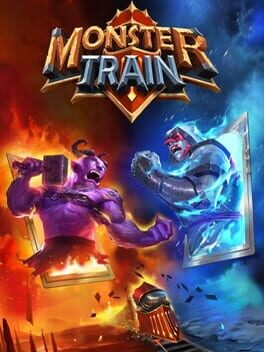
Monster Train cover97%

Monster Train 2020

Monster Train is the closest deck-building roguelike to Slay the Spire: you construct a card deck, select faction combinations, and battle up a procedurally arranged train with a distinct two-lane combat twist.

  • Key difference: Two-lane vertical battlefield adds spatial positioning layer.
  • Best for: StS players who want the purest deck-building roguelike alternative.
  • Skip if: You dislike the slightly faster, combo-heavy card pace.
XboxPCMobilePlayStationNintendo
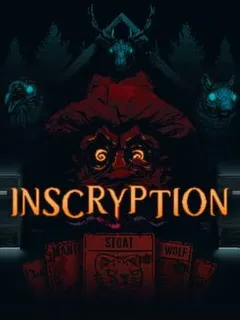
Inscryption cover95%

Inscryption 2021

Inscryption is a deck-building roguelike card game that shares Slay the Spire's core loop of drafting cards, managing resources, and climbing through encounters. It wraps that familiar skeleton in a meta-narrative mystery that constantly subverts expectations.

  • Key difference: Dense meta-narrative layer reframes every run with new rules.
  • Best for: StS fans who want story depth woven into card mechanics.
  • Skip if: You want pure, transparent roguelike runs with no narrative tricks.
XboxPlayStationPCNintendo
The Binding of Isaac: Rebirth cover84%

The Binding of Isaac: Rebirth 2014

The Binding of Isaac: Rebirth is a roguelike built around run-based item synergies — discovering powerful combinations each playthrough mirrors how StS players craft a winning deck. Every run starts fresh with hundreds of possible build directions.

  • Key difference: Real-time twin-stick shooter instead of turn-based card play.
  • Best for: Players who love emergent synergies and monstrous run variance.
  • Skip if: You need turn-based pacing to think through decisions.
PlayStationPCNintendoMobileXbox
Hades cover82%

Hades 2020

Hades shares Slay the Spire's roguelike DNA: each run you collect boons and upgrades that stack into a unique build, and permanent progression unlocks between attempts. The narrative delivery is exceptional.

  • Key difference: Fast real-time hack-and-slash action, not card-based turns.
  • Best for: StS fans who want rich lore and smoother moment-to-moment action.
  • Skip if: You find action combat tiring and prefer deliberate turn-based play.
XboxPlayStationPCMobileNintendo
Darkest Dungeon cover82%

Darkest Dungeon 2016

Darkest Dungeon uses turn-based party combat with a stress/affliction system on top of roguelite progression — the punishing resource management and encounter sequencing captures StS's tense risk-reward feel.

  • Key difference: Gothic horror tone with permanent party death and stress mechanics.
  • Best for: StS fans who want punishing atmosphere and party-based turns.
  • Skip if: You dislike high attrition and want to avoid permanent loss.
PlayStationPCMobileXboxNintendo
Dicey Dungeons cover78%💎 Gem

Dicey Dungeons 2019

Dicey Dungeons replaces cards with dice as your combat resource, but the run-based structure, character selection with unique ability sets, and equipment-drafting loop map almost directly onto Slay the Spire's skeleton.

  • Key difference: Dice rolling replaces cards as the core resource mechanic.
  • Best for: Players wanting StS's structure with a fresh resource system.
  • Skip if: You dislike any reliance on random dice results in combat.
XboxPlayStationPCMobileNintendo
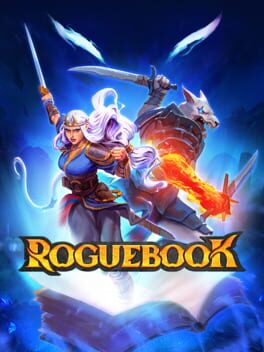
Roguebook cover75%💎 Gem

Roguebook 2021

Roguebook is a direct deck-building roguelike by one of the Magic: The Gathering designers — you explore a hex map, collect cards for two paired heroes, and battle bosses in sequences that feel very close to StS.

  • Key difference: Dual-hero system and hex map exploration add a layer of board navigation.
  • Best for: StS fans who enjoy card game design pedigree and dual-character synergies.
  • Skip if: You want a single protagonist and minimal map decisions.
XboxPlayStationPCNintendo
Dead Cells cover74%

Dead Cells 2018

Dead Cells is a roguelite where weapon and mutation combinations define each run, echoing the build-crafting satisfaction of StS. Choosing which scrolls to pick up per run requires meaningful strategic trade-offs.

  • Key difference: Action platformer requiring fast reflexes, not strategic card play.
  • Best for: Players who want run-based build crafting with kinetic combat.
  • Skip if: You have no interest in action-platformer mechanics.
PlayStationPCMobileXboxNintendo
Enter the Gungeon cover72%

Enter the Gungeon 2016

Enter the Gungeon is a roguelike where synergies between collected guns and passives reward experimentation over many runs, much like StS rewards understanding card interactions. Boss encounters demand pattern recognition and adaptability.

  • Key difference: Bullet-hell twin-stick shooter rather than card-based turns.
  • Best for: Players drawn to the high-run-count mastery arc of StS.
  • Skip if: You dislike twitch-based bullet dodging.
PlayStationPCMobileXboxNintendo
Marvel's Midnight Suns cover70%

Marvel's Midnight Suns 2022

Marvel's Midnight Suns uses a card-based tactical combat system where you draft a hand each turn and manage positioning — it scratches the deck-building strategy itch with a superhero license and a full social narrative layer.

  • Key difference: Narrative character management meta-layer between missions.
  • Best for: StS fans who want card tactics with AAA production and Marvel heroes.
  • Skip if: You want pure roguelike runs without soap-opera social systems.
XboxPlayStationPCNintendo
Risk of Rain 2 cover68%

Risk of Rain 2 2020

Risk of Rain 2 delivers roguelike run variance through stacked item synergies — finding overpowered combinations in each run captures the same joy as assembling a broken StS deck. Runs escalate in difficulty similarly.

  • Key difference: Third-person 3D shooter with co-op support.
  • Best for: StS players who want to play roguelikes with friends.
  • Skip if: You exclusively want solo turn-based play.
XboxPlayStationPCNintendo
Returnal cover65%

Returnal 2021

Returnal is a roguelike where each run builds a different loadout from scratch and death returns you to the start, replicating StS's tension around run investment. The escalating boss encounters reward learning and adaptation.

  • Key difference: Intense real-time third-person shooter on console/PC.
  • Best for: Console players wanting a premium roguelike with production values.
  • Skip if: You want deliberate card-based strategy, not twitch action.
PCPlayStation
Cult of the Lamb cover62%

Cult of the Lamb 2022

Cult of the Lamb blends roguelite dungeon runs — where weapon and curse combinations vary per attempt — with base-building between expeditions, mirroring StS's rhythm of combat challenges and persistent progression.

  • Key difference: Base management meta-layer replaces deckbuilding.
  • Best for: StS fans who want a persistent world to develop between runs.
  • Skip if: You dislike base management and prefer pure roguelike focus.
XboxPlayStationPCNintendo
Vampire Survivors cover58%

Vampire Survivors 2022

Vampire Survivors is a roguelite of escalating synergies: choosing which weapons and items to combine each run echoes StS's deck-curation satisfaction in a highly condensed format. Runs are short and addictive.

  • Key difference: Fully auto-attacking; decisions are between waves, not in combat.
  • Best for: Players wanting a lighter, faster roguelite loop on any device.
  • Skip if: You want meaningful moment-to-moment tactical decisions.
XboxPlayStationPCMobileNintendo
Spelunky cover57%

Spelunky 2012

Spelunky is a foundational roguelike where each procedurally generated level demands resource management and risk assessment — the same run-by-run strategic mindset StS cultivates. Knowledge compounds into eventual mastery.

  • Key difference: Real-time precision platformer with physics-based traps.
  • Best for: Players who want the purest run-mastery roguelike challenge.
  • Skip if: You dislike platformer dexterity requirements.
PlayStationPCXboxNintendo
Fire Emblem: Three Houses cover52%

Fire Emblem: Three Houses 2019

Fire Emblem: Three Houses shares StS's turn-based tactical combat and strategic character development. Choosing which abilities and gambits to deploy mirrors the card-selection decision-making of StS, albeit in a fixed campaign.

  • Key difference: Linear story campaign — no roguelike runs or permadeath by default.
  • Best for: StS fans who want turn-based tactics with deep narrative.
  • Skip if: You specifically want procedural roguelike replayability.
Nintendo
Baldur's Gate III cover48%

Baldur's Gate III 2023

Baldur's Gate 3 features deep turn-based tactical combat where ability and spell selection mirrors the decision-making density of StS. Build theory-crafting across characters is substantial and rewarding.

  • Key difference: Massive narrative RPG with no roguelike runs or deck-building.
  • Best for: StS players wanting a premium turn-based RPG to sink into.
  • Skip if: You want short roguelike sessions rather than a 100-hour epic.
XboxPCPlayStation
Gwent: The Witcher Card Game cover45%💎 Gem

Gwent: The Witcher Card Game 2018

Gwent is a pure card game with layered strategic decision-making — hand management, sequencing, and bluffing across two-round matches share conceptual DNA with StS's card-play timing. It rewards deep card knowledge.

  • Key difference: Competitive PvP card game with no roguelike or solo progression loop.
  • Best for: StS fans who want a pure card game to master competitively.
  • Skip if: You want roguelike runs rather than competitive matchmaking.
PlayStationMobilePCXbox
Heroes of Might and Magic III: The Restoration of Erathia cover42%

Heroes of Might and Magic III: The Restoration of Erathia 1999

Heroes of Might and Magic III combines turn-based strategy with RPG progression — managing heroes, spells, and armies across a map echoes the resource-and-risk planning of a StS run at a macro scale.

  • Key difference: Grand strategy/warlord game, no card mechanics or roguelike loop.
  • Best for: Turn-based strategy lovers who want depth over many sessions.
  • Skip if: You want fast roguelike runs instead of long strategic campaigns.
PC

At a glance

GameMatchShared DNABiggest differencePlatforms
Monster Train97%Role-playing (RPG), StrategyTwo-lane vertical battlefield adds spatial positioning layer.Xbox, PC, Mobile, PlayStation, Nintendo
Inscryption95%Strategy, AdventureDense meta-narrative layer reframes every run with new rules.Xbox, PlayStation, PC, Nintendo
The Binding of Isaac: Rebirth84%Role-playing (RPG), AdventureReal-time twin-stick shooter instead of turn-based card play.PlayStation, PC, Nintendo, Mobile, Xbox
Hades82%Role-playing (RPG), AdventureFast real-time hack-and-slash action, not card-based turns.Xbox, PlayStation, PC, Mobile, Nintendo
Darkest Dungeon82%Role-playing (RPG), StrategyGothic horror tone with permanent party death and stress mechanics.PlayStation, PC, Mobile, Xbox, Nintendo
Dicey Dungeons78%Role-playing (RPG), StrategyDice rolling replaces cards as the core resource mechanic.Xbox, PlayStation, PC, Mobile, Nintendo
Roguebook75%Role-playing (RPG), StrategyDual-hero system and hex map exploration add a layer of board navigation.Xbox, PlayStation, PC, Nintendo
Dead Cells74%Adventure, IndieAction platformer requiring fast reflexes, not strategic card play.PlayStation, PC, Mobile, Xbox, Nintendo
Enter the Gungeon72%Adventure, IndieBullet-hell twin-stick shooter rather than card-based turns.PlayStation, PC, Mobile, Xbox, Nintendo
Marvel's Midnight Suns70%Role-playing (RPG), StrategyNarrative character management meta-layer between missions.Xbox, PlayStation, PC, Nintendo
Risk of Rain 268%Adventure, IndieThird-person 3D shooter with co-op support.Xbox, PlayStation, PC, Nintendo
Returnal65%Intense real-time third-person shooter on console/PC.PC, PlayStation
Cult of the Lamb62%Role-playing (RPG), StrategyBase management meta-layer replaces deckbuilding.Xbox, PlayStation, PC, Nintendo
Vampire Survivors58%Role-playing (RPG), AdventureFully auto-attacking; decisions are between waves, not in combat.Xbox, PlayStation, PC, Mobile, Nintendo
Spelunky57%Adventure, IndieReal-time precision platformer with physics-based traps.PlayStation, PC, Xbox, Nintendo

What makes a game truly feel like Slay the Spire?

The core feeling comes from three interlocking elements: per-run deck construction (not a fixed loadout), turn-based or at least pauseable decision-making, and a roguelike structure that resets progress on death while rewarding growing knowledge. Inscryption nails all three from the candidate pool — it is a card roguelike at its heart, with additional design layers that feel revelatory rather than bloated. The Binding of Isaac: Rebirth swaps cards for items but replicates the same synergy-hunting satisfaction across hundreds of item combinations.

Games that are merely roguelikes — like Enter the Gungeon or Dead Cells — scratch the run-based itch but replace deck strategy with real-time action. They're worth your time if the roguelike loop is what you're after, but don't expect the same deliberate card-play rhythm.

If you want the card game side more than the roguelike side

Some players love Slay the Spire primarily because it's a well-designed card game, not because of permadeath. For them, Gwent: The Witcher Card Game — present in the candidate pool — offers sophisticated card strategy in a competitive format where sequencing and resource management matter deeply. Outside the pool, Marvel's Midnight Suns builds a full card-based tactical combat system around Marvel characters with positioning and combo play that rewards the same kind of hand-management thinking StS demands.

Best picks for players who love the strategic build-planning more than card play

Baldur's Gate 3 and Fire Emblem: Three Houses are the strongest candidates from the pool for players whose favourite part of StS is the deep turn-based decision-making and ability synergies — even though neither is a roguelike or a card game. BG3's encounter design rewards the same kind of resource-conservation and positioning thinking, just across a vast narrative RPG. Darkest Dungeon (in our additional picks) is arguably the closest in tone to StS — punishing, strategic, run-based — with turn-based party combat that makes every consumable feel precious.

More games to explore

Frequently asked questions

Is there a game exactly like Slay the Spire but with different characters?

Monster Train is the closest match: it's a deck-building roguelike where you pick two faction combinations per run, each with a distinct card pool, and climb a procedurally arranged gauntlet of battles. Roguebook is another strong alternative with a dual-hero system.

What's the best Slay the Spire alternative on console?

Hades is the most polished roguelike on console, though it uses real-time action rather than cards. For card-based play on console, Marvel's Midnight Suns and Inscryption are both available and deliver genuine deck-building strategy.

Are there any deck-building roguelikes that are more story-driven than Slay the Spire?

Inscryption (from the candidate pool) is the strongest option — its card roguelike core is wrapped in a escalating narrative mystery. Midnight Suns also pairs card combat with an extensive character-relationship story.

What should I play if I love Slay the Spire's relic system specifically?

The Binding of Isaac: Rebirth is the best parallel — its passive item pickups function like relics, stacking into wildly different builds each run. Risk of Rain 2 similarly builds its runs around stacked passive items with unexpected synergies.

Is Hades actually similar to Slay the Spire?

Hades shares the roguelike DNA — run-based structure, per-run build variety, meta-progression between attempts — but combat is real-time action rather than card-based turns. If the roguelike loop is what you love about StS, Hades is excellent. If the card strategy is the core appeal, look first at Monster Train or Inscryption.