Persona 3 is beloved for a specific double-life tension: by day, you are a quiet transfer student navigating friendships, exams, and after-school clubs on a ticking calendar; by night, you descend into a nightmare tower to fight manifestations of the human psyche. The magic is how tightly those two halves reinforce each other — every Social Link bond you deepen powers your Personas in combat, meaning human relationships literally determine your survival.
When fans say they want games like Persona 3, they are looking for some combination of: meaningful character bonds that shape gameplay, turn-based or tactical RPG combat with a layer of strategy, a strong sense of atmosphere and place (often contemporary Japan), and a story with genuine emotional weight — ideally one that isn't afraid to explore mortality, identity, and the fear of loss.
Top pick:Persona 5 Royal is the single closest pick: it is the same game refined over a decade, running the identical dual-life engine with Social Links (now Confidants), Tartarus replaced by hand-crafted Palaces, and a new semester that adds emotional closure the original Persona 3 famously withheld — if you finished P3 and want more of exactly that feeling at its absolute best, Royal is the answer.
Some store buttons are affiliate links — we may earn a commission at no extra cost to you.
24 games like Persona 3
97%
Persona 5 Royal 2019
Persona 5 Royal is essentially the perfected template of everything Persona 3 built: calendar-driven social links, a student protagonist living a double life, and dungeon-crawling with Persona-summoning combat. Royal adds a fully fleshed third semester and a new party member over the base game.
Key difference: More stylized, lighter tone; heist framing instead of survival horror.
Best for: P3 fans who want the most polished, content-rich entry.
Skip if: You disliked P3's time-management pressure.
Persona 5 runs on the same dual-life engine as Persona 3 — school by day, dungeon by night, S-Link bonds powering your Personas — with a phantom-thief rebellion narrative replacing P3's Dark Hour mythology.
Key difference: Thematically hopeful and rebellious vs. P3's melancholy fatalism.
Best for: Players who want a longer, more mechanically generous Persona experience.
Skip if: You preferred P3's heavier, bleaker emotional register.
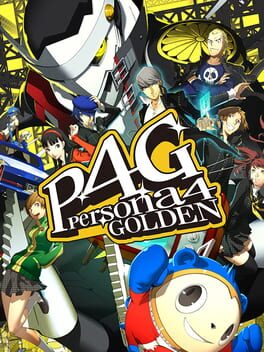
Persona 4 Golden is the direct sibling to Persona 3, with an identical social-link and calendar structure, now set in a rural murder mystery. The added Golden content deepens every social relationship substantially.
Key difference: Warmer, cozy mystery tone; no random dungeon floors — hand-crafted areas.
Best for: P3 fans who want a friendlier, more cheerful companion atmosphere.
Skip if: You found P3's repetitive dungeon loop fine and want more challenge.
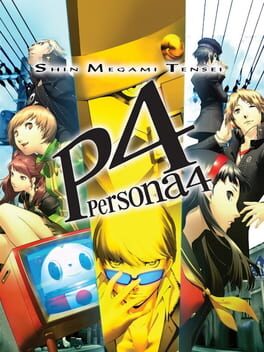
Persona 4 (base) delivers the same JRPG-plus-social-simulation loop in a rural Inaba murder investigation, and its darker character arcs around loneliness and self-acceptance echo P3's existential weight.
Key difference: No mechanical improvements of Golden; some content locked behind TV.
Best for: Players who can't access Golden and want the original experience.
Skip if: You want the definitive version — just play Golden instead.
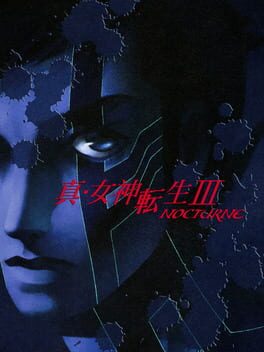
The mainline SMT game that directly precedes Persona 3's development — a dungeon-crawling demon-negotiation RPG with existential themes, Press Turn combat, and the same oppressive end-of-the-world atmosphere. Harder and more abstract than Persona.
Key difference: No social simulation or high school life — purely dungeon and narrative.
Best for: P3 fans who want more challenge and less slice-of-life.
Skip if: You need social bonds and school-life structure.
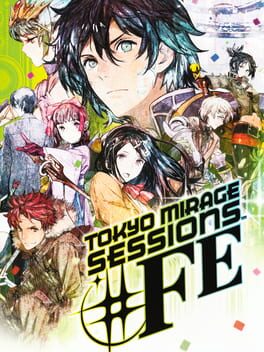
A Persona-adjacent Atlus RPG set in contemporary Tokyo where teenagers fight shadow entities using elemental weaknesses — essentially a Persona game crossed with Fire Emblem, built by the same team.
Key difference: J-pop idol industry setting; lighter, more colorful tone.
Best for: P3/P5 fans who want a similar loop with a brand-new setting.
Skip if: You disliked idol-culture aesthetics or want darker themes.
Catherine is another Atlus Tokyo release that blends a story-heavy social drama about commitment and identity with a puzzle mechanic standing in for dungeon crawling — it even shares voice actors and themes of mortality with P3.
Key difference: Block-climbing puzzle game, not turn-based RPG combat.
Best for: P3 fans who want more Atlus drama and existential dread.
Skip if: You want a long JRPG with party management.
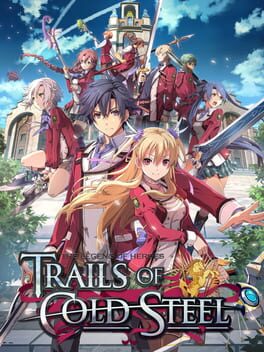
A JRPG set in a military academy where you build bonds with classmates between turn-based missions — the social bonding system, school calendar structure, and character ensemble are the closest Western players can get to the Persona formula outside of Atlus.
Key difference: Slower-paced, very text-heavy; four-game arc requires long commitment.
Best for: P3 fans who want the social sim + JRPG combo in a new world.
Skip if: You want a short, punchy RPG or dislike reading extensive dialogue.
Omori is an indie RPG wrapped in a surreal horror framework about grief, trauma, and repressed memory — built on a classic turn-based combat engine and structured around daily exploration, with an emotional blindside that rivals P3's finale in impact.
Key difference: 2D pixel art; smaller scale; more horror/psychological focus.
Best for: P3 players moved most by its themes of loss and mortality.
Skip if: You want a large-scale RPG with social simulation mechanics.
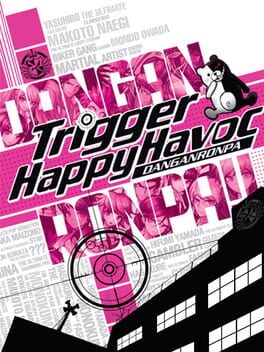
Danganronpa: Trigger Happy Havoc traps high school students in a life-or-death game, pairing slice-of-life social bonding between classmates with a dark supernatural mystery — a structure that mirrors P3's blend of everyday high school life and lethal hidden threat.
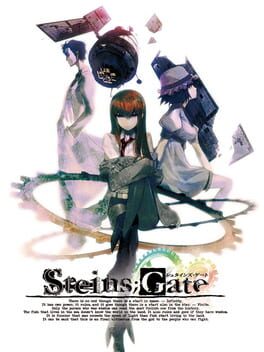
Steins;Gate is a visual novel set in contemporary Tokyo where a small group of students uncovers a time-travel conspiracy — matching P3's tone of ordinary teens pulled into a world-ending supernatural threat they must face together, with a similarly gut-punch emotional ending.
Key difference: Pure visual novel, essentially no gameplay systems.
Best for: P3 fans who loved the story and characters above all else.
Skip if: You want dungeon-crawling or combat systems.
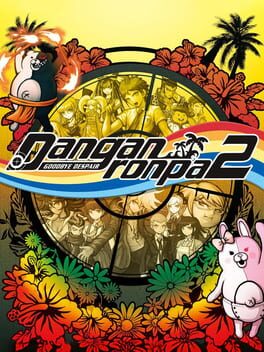
Danganronpa 2 deepens the formula with a more ambitious cast and island free-time social bonding before each killing game — the despair themes and character bonds echo P3's emotional texture closely.
Key difference: Tropical island setting; shifts tone toward surreal comedy before tragedy.
Best for: Anyone who finished Danganronpa 1 and loved the social bonds.
Skip if: You disliked the first Danganronpa's trial pacing.
NieR: Automata pairs relentless action with layered existential philosophy, asking what it means to live when death is inevitable — a thematic core essentially identical to P3's memento mori message. The multiple-route structure rewards full completion like P3's New Game+.
Key difference: Real-time action combat; no social calendar or high school setting.
Best for: P3 fans who want the philosophy without the social sim structure.
Skip if: You specifically need turn-based party combat.
Danganronpa V3 is the most meta and narratively ambitious entry, questioning the nature of hope, despair, and fiction itself — themes with real resonance to P3's meditation on the meaning of death.
Key difference: Self-referential fourth-wall breaking ending divides the fanbase sharply.
Best for: P3 fans interested in existential, reality-questioning storytelling.
Skip if: You dislike controversial, polarizing conclusions.
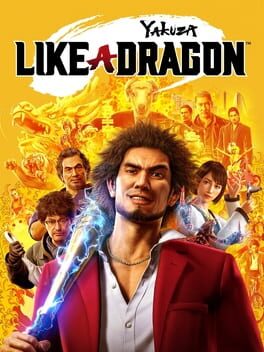
Yakuza: Like a Dragon is a modern Japanese turn-based RPG with a sprawling ensemble cast and constant tonal shifts between comedy and serious drama, set in contemporary Yokohama — it scratches P3's itch for a character-driven urban Japan RPG, just without the school-and-dungeon structure.
Key difference: Open-world Yakuza setting; brawler flavor to turn-based system.
Best for: P3 fans who love Japanese urban atmosphere and strong ensemble casts.
Skip if: You want the high school calendar / social link structure specifically.
Final Fantasy VII is a foundational JRPG with a small party of deeply characterized heroes facing apocalyptic stakes — its atmosphere of melancholy, loss, and heroism under existential threat prefigures P3's emotional register. Cloud's detachment mirrors P3's protagonist.
Key difference: Pre-rendered backgrounds, linear structure; no social sim layer.
Best for: P3 fans who want classic JRPG storytelling and iconic characters.
Skip if: You specifically need the social calendar dual-life loop.
Chrono Trigger is widely considered the apex of turn-based JRPG design, featuring a memorable ensemble cast, a time-travel mystery, and a legendary soundtrack — its brisk pacing and multiple endings reward investment much like P3's New Game+.
Key difference: No social simulation; lighter tone; Super Nintendo era.
Best for: P3 fans who want the purest distillation of JRPG party dynamics.
Skip if: You need modern systems or the social link layer.
Final Fantasy VI (listed as Final Fantasy III on SNES) features one of the most emotionally devastating JRPG stories ever told — a large cast, a genuinely menacing villain, and a world-collapse narrative that matches P3's late-game hopelessness before its cathartic resolution.
Key difference: Entirely linear classic JRPG; SNES era graphics and design.
Best for: Players who love character-ensemble JRPGs and don't mind age.
Clair Obscur: Expedition 33 is a turn-based RPG built by Persona fans, with a similar party structure, reactive timing-based combat, and a haunting story about mortality and sacrifice — it wears its Persona inspiration openly.
Key difference: European painterly aesthetic; no social sim calendar layer.
Best for: P3 fans who want fresh modern turn-based RPG storytelling.
Skip if: You need a social link system or high school setting.
Final Fantasy IX is a heartfelt JRPG meditation on identity, purpose, and mortality — the philosophical themes pair with a tightly written party of distinct characters, and its finale delivers an emotional payoff comparable to P3's.
Key difference: Fantasy medieval setting; ATB-based combat; no social simulation.
Best for: P3 fans who appreciate JRPGs that wear their emotional themes proudly.
Skip if: You specifically want the school-life dual-structure.
PlayStation
62%
Doki Doki Literature Club! 2017
Doki Doki Literature Club starts as a cheerful high school visual novel and systematically deconstructs itself into something deeply unsettling — the pivot mirrors P3's subversion of its own genre expectations and school setting.
Key difference: Free, very short; no combat or RPG systems whatsoever.
Best for: P3 fans who loved the horror-beneath-normalcy contrast.
Skip if: You want RPG mechanics and a lengthy playthrough.
Honkai: Star Rail is a gacha turn-based JRPG with an anime aesthetic, a strong ensemble cast, and dungeon-exploring mechanics that closely mirror Persona's Tartarus structure — it's the closest thing to Persona on mobile/PC with modern production values.
Key difference: Gacha monetization model; ongoing live-service content.
Best for: P3 fans who want something ongoing and free-to-start.
Skip if: You dislike live-service games or gacha economies.
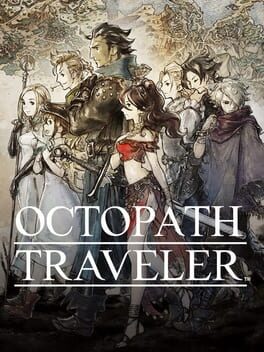
Octopath Traveler uses a beautiful HD-2D JRPG presentation with eight intersecting stories and a solid turn-based combat system — it scratches the JRPG itch without the social sim layer but delivers on atmosphere and tactical depth.
Key difference: Eight separate protagonists; stories feel disconnected.
Best for: P3 fans who want satisfying turn-based JRPG systems alone.
Skip if: You need a single unified emotional narrative and cast.
Undertale subverts JRPG conventions with a pacifist system where sparing enemies is the core mechanic — its humor, emotional gut-punches, and examination of genre tropes resonate with P3's deconstruction of the high school setting.
Key difference: Retro aesthetic; solo protagonist; very short runtime.
Best for: P3 fans who love subversive, emotionally layered RPG storytelling.
Skip if: You want a long JRPG with party management and social links.
More stylized, lighter tone; heist framing instead of survival horror.
Xbox, PlayStation, PC, Nintendo
Persona 5
95%
Role-playing (RPG), Adventure
Thematically hopeful and rebellious vs. P3's melancholy fatalism.
PlayStation
Persona 4 Golden
95%
Role-playing (RPG), Adventure
Warmer, cozy mystery tone; no random dungeon floors — hand-crafted areas.
PlayStation
Persona 4
93%
Role-playing (RPG), Adventure
No mechanical improvements of Golden; some content locked behind TV.
PlayStation
Shin Megami Tensei III: Nocturne
85%
Role-playing (RPG), Fantasy
No social simulation or high school life — purely dungeon and narrative.
PlayStation
Tokyo Mirage Sessions #FE
80%
Role-playing (RPG), Adventure
J-pop idol industry setting; lighter, more colorful tone.
Nintendo
Catherine
76%
Adventure, Action
Block-climbing puzzle game, not turn-based RPG combat.
PlayStation, Xbox
The Legend of Heroes: Trails of Cold Steel
74%
Role-playing (RPG), Adventure
Slower-paced, very text-heavy; four-game arc requires long commitment.
PlayStation, PC
Omori
73%
Role-playing (RPG), Adventure
2D pixel art; smaller scale; more horror/psychological focus.
Xbox, PlayStation, Nintendo, PC
Danganronpa: Trigger Happy Havoc
72%
Adventure, Action
Visual novel / courtroom logic game, no dungeon combat.
PC, Mobile, PlayStation
Steins;Gate
72%
Adventure, Science fiction
Pure visual novel, essentially no gameplay systems.
PlayStation, Mobile, PC, Xbox
Danganronpa 2: Goodbye Despair
70%
Adventure, Action
Tropical island setting; shifts tone toward surreal comedy before tragedy.
PC, Mobile, PlayStation, Nintendo
NieR: Automata
70%
Role-playing (RPG), Action
Real-time action combat; no social calendar or high school setting.
PlayStation, PC
Danganronpa V3: Killing Harmony
68%
Adventure, Science fiction
Self-referential fourth-wall breaking ending divides the fanbase sharply.
PlayStation, Mobile, PC, Nintendo
Yakuza: Like a Dragon
68%
Role-playing (RPG), Adventure
Open-world Yakuza setting; brawler flavor to turn-based system.
Xbox, PlayStation, PC
What makes a game truly feel like Persona 3?
The defining quality is not just turn-based combat or a Japanese setting — it is the sense that time is finite and every choice costs you something else. Persona 3's calendar forces you to choose between strengthening a Social Link, studying for exams, or resting to recover HP for the next dungeon run. Very few games replicate this precisely; Persona 4 Golden and Persona 5 Royal are the only titles that match it beat for beat. Yakuza: Like a Dragon captures the Japanese urban JRPG atmosphere and ensemble cast chemistry without the calendar pressure, while Clair Obscur: Expedition 33 captures the turn-based emotional storytelling without the social sim layer.
The other pillar is tonal: Persona 3 is genuinely about death — it asks whether life has meaning if it must end. NieR: Automata, Omori, and Final Fantasy VI each engage that same question with comparable seriousness, earning their places on any list targeting P3's emotional register rather than just its genre tags.
Best picks if you loved Persona 3's high school cast and mystery narrative
If the part of Persona 3 that moved you was watching the SEES members grow from strangers into a found family facing impossible odds, then Danganronpa: Trigger Happy Havoc and its sequels are essential — they place a similar cast of high school students in a life-or-death supernatural mystery and spend equal time on daily social bonding between the killings. Steins;Gate delivers comparable emotional devastation through a group of Tokyo students who stumble into a world-ending conspiracy, and its contemporary Japan setting feels distinctly Persona-adjacent. For something shorter and stranger, Doki Doki Literature Club! uses a cheerful school-club veneer to deliver a horror subversion that mirrors P3's own mask of normalcy over existential dread.
If you want the dungeon-crawling and combat above all else
Persona 3's Tartarus — a randomly generated dungeon you grind upward over months of in-game time — is a specific flavor of dungeon crawl tied to weakness exploitation and party management. Honkai: Star Rail is the most direct modern translation of that loop, with a Press Turn-adjacent weakness system, a gacha roster that functions like Persona fusion, and ongoing dungeon content. Chrono Trigger and Final Fantasy VII offer the definitive classic JRPG alternatives — no social sim, but the party chemistry and narrative weight hit comparable emotional highs. For players who want the challenge cranked up, Shin Megami Tensei III: Nocturne (see Additional below) is the purist's choice: raw dungeon-crawling, demon negotiation, and a punishing difficulty that makes Tartarus feel like a warm-up.
Is Persona 4 Golden basically the same as Persona 3?
Structurally yes — both use a calendar, Social Links, and dungeon-crawling combat. Persona 4 Golden is brighter and more mystery-thriller in tone, with hand-crafted dungeons instead of Tartarus's random floors, and a warmer ensemble dynamic. Most fans who love one love both.
What game has the most similar social link / relationship system to Persona 3?
Persona 5 Royal is the closest by a wide margin — it refines the Confidant system directly from Persona 3's Social Links. Outside the Persona series, The Legend of Heroes: Trails of Cold Steel (see Additional) replicates a school calendar + bond system most faithfully.
Are there any games like Persona 3 on PC?
Yes — Persona 5 Royal, Persona 4 Golden, NieR: Automata, Omori, Steins;Gate, Danganronpa, and Honkai: Star Rail are all available on PC. Persona 3 Reload (the 2024 remake of P3) is also available on PC via Steam.
What should I play after finishing Persona 3 if I want something with the same emotional impact?
Persona 4 Golden for the closest structural match; NieR: Automata or Omori if you want that same meditation on death and meaning in a completely different format; Danganronpa: Trigger Happy Havoc if you want high school cast tragedy without combat.
Is Persona 5 harder or easier than Persona 3?
Persona 5 Royal is generally considered easier — the dungeon design is hand-crafted and easier to navigate than Tartarus's random floors, and the Confidant system is more forgiving. Persona 3 Reload (the 2024 remake) adds the block-back mechanic from P5 to modernize the original's combat.
 97%
97%