What makes The Witcher 3: Wild Hunt so beloved is a rare combination: a hand-crafted open world where every side quest tells a complete, morally ambiguous story, a protagonist with genuine personality rather than a blank-slate hero, and a dark fantasy setting that feels lived-in and consequential. The monster-hunting loop, the branching dialogue, and the sense that your choices actually reshape the world set a standard few games have matched.
When players ask for "games like The Witcher 3," they're really asking for one or more of these things: rich authored storytelling in an open world, dark fantasy atmosphere with real stakes, deep RPG character progression, or that specific feeling of wandering off the main path and finding a side quest better than most games' main stories. The best alternatives nail at least two of these pillars.
Top pick: The single closest pick is The Witcher 2: Assassins of Kings — it's the same protagonist, the same monster-hunting world, the same dark political tone, and the same CD Projekt RED craft, and if you haven't played it, it remains one of the most narratively dense and morally demanding RPGs ever made, with a branching second act that sends you down entirely different regions depending on one early choice.
Some store buttons are affiliate links — we may earn a commission at no extra cost to you.
24 games like The Witcher 3: Wild Hunt
93%
The Witcher 2: Assassins of Kings 2011
The direct predecessor to Witcher 3, following Geralt through a morally complex civil war with the same monster-hunting contracts, mature narrative, and branching choices. More linear in structure but arguably darker and more politically layered.
Key difference: Smaller, more corridor-driven world with no open-world exploration.
Best for: Fans who want the same Geralt story with even grittier stakes.
Skip if: You disliked Witcher 3's combat and want something fresh.
Skyrim shares Witcher 3's open-world fantasy exploration, dungeon-crawling, and character-progression loop in a vast Nordic setting with hundreds of hand-crafted quests. Lacks Witcher's narrative depth but excels at freeform sandbox discovery.
Key difference: Far shallower story and character writing; more sandbox than narrative RPG.
Best for: Players who want maximum open-world freedom over authored drama.
Skip if: You came for morally complex storytelling and memorable characters.
Dragon Age: Origins is a dark fantasy RPG with weighty player choices, political intrigue, companion relationships, and a world shaped by your decisions — mirroring Witcher 3's narrative DNA in a tactical RPG frame.
Key difference: Pause-and-play tactical combat instead of real-time action.
Best for: Story-first players who want deeper companion arcs.
Skip if: You prioritize fluid third-person action combat.
Ghost of Tsushima is an open-world action RPG with richly written side quests, morally weighted decisions, and a stunning handcrafted world — its Mythic Tales and character-driven story feel structurally identical to Witcher 3's quest design.
Key difference: Feudal Japan samurai setting with no fantasy magic or RPG stats.
Best for: Witcher 3 fans who want the same quest quality in a samurai world.
Skip if: You need deep RPG progression systems or dark fantasy tone.
Dragon Age: Inquisition brings that dark fantasy RPG formula into an open-world format with large explorable regions, faction politics, and choice-driven quests structurally closest to Witcher 3 among the Dragon Age series.
Key difference: Bloated side content dilutes narrative quality late-game.
Best for: Dragon Age fans ready for an open-world format.
Skip if: You want tight, focused writing throughout.
Cyberpunk 2077 is CDPR's follow-up open-world RPG with the same emphasis on richly written side quests, moral ambiguity, and a dense world full of lore — transplanted from dark fantasy to neon-drenched sci-fi.
Key difference: Cyberpunk sci-fi setting with first-person shooting instead of swordplay.
Best for: Witcher 3 fans craving CDPR's quest-writing in a new universe.
Skip if: You only connect with high fantasy settings.
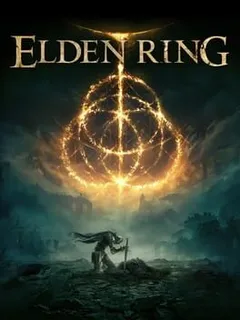
Elden Ring delivers open-world dark fantasy exploration with intricate lore, boss-hunting, and a world that rewards curiosity — sharing Witcher 3's sense of a living, dangerous world to uncover on your own terms.
Key difference: Minimal story delivery; brutal, unforgiving Soulslike combat.
Best for: Players wanting maximum challenge in an open dark fantasy world.
Skip if: You dislike dying repeatedly or want voiced, directed narrative.
The original Witcher game establishes Geralt's world with the same monster contracts, morally grey decisions, and dark-fantasy atmosphere — though in a more isometric, older RPG format rooted in Bioware-era design.
Key difference: Older click-combat system; smaller scope and rougher production.
Best for: Completionists who want the full Witcher story from the start.
Skip if: You can't stomach dated mechanics or visual fidelity.
Odyssey is the most Witcher 3-like Assassin's Creed entry, featuring a massive open world, dialogue choices that shape the story, romanceable NPCs, and mythology-soaked side quests in ancient Greece.
Key difference: More bloated with repetitive content; shallower moral complexity.
Best for: Players who want a longer, more RPG-lite open-world after Witcher 3.
Skip if: You dislike Ubisoft open-world padding or want darker tone.
Baldur's Gate 3 is the richest narrative fantasy RPG since Witcher 3, featuring branching stories, companion depth, moral weight in every decision, and a dark fantasy tone — in a turn-based tactical format.
Key difference: Turn-based D&D combat instead of real-time action.
Best for: Story and roleplay purists who want maximum narrative freedom.
Skip if: You want fluid action combat and open-world traversal.
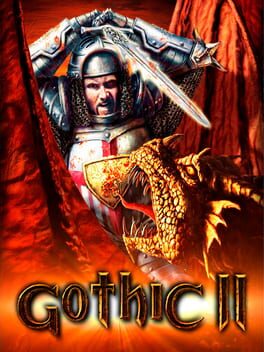
Gothic II is an underrated German open-world action RPG set in a dark fantasy world where faction allegiance, NPC routines, and monster hunting create an organic sense of a living world strikingly similar to Witcher 3's design philosophy.
Key difference: Older, rougher graphics and more punishing early-game difficulty curve.
Best for: Open-world RPG fans who want an unsung precursor to Witcher's design.
Skip if: You need modern production values or voice acting quality.
Oblivion offers Witcher 3-style open-world fantasy RPG exploration with hundreds of quests, guild storylines, and a hand-built world that rewards wandering — predecessor to Skyrim with more distinct faction writing.
Key difference: Dated visuals and less refined world design than Skyrim or Witcher.
Best for: Classic RPG fans who want dense guild content and faction politics.
Skip if: You can't tolerate pre-2010 RPG rough edges.
Red Dead Redemption 2 matches Witcher 3's commitment to narrative gravitas, world-building detail, and side missions with genuine emotional weight — just set in the dying American West instead of dark fantasy.
Key difference: Realistic Western setting; no magic, monsters, or RPG skill trees.
Best for: Players who loved Witcher 3's storytelling over its fantasy trappings.
Skip if: You specifically want fantasy RPG progression systems.
Bloodborne channels the same dark fantasy atmosphere and monster-hunting core loop as Witcher 3 in a Gothic Lovecraftian world — with more punishing, precise combat and a story told through item descriptions.
Key difference: Brutally difficult Soulslike; story delivered obliquely, not through dialogue.
Best for: Players craving dark fantasy monster-hunting with intense challenge.
Skip if: You want narrative clarity or forgiving difficulty.
Horizon Zero Dawn is a narrative-rich open-world action RPG with a compelling mystery-driven story, skill progression, and a world packed with side content — sharing Witcher 3's quest density and protagonist-driven drama.
Key difference: Post-apocalyptic sci-fi world; less morally grey writing.
Best for: Action RPG fans who want a strong female protagonist-led story.
Skip if: You want dark fantasy tone and morally complex choice systems.
Middle-earth: Shadow of Mordor drops you in Tolkien's dark fantasy world as a monster-hunting ranger with open-world stealth and combat — the Nemesis system creates emergent stories that echo Witcher 3's living-world feel.
Key difference: Far shallower story; Nemesis system drives emergent rather than authored drama.
Best for: Fantasy action fans who want systemic open-world gameplay.
Skip if: You want rich narrative and branching choices over systemic play.
Kingdom Come: Deliverance is a grounded open-world RPG with the same quest depth and NPC authenticity as Witcher 3 — set in a realistic medieval Bohemia with no magic, demanding survival systems, and excellent writing.
Key difference: Historically realistic, no fantasy; very demanding early learning curve.
Best for: Witcher 3 fans who want gritty medieval realism over fantasy.
Skip if: You dislike complex hunger/fatigue systems or slow starts.
Greedfall is a narrative-heavy action RPG set in a colonial fantasy world with faction diplomacy, companion relationships, and branching quest outcomes — a smaller-budget Witcher 3 with surprising writing quality.
Key difference: Smaller scope and lower production values than Witcher 3.
Best for: Witcher 3 fans who've played everything else and want a hidden gem.
Skip if: You can't overlook dated graphics or rough combat feel.
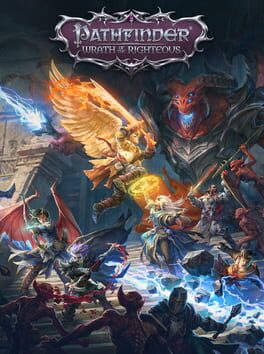
Wrath of the Righteous is a deep dark fantasy CRPG with sweeping world stakes, complex character builds, and morally ambitious storytelling that rivals Witcher 3's narrative ambition in a top-down tactical format.
Key difference: Turn-based/RTWP tactical combat; isometric perspective; very complex systems.
Best for: RPG fans who want maximum narrative depth and mechanical complexity.
Skip if: You want action combat or don't enjoy dense ruleset management.
Dark Souls III shares Witcher 3's dark fantasy world and emphasis on meaningful combat against formidable enemies, with deep lore built into every corner of its interconnected world.
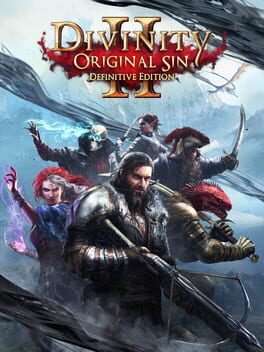
Divinity: Original Sin 2 is a deep fantasy RPG with player-choice-driven narrative, rich lore, and companions with full story arcs — it's among the best story-RPGs released alongside Witcher 3 in the same era.
NieR: Automata shares Witcher 3's commitment to asking serious philosophical questions through its world — androids hunting machine life echoes monster-hunting, and multiple playthroughs reframe the story like Witcher's endings.
Key difference: Action-heavy hack-and-slash with multiple meta-narrative playthroughs required.
Best for: Players who want emotional, thematically ambitious storytelling in an action RPG.
Skip if: You want classic high fantasy or a single-playthrough narrative.
Shadow of War expands on Shadow of Mordor's Nemesis system in a larger Tolkien open world, adding RPG progression layers and fortress sieges that push it closer to Witcher 3's content density.
Key difference: Nemesis-system emergent gameplay overshadows authored story quality.
Best for: Players who want more RPG depth than Shadow of Mordor offered.
Skip if: You want strong narrative over systemic gameplay loops.
God of War (2018) parallels Witcher 3's structure: a character-driven journey through a fantasy world with deep lore, emotional father-child relationship, and semi-open exploration anchored by strong writing.
Key difference: More linear, action-focused; no player choice or branching narrative.
Best for: Players who want cinematic fantasy storytelling without RPG complexity.
Skip if: You want open-world freedom or branching quest outcomes.
Smaller, more corridor-driven world with no open-world exploration.
PC, Xbox
The Elder Scrolls V: Skyrim
90%
Role-playing (RPG), Adventure
Far shallower story and character writing; more sandbox than narrative RPG.
PlayStation, PC, Xbox
Dragon Age: Origins
88%
Role-playing (RPG), Action
Pause-and-play tactical combat instead of real-time action.
PlayStation, PC, Xbox
Ghost of Tsushima
88%
Role-playing (RPG), Adventure
Feudal Japan samurai setting with no fantasy magic or RPG stats.
PlayStation
Dragon Age: Inquisition
87%
Role-playing (RPG), Adventure
Bloated side content dilutes narrative quality late-game.
PlayStation, PC, Xbox
Cyberpunk 2077
86%
Role-playing (RPG), Adventure
Cyberpunk sci-fi setting with first-person shooting instead of swordplay.
Xbox, PlayStation, Nintendo, PC
Elden Ring
85%
Role-playing (RPG), Adventure
Minimal story delivery; brutal, unforgiving Soulslike combat.
Xbox, PlayStation, Nintendo, PC
The Witcher
85%
Role-playing (RPG), Adventure
Older click-combat system; smaller scope and rougher production.
PC
Assassin's Creed Odyssey
84%
Role-playing (RPG), Adventure
More bloated with repetitive content; shallower moral complexity.
Xbox, PlayStation, PC
Baldur's Gate III
83%
Role-playing (RPG), Action
Turn-based D&D combat instead of real-time action.
Xbox, PC, PlayStation
Gothic II
82%
Role-playing (RPG), Adventure
Older, rougher graphics and more punishing early-game difficulty curve.
PC
The Elder Scrolls IV: Oblivion
82%
Role-playing (RPG), Adventure
Dated visuals and less refined world design than Skyrim or Witcher.
PlayStation, PC, Xbox
Red Dead Redemption 2
81%
Role-playing (RPG), Adventure
Realistic Western setting; no magic, monsters, or RPG skill trees.
PlayStation, PC, Xbox
Bloodborne
80%
Role-playing (RPG), Adventure
Brutally difficult Soulslike; story delivered obliquely, not through dialogue.
PlayStation
Horizon Zero Dawn
80%
Role-playing (RPG), Adventure
Post-apocalyptic sci-fi world; less morally grey writing.
PlayStation, PC
What makes a game feel like The Witcher 3?
The Witcher 3's magic comes from three interlocking elements: authored quest density (every contract has a twist), a world that feels inhabited rather than gamified, and a morally grey protagonist navigating politics rather than saving the world cleanly. Dragon Age: Origins nails the narrative and moral-choice pillars in a dark fantasy setting, while Red Dead Redemption 2 replicates the world-building detail and emotional side-mission quality in a completely different genre — both prove that setting is less important than craft.
Kingdom Come: Deliverance and Gothic II are the hidden gems that most "games like Witcher 3" lists miss entirely: both share Witcher's commitment to NPC authenticity, non-heroic protagonists, and quests that don't hold your hand, in open worlds that feel genuinely alive. Gothic II in particular is a direct ancestor of Witcher's design philosophy and still holds up for players willing to meet it on its own terms.
Best open-world action RPG alternatives post-Witcher 3
Elden Ring and Horizon Zero Dawn represent the two extremes: Elden Ring strips narrative delivery down to environmental lore and boss encounters but delivers the most expansive and rewarding dark fantasy open world since Witcher 3, while Horizon Zero Dawn gives you a more traditionally paced story-driven RPG with quest markers, skill trees, and a protagonist-focused narrative. Both came out after Witcher 3 and bear its influence clearly.
Cyberpunk 2077 is the most direct spiritual successor by the same studio — it has CDPR's signature side-quest writing quality (some individual quests rival Witcher 3's best), a dense open world rewarding exploration, and branching endings. Its sci-fi setting is the biggest departure, but the authorial fingerprints are unmistakable.
If you want the story and choices more than the action
Baldur's Gate 3 is the closest rival to Witcher 3 in terms of sheer narrative ambition and the weight of player choices — it just delivers that in a turn-based tactical combat system rather than real-time swordplay. Companions like Astarion and Shadowheart have questlines with emotional payoffs comparable to Witcher 3's Bloody Baron arc. Divinity: Original Sin 2 is similarly rewarding for story-RPG fans, with the added bonus of co-op support.
For players who love Witcher 3's companion writing and branching dialogue but can tolerate a sci-fi shooter frame, Mass Effect 2 remains the gold standard of character-driven RPG storytelling — its loyalty mission structure is essentially the Witcher 3 side-quest formula applied to a space opera.
Is there anything as good as The Witcher 3 for story and open world?
The closest rivals are Ghost of Tsushima (for quest design and world craft), Baldur's Gate 3 (for narrative depth and player choice), and Red Dead Redemption 2 (for world-building quality and emotional storytelling). None fully replicate the package, but each excels in specific dimensions Witcher 3 fans care about.
Is Dragon Age: Origins similar to The Witcher 3?
Very much so in its DNA: dark fantasy setting, morally grey decisions with real consequences, companion relationships, and a world shaped by your choices. The main difference is combat — Dragon Age uses a pause-and-play tactical system rather than Witcher 3's real-time action, and it's older. Dragon Age: Inquisition is closer in format with its open-world regions.
What game has the best side quests like The Witcher 3?
Ghost of Tsushima's Mythic Tales and side missions consistently earn comparisons to Witcher 3's side quest quality. Red Dead Redemption 2's stranger missions also deliver self-contained stories with surprising emotional depth. Among RPGs, Baldur's Gate 3 has the most authored side content to rival Witcher 3's best work.
Is Cyberpunk 2077 similar to The Witcher 3?
Yes — it's made by the same studio (CD Projekt RED) and carries the same authorial fingerprint: densely written side quests, a morally complex world, branching endings, and a living open city. The biggest differences are the sci-fi cyberpunk setting, first-person perspective during most gameplay, and a heavier emphasis on shooting over swordplay.
What's the best Witcher 3 alternative on a shorter time commitment?
God of War (2018) delivers comparable emotional storytelling and dark fantasy atmosphere in roughly 25-30 hours. The Outer Worlds gives you Witcher-quality RPG writing and player choices in a compact 20-hour experience. NieR: Automata can be completed in around 20 hours on a first playthrough while offering thematic depth comparable to Witcher 3's best moments.
 93%
93%