World of Warcraft's enduring hold comes from a precise cocktail: a rich high-fantasy world built over decades of Warcraft lore, a satisfying class-based character identity, a social architecture of guilds and group content (dungeons, raids, battlegrounds), and a gear progression treadmill that keeps players returning season after season. The combination of accessibility and depth—easy to start, near-infinite to master—is what made it the defining MMORPG.
When players look for games like WoW, they're usually chasing one of a few specific itches: the social MMO structure (guilds, raids, shared world), the high-fantasy class-fantasy feel, the loot-driven gear progression, or the Warcraft lore itself. The best recommendations target whichever of these matters most to you.
Top pick:Final Fantasy XIV Online is the single closest match to World of Warcraft today—it shares the subscription model, tab-target class combat, dungeon/raid tier structure, seasonal events, guild system, and a vast high-fantasy open world, while adding what many consider the genre's best story writing and a famously welcoming community.
Some store buttons are affiliate links — we may earn a commission at no extra cost to you.
22 games like World of Warcraft
93%
Final Fantasy XIV Online 2013
Final Fantasy XIV is a subscription-based MMORPG with class/job progression, instanced dungeons, large-scale raids, and a world-spanning quest narrative—hitting virtually every beat of WoW. Its story content and community culture are widely considered the genre's best.
Key difference: Japanese art direction and a single-player-quality main narrative.
Best for: WoW veterans who want a polished story alongside endgame raiding.
Skip if: You hate mandatory MSQ gating and slow early pacing.
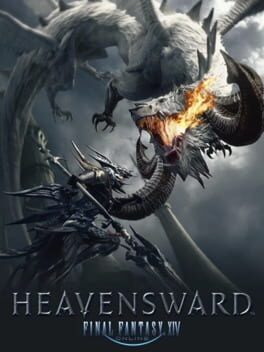
Heavensward is FFXIV's first expansion, widely credited with elevating the game from average to exceptional—adding flying mounts, new jobs, and a critically praised high-fantasy story arc with dragons and political intrigue. It's where most players say the game truly rivals WoW.
Key difference: Cannot be played without completing base FFXIV's main story first.
Best for: Players already in FFXIV looking for the expansion that hooked millions.
Skip if: You want to jump straight into endgame without story investment.
The Elder Scrolls Online runs in the same tab-target, quest-hub, dungeon-finder loop as WoW but inside Tamriel—complete with guilds, trials (raids), battlegrounds PvP, and a massive open world. Its fully voiced quests give it a solo-RPG feel on top of the MMO skeleton.
Key difference: Fully open, level-scaled world—no defined faction leveling path.
Best for: Skyrim fans who want persistent multiplayer and group endgame.
Skip if: You need tight class roles and structured group trinity (tank/heal/DPS).
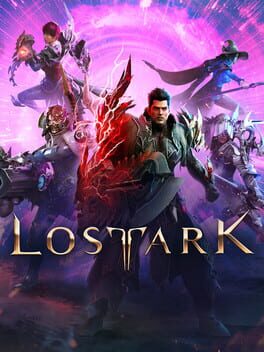
Lost Ark is a free-to-play isometric MMORPG with WoW-style class fantasy, instanced raids requiring coordinated party roles, a vast open world, and deep endgame gear progression systems.
Key difference: Isometric action combat and heavy gatekeeping endgame grind.
Best for: WoW raiders who want a fresh, active MMO with complex endgame systems.
Skip if: You dislike aggressive monetization and repetitive horizontal grind.
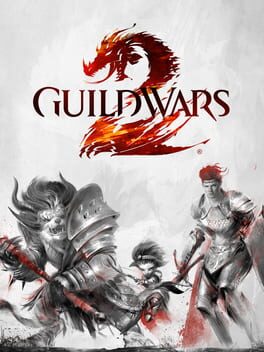
Guild Wars 2 shares WoW's fantasy open world and dungeon/raid structure but replaces the subscription with buy-to-play and strips mandatory monthly grinding via horizontal progression. Its dynamic events and action-oriented combat feel familiar yet refreshingly different.
Key difference: No subscription and horizontal endgame gear progression.
Best for: WoW players burned out on treadmill gear grinds.
Skip if: You love hard mythic-tier raid tuning and tight class hierarchies.
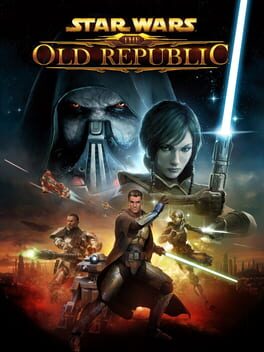
Star Wars: The Old Republic is a WoW-engine MMORPG from BioWare with fully voiced class stories, companion systems, guild progression, and instanced operations (raids). It feels like a BioWare RPG wrapped in an MMO shell.
Key difference: Science-fantasy Star Wars setting instead of high fantasy.
Best for: WoW players who want BioWare-quality companion storytelling.
Skip if: You want a thriving competitive PvP or large active raiding scene.
RuneScape is a browser-born MMORPG with skill-based progression, hundreds of quests, crafting, trading, PvP, and bossing—covering nearly every pillar of WoW but with a sandbox economy emphasis and no class restrictions.
Key difference: Skill-level sandbox instead of class-based character identity.
Best for: WoW players who love crafting, trading, and economy mastery.
Skip if: You need modern 3D combat feel and polished UI.
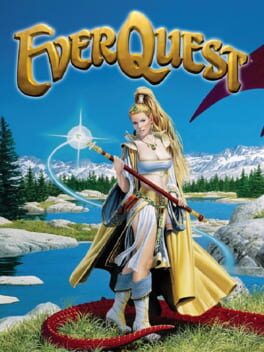
EverQuest is the genre ancestor WoW was directly inspired by—class-based adventuring, group dungeons, guild raids, and a sprawling high-fantasy world that defined MMO conventions before 2004.
Key difference: Brutally punishing, slower, and older—extremely steep for new players.
Best for: MMO historians and hardcore grind purists seeking WoW's roots.
Skip if: You need modern UI, quality-of-life features, or a large new player base.
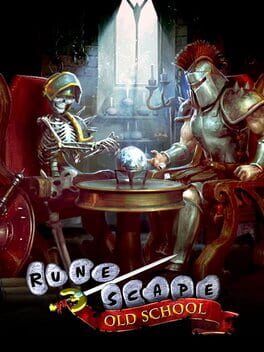
Old School RuneScape preserves the 2007-era version of RuneScape—slower, grittier, and driven by community consensus—with active bossing, PvP wilderness, and fresh seasonal leagues. Its massive engaged playerbase rivals many modern MMOs.
Key difference: Deliberately retro 2D-tile graphics and slower tick-based gameplay.
Best for: Nostalgic players who want a pure, unmodernized MMO grind.
Skip if: You can't get past the dated pixel visuals.
Warcraft III is the direct lore predecessor to WoW—it introduces Arthas, the Lich King, Thrall, and the very zones later explored in WoW. Playing it makes the MMO's world vastly richer.
Key difference: Real-time strategy, not an MMO—entirely different core loop.
Best for: WoW lore fans who want the full story context.
Skip if: You want persistent character progression and online co-op RPG play.
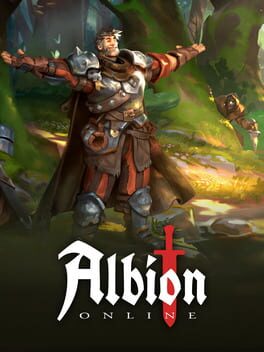
Albion Online is a sandbox MMORPG with full open-world PvP, player-driven economy, guild territory wars, and a classless gear-defines-role system that rewards organized social play similarly to WoW's raiding.
Key difference: Fully player-driven sandbox economy and brutal open-world PvP with loot-on-death.
Best for: WoW guild leaders who want high-stakes territory warfare and crafting.
Skip if: You want safe questing zones and PvE-only progression paths.
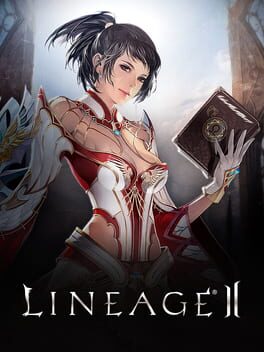
Lineage II is a classic hardcore MMORPG with clan wars, siege warfare, and a punishing grind in a high-fantasy world—occupying the same competitive genre space as WoW but with far higher stakes and consequence.
Key difference: Much harsher death penalties and grind; near-dead Western servers.
Best for: Veteran MMO players who want brutal, consequence-heavy PvP.
Skip if: You want an active English-speaking server population.
The Frozen Throne expansion introduces the scourge storyline that culminates in Wrath of the Lich King and adds the Blood Elf and Naga—essential Warcraft lore for any WoW player.
Key difference: RTS expansion, not an RPG—requires Warcraft III base game.
Best for: WoW story fans seeking the full Arthas arc.
Skip if: You don't enjoy real-time strategy or base building.
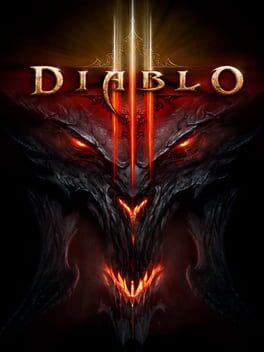
Diablo III distills WoW's loot-driven progression and class fantasy into a fast-paced dungeon crawler—sharing the Blizzard polish and some lore—while replacing the MMO world with co-op instanced maps.
Key difference: No persistent world or social MMO systems; pure loot-grind dungeon crawler.
Best for: WoW players who want the Blizzard class fantasy and loot loop offline.
Skip if: You need an open world, questing hubs, or social guild gameplay.
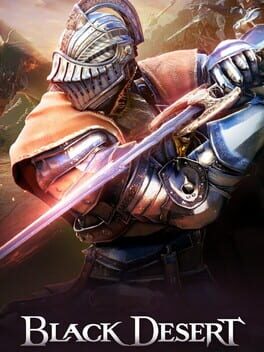
Black Desert is a visually stunning MMORPG set in a dark fantasy world with some of the smoothest action combat in the genre, deep crafting/trading systems, and guild node wars serving as its equivalent of WoW's large-scale PvP.
Key difference: Action combat (no tab-targeting) and heavy life-skill sandbox focus.
Best for: WoW players craving modern graphics and node-war PvP guilds.
Skip if: You dislike pay-to-win cash shops or grind-heavy progression.
Dragon Age: Origins is a party-based fantasy RPG with a class system (warrior/mage/rogue), tactical ability rotations, and a rich high-fantasy world full of factions and lore—it's the closest single-player game to WoW's RPG feel.
Key difference: Offline single-player with pause-and-play tactics instead of real-time MMO.
Best for: WoW lore lovers who want a deep narrative without other players.
Skip if: You need live multiplayer and persistent character growth.
Tera is a fantasy MMORPG that adopted WoW's quest and dungeon structure but replaced tab-targeting with genuine action combat requiring manual aiming and dodging.
Key difference: Full action combat instead of tab-target ability rotations.
Best for: WoW dungeon fans who want skill-based, reactive combat feel.
Skip if: You want a large, healthy Western playerbase—it has declined significantly.
Diablo II shares WoW's core fantasy loot loop—kill monsters, collect gear, refine your build, repeat—with class archetypes (Necromancer, Paladin, Sorceress) that directly influenced WoW's class design.
Key difference: No shared open world—instanced dungeon crawler, no other players in your zone.
Best for: WoW players who love theorycrafting gear builds and farming drops.
Skip if: You need social guild play and persistent open-world exploration.
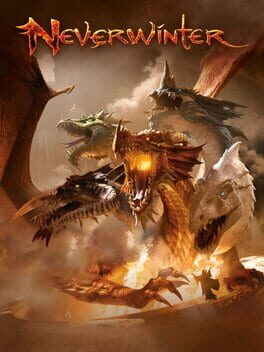
Neverwinter is a free-to-play MMORPG set in the D&D Forgotten Realms using WoW-style quest hubs, class roles, and instanced dungeons with a group finder. Its low barrier to entry makes it an easy WoW-lite alternative.
Key difference: Free-to-play with aggressive cash-shop monetization.
Best for: Players wanting a quick, free MMO experience in a D&D world.
Skip if: You want deep endgame raiding or a large competitive PvP scene.
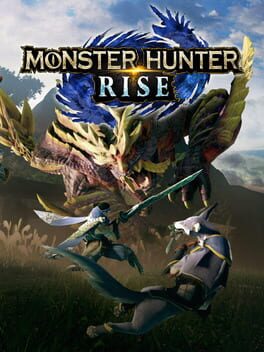
Monster Hunter Rise captures WoW's co-op dungeon loop—gather a party of up to four, learn a boss's attack patterns, refine your gear, and repeat with escalating difficulty—in a gorgeous action-RPG framework with deep weapon classes.
Key difference: Action combat and no persistent shared open world or social MMO structure.
Best for: WoW raid enthusiasts who want co-op boss mastery in a single-player-friendly package.
Skip if: You need an MMO social world, guilds, and live-service seasonal events.
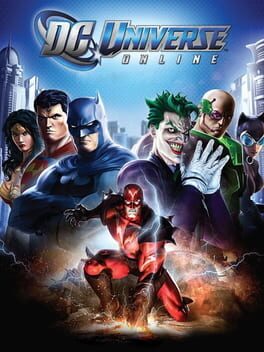
DC Universe Online is a superhero MMORPG with class roles, instanced raids, seasonal events, and PvP—structurally very close to WoW but in a licensed DC comics world with action combat.
Key difference: Superhero setting; action combat instead of tab-target.
Best for: WoW MMO fans who are DC comics enthusiasts.
Skip if: You want high fantasy and a large, active competitive community.
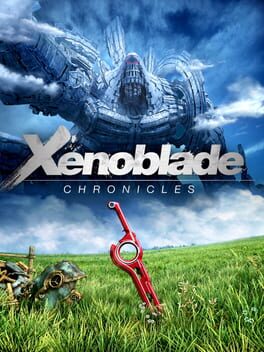
Xenoblade Chronicles features a vast open world, deep class-based party composition, talent trees, and a MMORPG-inspired arts combat system that was directly influenced by WoW's ability bar design—all in a single-player JRPG.
Key difference: Single-player JRPG; no multiplayer or shared world.
Best for: WoW fans who want a deep offline RPG with MMORPG-style combat feel.
Skip if: You need live multiplayer and social guild systems.
Nintendo
At a glance
Game
Match
Shared DNA
Biggest difference
Platforms
Final Fantasy XIV Online
93%
Role-playing (RPG), Action
Japanese art direction and a single-player-quality main narrative.
Xbox, PlayStation, Nintendo, PC
Final Fantasy XIV: Heavensward
90%
Role-playing (RPG), Action
Cannot be played without completing base FFXIV's main story first.
Xbox, PlayStation, PC
The Elder Scrolls Online
88%
Role-playing (RPG), Adventure
Fully open, level-scaled world—no defined faction leveling path.
Xbox, PlayStation, PC
Lost Ark
88%
Role-playing (RPG), Adventure
Isometric action combat and heavy gatekeeping endgame grind.
PC
Guild Wars 2
87%
Role-playing (RPG), Adventure
No subscription and horizontal endgame gear progression.
PC
Star Wars: The Old Republic
85%
Role-playing (RPG), Fantasy
Science-fantasy Star Wars setting instead of high fantasy.
PC
RuneScape
80%
Role-playing (RPG), Adventure
Skill-level sandbox instead of class-based character identity.
PC, Mobile
EverQuest
80%
Role-playing (RPG), Adventure
Brutally punishing, slower, and older—extremely steep for new players.
PC
Old School RuneScape
78%
Role-playing (RPG), Adventure
Deliberately retro 2D-tile graphics and slower tick-based gameplay.
Mobile, PC
Warcraft III: Reign of Chaos
76%
Fantasy, Warfare
Real-time strategy, not an MMO—entirely different core loop.
PC
Albion Online
74%
Role-playing (RPG), Fantasy
Fully player-driven sandbox economy and brutal open-world PvP with loot-on-death.
Xbox, PC, Mobile
Lineage II
73%
Role-playing (RPG), Adventure
Much harsher death penalties and grind; near-dead Western servers.
PC
Warcraft III: The Frozen Throne
72%
Fantasy, Warfare
RTS expansion, not an RPG—requires Warcraft III base game.
PC
Diablo III
72%
Role-playing (RPG), Adventure
No persistent world or social MMO systems; pure loot-grind dungeon crawler.
PlayStation, PC, Xbox
Black Desert
71%
Role-playing (RPG), Adventure
Action combat (no tab-targeting) and heavy life-skill sandbox focus.
Xbox, PlayStation, PC
What makes a game truly feel like World of Warcraft?
The WoW formula rests on four pillars: a persistent shared open world where thousands of players coexist, defined class roles (tank, healer, DPS) that make group content require coordination, a gear treadmill that resets each patch to keep progression meaningful, and a social layer of guilds and raiding that turns the game into a second social life. Not every fantasy RPG hits all four—The Elder Scrolls Online nails the open world and dungeons but softens class roles, while Guild Wars 2 ditches the gear treadmill entirely for horizontal progression.
If the raid and group content pillar matters most to you, Final Fantasy XIV Online and its expansion Heavensward are the unambiguous answer—its Savage and Ultimate raid tiers are as demanding and community-driven as anything WoW has produced.
Best MMO alternatives for WoW veterans by playstyle
For lore-driven storytelling: Star Wars: The Old Republic gives every class a fully voiced BioWare-quality story, and The Elder Scrolls Online fills Tamriel with hundreds of hours of voiced quests. For competitive PvP and guild warfare: Black Desert's node wars and Albion Online's open-world loot-drop PvP offer the highest stakes. For a free entry point: Neverwinter and DC Universe Online are free-to-play and structurally WoW-like, though with smaller active communities.
Players who want the Warcraft universe itself but a different genre should start with Warcraft III: Reign of Chaos and its expansion The Frozen Throne—together they tell the complete story of Arthas, Thrall, and the events that shaped WoW's entire first decade.
If you want the loot grind without the MMO subscription
Diablo II is the closest single-player distillation of WoW's core loop—class fantasy, itemization depth, and the pull to farm one more boss for one better drop—and it directly influenced WoW's own design. Monster Hunter Rise replicates the co-op dungeon-boss-loot-repeat cycle in an action RPG framework with no subscription, an excellent class roster of weapon types, and four-player multiplayer that rewards the same communication and preparation WoW raiding demands.
For players who want WoW's RPG feel in a purely narrative, offline context, Dragon Age: Origins is the classic recommendation—its Bioware-era class system, party composition, and high-fantasy world lore scratch the same itch as WoW's early RPG storytelling without requiring other players.
Is there a game exactly like World of Warcraft but free to play?
The closest free-to-play option with WoW's structure is Final Fantasy XIV Online, which has an extremely generous free trial covering the base game and first expansion (though the subscription kicks in for later content). Neverwinter and DC Universe Online are fully free MMORPGs with similar dungeon/raid structures. RuneScape and Old School RuneScape are also free to start, though their sandbox skill-based systems differ from WoW's class-role model.
What is the best MMORPG to play after World of Warcraft?
Final Fantasy XIV Online is the near-universal recommendation for WoW veterans—it shares the subscription model, dungeon finder, raid tiers, guild system, and class roles, while offering what many consider the best story in the MMORPG genre. The Elder Scrolls Online is the best choice for players who prioritize open-world exploration and lore immersion.
Are there any games with the same Warcraft universe lore?
Warcraft III: Reign of Chaos and its expansion The Frozen Throne are the essential Warcraft lore games—they tell the stories of Arthas, Thrall, Sylvanas, and Illidan that form WoW's entire narrative foundation. Hearthstone (not in this list) is a card game set in the same universe if you want something lighter.
What game should I play if I love WoW raiding specifically?
Final Fantasy XIV Online has the most comparable raid ecosystem, including Savage (hard mode) and Ultimate (extreme challenge) tiers that require the same team coordination and preparation as WoW's Mythic raids. Monster Hunter Rise captures the co-op boss-learning loop in an action-RPG format without an MMO subscription. Lost Ark also has challenging 8-player raids with strict role requirements.
Is Guild Wars 2 a good alternative to World of Warcraft?
Yes, especially if you're tired of WoW's gear treadmill. Guild Wars 2 is buy-to-play with no subscription, its endgame focuses on horizontal progression (cosmetics and mastery rather than power), and its open-world dynamic events replace traditional questing. Its structured PvP and world-vs-world modes cover WoW's PvP pillar. The main difference is it deliberately avoids the mandatory monthly reset grind that defines WoW's content cycle.
 93%
93%