Chess++ takes the familiar 64-square board and breaks it open: a third spatial dimension, redesigned movement rules, and entirely new pieces force you to rebuild your strategic intuition from scratch. Its appeal is the same as chess itself—perfect information, pure tactics, no luck—but with enough novelty to make even experienced players feel like beginners again.
When people look for games like Chess++, they are really after one thing: a game that rewards deep positional thinking, turn-by-turn sequencing, and the satisfaction of outmanoeuvring an opponent (human or AI) through logic alone. The best alternatives either twist chess's own rulebook or translate that same analytical rigour into a different format—grid tactics, card engines, or puzzle-strategy hybrids.
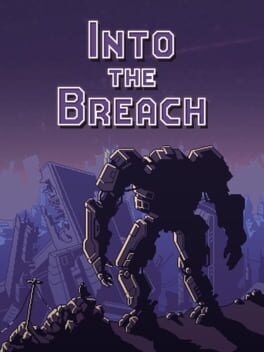
Top pick:Into the Breach is the single closest match in this pool: like Chess++, it presents a small, perfectly visible grid, completely telegraphed opponent actions, and a demand for precise spatial sequencing—every turn feels like solving a chess puzzle under time pressure, making it the first game any Chess++ fan should try.
Some store buttons are affiliate links — we may earn a commission at no extra cost to you.
18 games like Chess++
90%💎 Gem
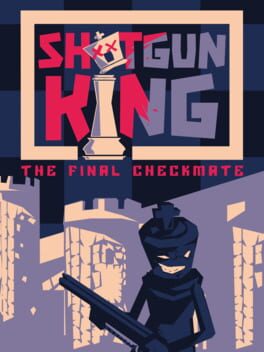
Shotgun King: the Final Checkmate 2022
Shotgun King is a chess variant roguelike where you play a lone king armed with a shotgun against a full enemy court; it directly twists classic chess rules just as Chess++ does, with each run adding new rule modifiers.
Key difference: Roguelike run structure and asymmetric one-king gameplay.
Best for: Chess++ fans who want a weirder, roguelike chess variant.
Skip if: You want a serious, symmetric chess experience.
Into the Breach places mechs on a tight grid and demands chess-like foresight: every enemy attack is telegraphed and every move is a spatial puzzle with perfect information. The grid-based, turn-based loop mirrors the mental rigour of a chess variant.
Key difference: Sci-fi narrative wrapper, mechs, and environmental hazards rather than pure pieces.
Best for: Players who love the puzzle-planning side of Chess++.
Skip if: You want a pure abstract board-game experience with no story.
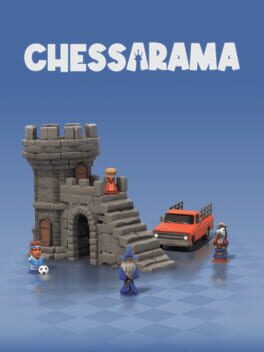
Chessarama is a collection of chess variant minigames—each mode rewrites the rules in a different way, directly mirroring the spirit of Chess++ by treating chess as a design canvas rather than a fixed game.
Key difference: Casual presentation and bite-sized modes rather than one deep system.
Best for: Players who love rule-variant chess and want many experiments.
Skip if: You want one deep, sustained chess variant with strong AI.
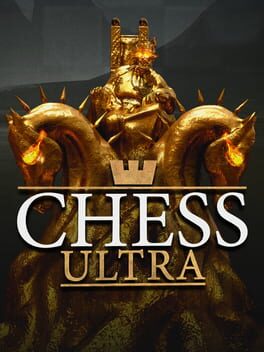
Chess Ultra is a premium digital chess implementation with strong AI difficulty tiers, VR support, and polished presentation—the natural companion if Chess++ sharpened your appetite for the base game.
Key difference: Pure standard chess with no rule variants or extra dimensions.
Best for: Players who want to sharpen classical chess skills alongside Chess++.
Skip if: You specifically want novel rules beyond standard chess.
Fire Emblem: Three Houses features turn-based grid combat where unit positioning and movement ranges echo chess piece logic. Strategic depth comes from managing how different unit classes move and attack.
Key difference: Heavy RPG and social simulation layers around each battle.
Best for: Players who want grid tactics with long-term character investment.
Skip if: You dislike anime aesthetics or relationship management systems.
Fire Emblem Awakening is a polished grid-tactics game with chess-like spatial thinking—flanking, range, and movement types matter greatly. It's tighter and more focused than Three Houses.
Key difference: 2D map combat and JRPG character progression system.
Best for: Players new to Fire Emblem wanting a streamlined entry.
Skip if: You want a purely abstract game without narrative filler.
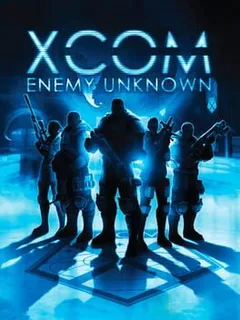
XCOM: Enemy Unknown translates military grid tactics into turn-based encounters where cover, sight lines, and action economy feel genuinely chess-like. Permadeath raises stakes for each decision.
Key difference: Squads, base management, and a campaign meta-layer add significant complexity.
Best for: Players ready to scale up from pure board-game tactics.
Skip if: You want quick, contained matches without lengthy campaigns.
Slay the Spire is a turn-based card roguelike that demands deep sequential thinking and hand optimization—the same kind of combinatorial planning Chess++ exercises, just expressed through a deck.
Hearthstone is a polished digital card/board game built around turn-based tactical dueling against an AI or human opponent, sharing Chess++'s one-on-one competitive format.
Key difference: Deckbuilding, mana economy, and card randomness replace fixed piece sets.
Best for: Players who enjoy the one-on-one duel format of Chess++.
Skip if: You dislike card game luck or free-to-play monetisation pressure.
Inscryption wraps a chess-adjacent tactical card game in a dark puzzle-box mystery; positional card placement and sacrifice mechanics reward spatial thinking similar to a chess variant.
Key difference: Strong narrative and meta-game mystery around the card system.
Best for: Players who want board-game logic infused with atmosphere and story.
Skip if: You want purely abstract gameplay with no narrative interruption.
Bad North is a real-time tactics game played on tiny procedurally generated island grids; moving unit platoons to block and flank Viking invaders requires spatial thinking very close to chess.
Key difference: Real-time wave defence rather than pure turn-based abstract play.
Best for: Players who want minimalist grid tactics with quick sessions.
Skip if: You need a strict turn-based pace to think clearly.
Balatro is a turn-based poker-roguelike requiring deep combinatorial thinking to maximise scoring runs—different theme but the same analytical mindset Chess++ demands.
Key difference: Poker hand evaluation replaces spatial piece movement entirely.
Best for: Chess++ fans who love finding optimal combinations in rule systems.
Skip if: You need spatial/positional gameplay to stay engaged.
Heroes of Might and Magic III: The Restoration of Erathia 1999
Heroes of Might and Magic III features turn-based hex-grid combat where unit stacking positions and attack order echo chess-like spatial planning, wrapped in a grand strategy layer.
Key difference: Fantasy RPG economy and map exploration around each tactical battle.
Best for: Players who want chess-style hex combat with more scope.
Skip if: You want fast, focused abstract matches with no overhead.
PC
54%💎 Gem
The Banner Saga 2014
The Banner Saga uses a grid-based tactical combat system with a small number of unit types whose movement and attack ranges reward precise positional chess-like thinking.
Key difference: Norse narrative and morale resource system frame each battle.
Best for: Players who want emotionally weighted grid tactics.
Skip if: You dislike story-driven pacing or permanent consequences.
Worms Armageddon is a classic turn-based positional game where placement, terrain reading, and sequencing of moves matter greatly—core chess instincts apply even in a comedic artillery wrapper.
Darkest Dungeon features turn-based positional combat where party order (who stands in which row) is a spatial constraint similar to piece placement, and careful sequencing is critical.
Key difference: Gothic horror atmosphere and heavy roguelike stress systems.
Best for: Players who enjoy positional thinking paired with punishing difficulty.
Skip if: You dislike grinding or bleak, punishing tone.
Civilization V is a turn-based strategy game where unit movement on hex tiles involves chess-like spatial planning, especially in combat manoeuvring and city placement.
Key difference: Massive 4X scope—diplomacy, science, culture—dwarfs pure tactics.
Best for: Players ready to graduate from duelling to grand-strategy thinking.
Skip if: You want quick focused matches rather than multi-hour campaigns.
Deckbuilding, mana economy, and card randomness replace fixed piece sets.
Mobile, PC
Inscryption
58%
Strategy
Strong narrative and meta-game mystery around the card system.
Xbox, PlayStation, PC, Nintendo
Bad North
58%
Strategy
Real-time wave defence rather than pure turn-based abstract play.
PlayStation, PC, Xbox, Nintendo
Balatro
55%
Strategy
Poker hand evaluation replaces spatial piece movement entirely.
Xbox, PlayStation, Nintendo, Mobile, PC
Heroes of Might and Magic III: The Restoration of Erathia
55%
Strategy
Fantasy RPG economy and map exploration around each tactical battle.
PC
The Banner Saga
54%
Strategy
Norse narrative and morale resource system frame each battle.
PlayStation, PC, Mobile, Xbox, Nintendo
What makes a game feel like Chess++?
The defining qualities of Chess++ are perfect information (no hidden cards or fog of war), spatial piece logic (movement rules define what each unit can threaten), and turn-based sequencing where a single mis-step cascades into defeat. Very few mainstream games match all three. Into the Breach is the rare exception—every enemy telegraphs its next move, every mech has constrained movement, and every solution is a spatial proof. The XCOM games approach this feel but add fog of war and randomised hit chances, which dilutes the pure logic.
Chess variant games like Shotgun King: The Final Checkmate and Chessarama (both in our additional picks) stay closest to Chess++'s literal DNA by keeping standard chess pieces and then deliberately breaking the rules—exactly the design philosophy Chess++ embodies.
If you want card-and-board-game tactics instead
Not every game with chess-like thinking needs a grid. Slay the Spire replaces spatial positioning with sequential card ordering, but the combinatorial mindset—planning three turns ahead, recognising patterns, exploiting rule interactions—is identical to what Chess++ trains. Inscryption goes further by embedding positional card placement on a small board, so your pieces' left-right positions matter in a way that should feel immediately familiar. Hearthstone offers the competitive one-on-one duel format of Chess++ in a more accessible package, though randomness from card draw introduces an element Chess++ deliberately avoids.
Best picks for pure grid-tactics fans
If what you love most about Chess++ is moving distinct unit types across a grid and exploiting their movement rules, Fire Emblem: Three Houses and Fire Emblem Awakening are your best bets—each unit class has a fixed movement range and weapon triangle that maps almost directly onto chess piece logic. The Banner Saga is the hidden gem here: its small hex-grid battles with a handful of unit types produce the same tight, chess-like positional tension with far less overhead than a full XCOM campaign, and it remains underplayed relative to its quality.
Is Chess++ a real chess game or a completely different game?
Chess++ uses chess as its foundation—same win condition (checkmate the king)—but adds a third spatial dimension to the board and introduces new piece types with unique movement rules. It plays recognisably like chess but requires rebuilding your strategic intuition for the extra axis of movement.
What is the best game like Chess++ for someone who wants pure abstract strategy?
Into the Breach is the closest match among mainstream titles: perfect information, grid-based movement rules for each unit type, and a purely logical puzzle structure with no randomness. For something even closer to chess's ruleset, Shotgun King: The Final Checkmate is a chess-variant roguelike that deliberately remixes chess rules in the same spirit as Chess++.
Are there other 3D chess video games?
True 3D chess games are rare. Chessarama offers multiple chess variants (though not all are 3D), and Chess Ultra is the most polished standard digital chess implementation. Chess++ itself is one of very few games to seriously implement a three-dimensional board as its core mechanic.
What games like Chess++ can I play against an AI opponent?
Most strategy games on this list include AI opponents. Into the Breach, XCOM: Enemy Unknown, Fire Emblem: Three Houses, Hearthstone (solo modes), and Slay the Spire all offer deep single-player AI challenges. Chess Ultra specifically excels at scalable AI difficulty for chess purists.
What should I play after Chess++ if I want something harder?
XCOM 2 on Ironman mode provides the steepest tactical difficulty curve—every decision is permanent and the AI scales aggressively. Into the Breach on Hard difficulty is shorter per run but demands near-perfect spatial reasoning. For card-based difficulty, Slay the Spire's higher Ascension levels offer a similarly relentless analytical challenge.
 90%💎 Gem