Outer Wilds earns its devotion by making knowledge the only currency: you never get stronger, unlock new abilities, or find better gear — you simply learn more about a solar system that was always fully open to you. The thrill is pure deduction and discovery, piecing together the secrets of an ancient civilization one environmental clue at a time, while a 22-minute time loop resets everything but your understanding.
When players ask for games like Outer Wilds, they usually mean one of a few things: the exploration-as-mystery structure where the world itself is the puzzle, the emotional gut-punch of a final revelation that recontextualizes everything, the solitary sense of smallness against an indifferent cosmos, or the time-loop mechanic used as a storytelling device rather than a punishment. The best recommendations share at least one of these — not merely the sci-fi or open-world tags.
Top pick:Return of the Obra Dinn is the single closest match: it is structurally built on the same principle that knowledge is the only progression, that each revelation recontextualizes what came before, and that the satisfaction of the final deduction is the entire point — if Outer Wilds is a mystery you solve by flying between planets, Obra Dinn is one you solve by rewinding time aboard a ghost ship, and both demand the same quality of patient, curious attention.
Some store buttons are affiliate links — we may earn a commission at no extra cost to you.
20 games like Outer Wilds
93%
Return of the Obra Dinn 2018
A deduction mystery aboard a ghost ship where you rewind to the frozen moment of each crew member's death and piece together what happened — knowledge is the only progression, and each revelation recontextualizes everything before it. The closest structural sibling to Outer Wilds that exists.
Key difference: Static scenes, no traversal or time loop — pure deductive logic.
Best for: Players who want Outer Wilds' mystery architecture in its purest form.
Skip if: You want spatial exploration or atmospheric traversal.
The Witness drops you on a mysterious island full of line puzzles whose rules you must infer entirely through observation — no tutorials, no hand-holding. Like Outer Wilds, the reward is the 'aha' moment itself, and the world holds a deeper meta-mystery beneath the surface puzzles.
Key difference: All puzzles are static line grids; no traversal or time mechanic.
Best for: Players who prize pure deduction and patient observation.
Skip if: You want narrative payoff or character warmth.
Majora's Mask is built around a three-day time loop you reset repeatedly, learning what every NPC does and piecing together interconnected mysteries — structurally the closest anything on Nintendo hardware gets to Outer Wilds' loop.
Key difference: Fantasy world with combat and traditional Zelda dungeons.
Best for: Players who want the time-loop feel in a richer action-adventure shell.
Skip if: You dislike combat or inventory management.
A first-person exploration of a family home where you discover each room's secrets and reconstruct the fate of a family across generations — emotionally affecting and built entirely on uncovering layered truth through environmental discovery.
Key difference: Anthology format, linear, no puzzles, about two hours long.
Best for: Players wanting Outer Wilds' emotional revelation in a short narrative game.
Skip if: You want open-ended exploration or any mechanical challenge.
Firewatch puts you in an isolated first-person wilderness with a slowly unfolding mystery communicated entirely through exploration and radio dialogue. The contemplative pacing and sense of place mirror Outer Wilds closely.
Key difference: Linear, no puzzles, and much shorter — about four hours.
Best for: Players who want the atmosphere without the puzzle complexity.
Skip if: You need mechanical challenge or gameplay systems.
An isometric action-adventure that deliberately withholds its rules and world logic, rewarding players who study an in-game manual written in an alien script — uncovering how the world actually works is the game, mirroring Outer Wilds' 'knowledge unlocks everything' philosophy.
Key difference: Has combat and Zelda-style dungeon structure; secrets are mechanical, not narrative.
Best for: Players who love Outer Wilds' discovery loop but want action-RPG scaffolding.
Skip if: Combat difficulty or cryptographic puzzles frustrate you.
Subnautica sends you to an alien ocean world where curiosity and exploration are the core loop — every dive reveals new biomes, lore fragments about a vanished civilization, and ecological mysteries. The sense of wonder and isolation is palpable.
The Vanishing of Ethan Carter is a first-person mystery set in a gorgeous autumnal valley where you reconstruct past events by examining crime scenes. Its focus on pure exploration and piecing together a strange, layered mystery strongly echoes Outer Wilds.
Key difference: Linear mystery; no time loop, no space, short runtime (~3 hours).
Best for: Players wanting a beautiful, low-friction mystery walk.
Skip if: You want systemic depth or replayability.
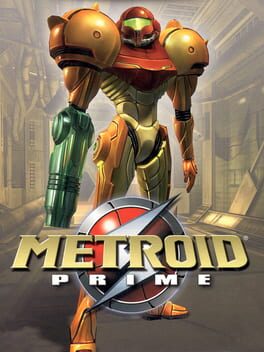
Metroid Prime is a first-person exploration of an isolated alien world where scanning the environment uncovers the lore of a lost civilization, piece by piece. The atmosphere of solitary discovery maps directly onto Outer Wilds' DNA.
Key difference: Has combat and item-gating; Metroidvania structure, not freeform.
Best for: Players who want Outer Wilds' tone with action and tight world design.
Skip if: You dislike combat or older control schemes.
Steins;Gate is a visual novel built around a time-loop mystery in which a group of scientists accidentally create a time machine and must piece together causality across parallel timelines. Its obsession with the implications of looping time is deeply Outer Wilds-adjacent.
Key difference: Visual novel — no exploration or spatial puzzles, reading-only.
Best for: Players who want the time-loop mystery taken to its narrative extreme.
Skip if: You need active gameplay or spatial exploration.
Gone Home is a first-person story exploration game where you wander an empty house and reconstruct what happened to a family entirely through environmental details and notes. The 'knowledge is the game' philosophy is identical to Outer Wilds.
Key difference: No puzzles, no space, very short — purely narrative.
Best for: Players who love environmental storytelling with no obstacles.
Skip if: You need mechanical gameplay or any challenge.
An archaeology exploration game set in a sci-fi ancient world where you translate a lost language by examining ruins and making deductions — the mystery of a vanished civilization slowly revealed through exploration and linguistic puzzle-solving.
Key difference: Dialogue-driven branching narrative; translation system replaces physics puzzles.
Best for: Players who love Outer Wilds' 'lost civilization' angle and want it fully narrativized.
Skip if: You want action or mechanical gameplay beyond dialogue choices.
To the Moon is a short sci-fi adventure about scientists traversing a dying man's memories to uncover a life-long mystery — emotionally devastating and driven entirely by uncovering hidden truth rather than combat or mechanics.
Fez is a platformer-exploration game hiding an elaborate second layer of cryptographic mystery — shift dimensions to see the world's geometry, then decode an alien alphabet to uncover what the world is actually about. The 'the game is smarter than it looks' revelation mirrors Outer Wilds perfectly.
Key difference: Platformer mechanics up front; cipher-cracking is entirely optional meta-puzzle.
Best for: Players who want Outer Wilds' layered mystery in a compact indie format.
Skip if: Decoding alien scripts sounds tedious rather than thrilling.
NieR: Automata reveals its true story only through multiple playthroughs that recontextualize everything, rewarding players who dig into lore logs and hidden truths about a dying civilization. That layered revelation loop echoes Outer Wilds' spirit.
Key difference: Action combat-heavy; revelations come via story beats, not spatial puzzles.
Best for: Players who want philosophical sci-fi mystery with strong action.
Skip if: You dislike anime aesthetics or combat-heavy games.
Inside is a wordless, atmospheric puzzle-platformer that withholds all explanation and forces you to interpret a deeply strange sci-fi world through observation alone. Its tonal commitment to mysterious dread and its final act share Outer Wilds' gift for jaw-dropping revelation.
Key difference: Linear, short (~3 hours), no open world or time mechanic.
Best for: Players who want a concentrated dose of cryptic wonder.
Skip if: You want freeform exploration or explicit narrative.
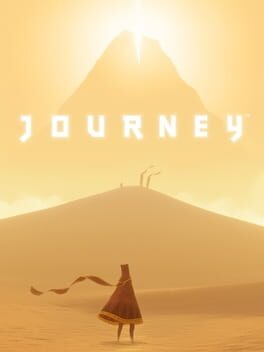
Journey is a wordless, atmospheric traversal of a mysterious ancient world where environmental storytelling and a profound final revelation carry all the emotional weight. The sense of smallness against an indifferent cosmos is a direct tonal cousin.
Key difference: About 2 hours long; no puzzles, no mechanics — pure vibes.
Best for: Players who want the emotional texture of Outer Wilds in the shortest possible form.
Skip if: You need intellectual challenge or systemic gameplay.
Abzu is an underwater exploration game that communicates the history of a vanished civilization entirely through environmental art and wordless discovery — meditative, beautiful, and built on wonder rather than combat.
Key difference: Very short, very linear; no puzzles or challenge whatsoever.
Best for: Players wanting a pure, stress-free sense-of-wonder experience.
Skip if: You want mystery to unravel intellectually, not just aesthetically.
No Man's Sky offers procedurally generated space exploration with a science-fiction atmosphere and lore logs from a vanished race (the Korvax/Atlas mysteries). The literal act of flying between planets in a hand-crafted solar system scratches a surface-level itch.
Key difference: Survival crafting and multiplayer replace mystery-driven narrative.
Best for: Players who want the physical act of space travel and want more of it.
Skip if: You want authored mystery with meaningful revelations.
Stray is a third-person exploration game set in a decaying sci-fi underground city, piecing together what happened to humanity through environmental observation and robotic NPC dialogue. Its scale is intimate and mystery-forward.
Key difference: You play as a cat; minimal puzzle depth, linear progression.
Best for: Players who want chill atmospheric mystery without intellectual pressure.
Skip if: You want open-world freeform exploration or systemic challenge.
Linear mystery; no time loop, no space, short runtime (~3 hours).
PlayStation, PC, Xbox, Nintendo
Metroid Prime
78%
Adventure, Action
Has combat and item-gating; Metroidvania structure, not freeform.
Nintendo
Steins;Gate
78%
Adventure, Science fiction
Visual novel — no exploration or spatial puzzles, reading-only.
PlayStation, Mobile, PC, Xbox
Gone Home
76%
Puzzle, Adventure
No puzzles, no space, very short — purely narrative.
PlayStation, PC, Mobile, Xbox, Nintendo
Heaven's Vault
74%
Puzzle, Adventure
Dialogue-driven branching narrative; translation system replaces physics puzzles.
PlayStation, PC, Nintendo
To the Moon
73%
Puzzle, Adventure
Pixel RPG presentation; minimal interactivity, essentially a moving story.
Xbox, PC, Mobile, PlayStation, Nintendo
Fez
72%
Puzzle, Adventure
Platformer mechanics up front; cipher-cracking is entirely optional meta-puzzle.
PlayStation, PC, Mobile, Xbox, Nintendo
NieR: Automata
70%
Action, Science fiction
Action combat-heavy; revelations come via story beats, not spatial puzzles.
PlayStation, PC
What makes a game feel like Outer Wilds?
The single defining trait of Outer Wilds is that information replaces power — you are never blocked by insufficient stats, only by insufficient understanding. The Witness does this most directly: you cannot brute-force any puzzle, only understand it, and the island is fully traversable from the start. Return of the Obra Dinn (in our additional list) applies the same philosophy to detective work. Everything else on this list approximates the feeling through one angle — atmosphere, time loops, environmental storytelling — but those two games share the actual philosophical DNA.
Majora's Mask is the outlier worth flagging: it is the only mainstream game to use the time-loop-as-world-state mechanic with comparable sophistication, where understanding the schedule of a living world is the puzzle. If you loved Outer Wilds' loop for what it revealed about how the Nomai lived, Majora's Mask scratches exactly that itch.
If you want atmosphere and solitary mystery without the puzzles
Firewatch and The Vanishing of Ethan Carter are the strongest low-friction picks for players who loved the tone of Outer Wilds — the isolation, the beautiful alien environment, the drip of mystery — but found the puzzle navigation stressful. Both are first-person, both build to a strange and layered revelation, and neither requires you to master physics-based space flight. Journey and Abzu strip out even the mystery and deliver pure contemplative wonder if that's all you need.
For the emotional devastation of the ending specifically, What Remains of Edith Finch (additional list) and To the Moon are the two most reliable bets: short, story-driven, and engineered to leave you sitting in silence afterward.
Hidden gems most 'games like Outer Wilds' lists miss
The Vanishing of Ethan Carter consistently flies under the radar despite being one of the most atmospherically rich first-person mystery games ever made — its photogrammetric world and restrained, intelligent mystery make it a natural Outer Wilds companion piece. Fez is even more overlooked: its surface is a charming platformer, but beneath it hides an elaborate alien cipher that rewards exactly the kind of obsessive, lateral-thinking curiosity that Outer Wilds demands. And Tunic (additional) is the most underrated direct heir to Outer Wilds' 'the game withholds its own rules and you must figure them out' philosophy.
Is there anything that plays exactly like Outer Wilds?
Nothing replicates its specific combination of physics-based space flight, time loop, and knowledge-only progression. Return of the Obra Dinn is the closest in philosophy (information is the only currency, each clue recontextualizes everything), while Majora's Mask is closest in structure (time loop, living world, piecing together events). The Witness is the closest in design principle (open world, no tutorials, understanding unlocks everything).
Are there games like Outer Wilds on mobile?
No direct equivalents exist on mobile. Monument Valley and its sequel share the sense of quiet spatial mystery, and Heaven's Vault has a mobile port that approximates the 'lost civilization' exploration angle, but neither matches the open-world freeform structure.
What should I play after finishing the Echoes of the Eye DLC?
If the horror and isolation of Echoes of the Eye resonated, try Subnautica for sustained alien-world dread, or Control for mysterious environments that withhold explanation. If the new emphasis on pure environmental storytelling without explicit puzzles appealed, Gone Home and What Remains of Edith Finch deliver that in concentrated form.
Is No Man's Sky similar to Outer Wilds?
Superficially — both involve flying a spaceship between planets in a solar system. But No Man's Sky is a survival crafting game built on resource loops and procedural generation, while Outer Wilds is a authored mystery where knowledge replaces all other progression. They scratch very different itches; don't expect the same satisfaction from both.
What game has the best time-loop mechanic similar to Outer Wilds?
Majora's Mask uses a three-day loop where the entire world operates on a schedule you must learn and exploit — it's the closest console equivalent. Steins;Gate explores time loops as a narrative and philosophical device in exhaustive, emotionally devastating detail as a visual novel. Deathloop (not in this pool) uses the mechanic as an action stealth structure if you want something more game-y.
 93%
93%