The Room earns its devotion through one specific alchemy: the tactile satisfaction of a physical object that reveals hidden mechanisms, secret compartments, and layered puzzles the more carefully you study it. Its occult atmosphere — candlelit, intimate, faintly threatening — turns each solved latch into a small act of forbidden discovery.
When players ask for games like The Room, they are really asking for two things: intricate, observation-driven puzzle design where the solution hides in plain sight, and a mysterious, atmospheric world that makes solving each mechanism feel meaningful. The best matches share that focused, cerebral, hands-on feeling.
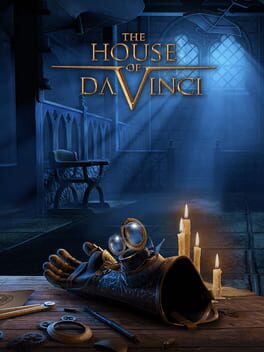
Top pick:The House of Da Vinci is the single closest match — it was built explicitly to replicate The Room's tactile puzzle-box structure, set inside Renaissance workshops filled with Da Vinci-designed contraptions you turn, unlock, and dissect with the same hands-on intimacy that defines The Room's DNA. If you haven't played it, start there.
Some store buttons are affiliate links — we may earn a commission at no extra cost to you.
21 games like The Room
92%
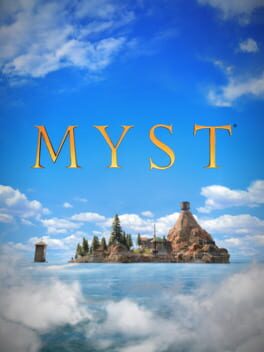
Myst 2020
Myst is the definitive atmospheric puzzle-exploration game: a mysterious island filled with mechanical contraptions, hidden symbols, and layered environmental clues — essentially the blueprint The Room builds its entire design upon.
Key difference: Vast multi-world exploration rather than a single focused object.
Best for: Players who want The Room expanded to an entire island world.
Skip if: You find slow, non-linear exploration frustrating.
The House of Da Vinci is essentially The Room set in Renaissance Florence — tactile 3D puzzle-boxes, hidden mechanisms on intricate props, and a dark historical mystery you piece together by turning every object in your hands.
Key difference: Historical Renaissance setting and slightly simpler puzzle depth.
Best for: Players who want the closest possible experience to The Room.
Skip if: You've already played it — it's nearly identical in structure.
Machinarium is a wordless point-and-click puzzle adventure in which you manipulate an intricate mechanical world to progress — the same careful, observational problem-solving that makes The Room so satisfying, wrapped in a gorgeous hand-drawn aesthetic.
Key difference: Robot protagonist in a steampunk city rather than a dark occult chamber.
Best for: Players who love tactile puzzles with strong atmosphere and no combat.
Skip if: You dislike slow, deliberate inventory-style puzzles.
Return of the Obra Dinn puts you aboard a ghost ship, deducing the fate of every crew member through environmental observation and inference — the same meticulous, detail-hunting logic as The Room, but at a grander deductive scale.
Key difference: Deduction-journal mystery on a ship; no physical object manipulation.
Best for: Players who love The Room's methodical hidden-secret reveals.
Skip if: You want clear puzzle steps; Obra Dinn demands open-ended deduction.
The Witness drops you on an island where every surface hides a panel puzzle — it rewards the same careful observation and pattern-recognition that The Room demands, building to a deep sense of mystery as you uncover the island's secrets.
Key difference: Open-world layout with hundreds of independent puzzles, not a single box.
Best for: Players wanting a longer, meatier pure-puzzle challenge.
Skip if: You prefer narrative payoff over abstract visual puzzles.
The Talos Principle combines layered environmental puzzles with an unsettling philosophical mystery, delivering the same slow-burn sense of uncovering something ancient and strange that drives The Room's atmosphere.
Key difference: 3D first-person perspective with philosophical AI narrative.
Best for: Players who want puzzle depth paired with intellectual storytelling.
Skip if: You want quick sessions; this demands long, thoughtful play.
Quern is a first-person Myst-like puzzle-exploration game on a mysterious island, where every device and mechanism must be studied and unlocked — sharing The Room's sense of a hidden world revealed through careful object manipulation.
Key difference: Open first-person island exploration rather than a single box focus.
Best for: Players who want a longer, Myst-style version of The Room's feel.
Skip if: You want the zoomed-in tactile object intimacy of The Room specifically.
SOMA is a puzzle-driven exploration game set in a claustrophobic underwater station, sharing The Room's tight, oppressive atmosphere and the feeling of piecing together a disturbing hidden truth through environmental clues.
Key difference: Full 3D walking-sim horror with existential sci-fi narrative.
Best for: Players who want atmosphere and dread alongside puzzle elements.
Skip if: You want pure puzzle; SOMA leans heavily on story and horror.
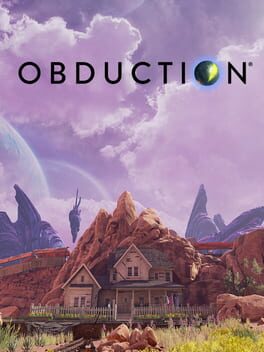
Obduction is Cyan's (creators of Myst) spiritual successor — mysterious alien environments filled with interconnected mechanical puzzles, the same slow revelation of a hidden world that drives The Room's appeal.
Key difference: Huge alien-world scope versus The Room's intimate single object.
Best for: Players who loved Myst and want a modern, longer puzzle world.
The Vanishing of Ethan Carter casts you as a paranormal investigator reconstructing crime scenes through environmental observation — the same quiet, mysterious atmosphere and detail-hunting focus as The Room, in an open rural setting.
Key difference: Outdoors open-world exploration rather than a confined object.
Best for: Players who love mystery atmosphere over mechanical puzzle-clicking.
Skip if: You want dense, multi-step mechanical puzzles.
To the Moon is a point-and-click adventure built around uncovering hidden memories and secrets through careful exploration of environments, echoing The Room's sense of piecing together a melancholy, mysterious story from clues.
Key difference: Narrative-driven RPG-maker aesthetic; virtually no mechanical puzzles.
Best for: Players drawn to The Room's story and mood over its mechanics.
Skip if: You play The Room primarily for its intricate tactile puzzles.
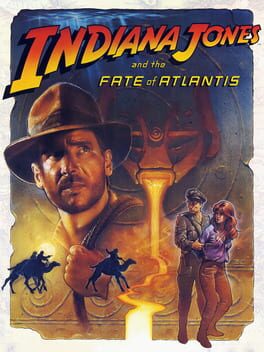
Indiana Jones and the Fate of Atlantis is a classic point-and-click puzzle adventure demanding sharp observation and multi-step solutions — the same methodical deduction loop that The Room refines into a tactile art form.
Key difference: Dialogue trees and inventory adventure across many locations.
Best for: Classic adventure fans who want a deep, wordy puzzle narrative.
Skip if: You want modern visuals and no text-heavy dialogue.
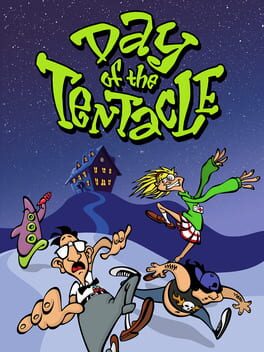
Day of the Tentacle is a legendary point-and-click puzzle adventure with intricate multi-room, time-travel puzzles — a foundational example of the same careful observation and mechanical ingenuity The Room distills into a single object.
Key difference: Comedic tone and dialogue-driven adventure, not atmospheric horror.
Best for: Classic adventure fans wanting witty, dense puzzle design.
Skip if: You dislike cartoonish comedy or old-school pixel art.
PC
62%
Inside 2016
Inside is a wordless, atmospheric puzzle-platformer drenched in dread that rewards careful environmental observation — its oppressive tone and satisfying mechanical solutions share DNA with The Room's dark puzzle feel.
Key difference: Side-scrolling platformer with physical puzzles, not a static box.
Best for: Players wanting short, dark, atmospheric puzzle storytelling.
Skip if: You dislike platforming or ambiguous narratives.
Limbo is a dark, silent puzzle-platformer with a haunting aesthetic and physics-based puzzles that share The Room's gloomy atmosphere and the quiet satisfaction of cracking each obstacle through observation.
Key difference: Platformer with reflex elements; no object manipulation.
Best for: Players who love The Room's dark mood in a very short package.
Skip if: You dislike any platforming or trial-and-error deaths.
What Remains of Edith Finch strings together vignettes of family secrets uncovered by exploring a mysterious house — the enclosed, detail-rich setting and sense of hidden history feel very close to The Room's atmosphere.
Key difference: Walking simulator; no mechanical puzzles at all.
Best for: Players drawn to The Room's story and setting over its puzzles.
Skip if: You want any mechanical puzzle challenge.
Braid is an indie puzzle-platformer built around a single elegant mechanic (time manipulation) explored with increasing ingenuity — its focused, cerebral puzzle design shares the same satisfying logic as The Room.
Key difference: 2D platformer with time mechanics; no inventory or point-and-click.
Best for: Players who love clever single-mechanic puzzle design.
Skip if: You dislike platforming or abstract puzzle framing.
Firewatch places you in a remote forest where something unsettling is unraveling — its confined mystery, gradual revelation of hidden truths, and rich environmental detail echo The Room's sense of isolation and dread.
Key difference: First-person walking-sim focused on dialogue; almost no puzzles.
Best for: Players who loved The Room's atmosphere and mystery arc.
The Wolf Among Us is a noir point-and-click adventure where you investigate dark fairy-tale mysteries through scene observation and choice — the same genre heritage as The Room but built around story and character over mechanical puzzles.
Key difference: Choice-driven narrative adventure; puzzles are minimal.
Best for: Players who want point-and-click with a strong, moody story.
Skip if: You play The Room for its mechanical puzzle intricacy.
Silent Hill 2 features inventory-based environmental puzzles woven into a deeply atmospheric horror narrative — the dark, oppressive mystery and tactile puzzle-solving share an undercurrent with The Room's occult dread.
Key difference: Full action-horror game with combat and a long, harrowing story.
Best for: Players who want The Room's horror atmosphere in a full RPG-length game.
Skip if: You want pure puzzles with no combat or horror stress.
The Walking Dead is a point-and-click adventure that rewards careful environmental observation and inventory use — its genre roots match The Room, though it pivots to emotional narrative over mechanical puzzle design.
Key difference: Choice-driven emotional drama; puzzles are simple and sparse.
Best for: Players who loved The Room's point-and-click heritage and want story.
Skip if: You play for intricate mechanical puzzles, not narrative.
Vast multi-world exploration rather than a single focused object.
Xbox, PlayStation, PC
The House of Da Vinci
90%
Point-and-click, Puzzle
Historical Renaissance setting and slightly simpler puzzle depth.
Xbox, PlayStation, Mobile, PC, Nintendo
Machinarium
87%
Point-and-click, Puzzle
Robot protagonist in a steampunk city rather than a dark occult chamber.
PlayStation, PC, Mobile, Xbox, Nintendo
Return of the Obra Dinn
85%
Puzzle, Indie
Deduction-journal mystery on a ship; no physical object manipulation.
PlayStation, PC, Xbox, Nintendo
The Witness
83%
Puzzle, Indie
Open-world layout with hundreds of independent puzzles, not a single box.
PlayStation, PC, Mobile, Xbox
The Talos Principle
78%
Puzzle, Indie
3D first-person perspective with philosophical AI narrative.
PlayStation, PC, Mobile, Xbox, Nintendo
Quern: Undying Thoughts
78%
Puzzle, Indie
Open first-person island exploration rather than a single box focus.
PC, PlayStation, Xbox
Soma
75%
Puzzle, Indie
Full 3D walking-sim horror with existential sci-fi narrative.
PlayStation, PC, Xbox, Nintendo
Obduction
74%
Point-and-click, Puzzle
Huge alien-world scope versus The Room's intimate single object.
PC, PlayStation, Mobile, Xbox
The Vanishing of Ethan Carter
72%
Puzzle, Indie
Outdoors open-world exploration rather than a confined object.
PlayStation, PC, Xbox, Nintendo
To the Moon
65%
Point-and-click, Puzzle
Narrative-driven RPG-maker aesthetic; virtually no mechanical puzzles.
Xbox, PC, Mobile, PlayStation, Nintendo
Indiana Jones and the Fate of Atlantis
65%
Point-and-click, Puzzle
Dialogue trees and inventory adventure across many locations.
PC
Day of the Tentacle
63%
Point-and-click, Fantasy
Comedic tone and dialogue-driven adventure, not atmospheric horror.
PC
Inside
62%
Puzzle, Indie
Side-scrolling platformer with physical puzzles, not a static box.
PlayStation, PC, Mobile, Xbox, Nintendo
Limbo
58%
Puzzle, Indie
Platformer with reflex elements; no object manipulation.
PlayStation, PC, Mobile, Xbox, Nintendo
What makes a game truly feel like The Room?
The Room's core DNA is the puzzle-box mechanic: a single, richly detailed physical object that hides more than it shows, demanding that you rotate, probe, and decode it in sequence. Very few games replicate this exactly — Machinarium comes closest from the candidate pool, replacing the iron safe with a mechanical city where every surface is a cleverly disguised contraption. The Witness scales the same observational patience across an entire island of panel puzzles, while The Talos Principle pairs puzzle rigour with the same sense of an ancient, unsettling intelligence watching you work.
Atmosphere matters as much as mechanics. Soma and The Vanishing of Ethan Carter both deliver The Room's sense of peeling back a dark secret layer by layer, even if their puzzles are less mechanically intricate. The key thread is purposeful observation — games where rushing gets you nowhere and careful study is always rewarded.
Best picks if you love The Room's mystery and hidden-world storytelling
If the occult mystery draws you as much as the puzzles, What Remains of Edith Finch and Firewatch deliver richly atmospheric hidden-history narratives set in enclosed, detail-packed spaces — without any mechanical puzzle challenge. For something with actual deductive depth, Return of the Obra Dinn (in the additional picks) is the finest example of environmental mystery-solving in recent years: every clue is physical, visible, and logical, and the satisfaction of a correct deduction mirrors The Room's latching-mechanism click perfectly.
Silent Hill 2 goes furthest into the dark: if The Room's faintly sinister occult tone is what keeps you playing, Silent Hill 2's oppressive dread and environmental puzzle language scratch that same unease — at much greater length and horror intensity.
Hidden gems worth playing before the obvious picks
Machinarium is the most underrated recommendation in any "games like The Room" list — it sold well but rarely comes up in puzzle discussions despite being an almost perfect match in feel, pacing, and mechanical ingenuity. Its robot-repair puzzles demand the same slow, careful attention to what each element does before trying to use it. The Vanishing of Ethan Carter is similarly overlooked: its paranormal investigation puzzles are less mechanical but its sense of a place concealing something terrible is second only to The Room itself. Among the additional picks, Quern: Undying Thoughts is the most frequently missed — a polished Myst-style gem that punches well above its visibility.
Is there a game that plays exactly like The Room but is longer?
The House of Da Vinci (additional picks) is the closest structural match — tactile 3D puzzle-boxes with a dark historical mystery. For more content in a similar vein, Myst and its sequels offer the same observation-driven puzzle exploration across an entire world rather than a single object.
Are there free or mobile games like The Room?
The Room itself began on mobile, and its sequels (The Room Two, Three, Four: Old Sins) are all available on iOS and Android and are the most direct continuation. Monument Valley shares the puzzle-toy aesthetic in a more abstract form.
What's the best The Room alternative on PC?
The Witness is the strongest PC pick from this list — a vast, pure-puzzle game built entirely on patient observation and pattern recognition, with the same rewarding 'click' when a solution becomes clear. Return of the Obra Dinn is equally essential for fans of environmental mystery.
Are there games like The Room with a scarier atmosphere?
Soma (in the candidate list) shares The Room's claustrophobic intimacy and occult-adjacent dread but goes fully into sci-fi body horror. Silent Hill 2 is the deepest cut if you want puzzle-solving wrapped in genuine psychological horror.
What should I play after finishing all The Room games?
Start with The House of Da Vinci for the most direct puzzle-box continuation, then move to The Witness for a longer pure-puzzle challenge, Machinarium for point-and-click atmosphere, and Return of the Obra Dinn for the finest mystery-deduction game of the last decade.
 92%
92%