Blue Prince earns its obsession through a deceptively elegant design: every dawn you draft rooms from a random hand and place them to build a path through Mt. Holly's ever-shifting manor, hunting for the mythical Room 46. What makes it special is that knowledge accumulates across runs while the layout resets — you're not grinding skill, you're growing understanding of a mystery one piece at a time.
When players ask for games like Blue Prince they're really looking for three interlocking things: a run-based loop where failure teaches rather than punishes, a layered mystery that rewards patient observation, and puzzles that feel embedded in a larger secret rather than bolted onto a story. The best matches share at least two of these, even if their surface genre differs.
Top pick:Outer Wilds (in the additional list) is the single closest match in spirit — its 22-minute cyclical loop resets everything except your understanding, and the entire game is a mystery assembled from inference and observation with no skill gating — but if you're limited to the candidate pool, Tunic is the top pick: it hides its rules as deliberately as Blue Prince hides Room 46, and the joy of deciphering what the world is actually telling you feels nearly identical.
Some store buttons are affiliate links — we may earn a commission at no extra cost to you.
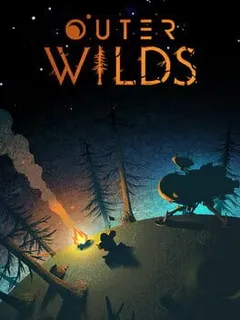
Outer Wilds is perhaps the closest spiritual sibling to Blue Prince: each 22-minute loop resets the solar system but not your knowledge, and you assemble a lost civilization's mystery entirely through observation and inference. Nothing is gated by skill — only by what you understand.
Key difference: 3D space exploration with physics; no drafting or room-placement mechanics.
Best for: Anyone who loves Blue Prince's 'knowledge accumulates across runs' loop.
Skip if: You dislike open-ended exploration with no quest markers.
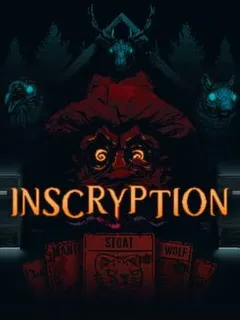
Inscryption is a deckbuilding roguelite wrapped in a meta-mystery horror game — you draft cards to battle in a cabin, but the real puzzle is the sinister secret encoded in the game itself. The layered mystery revealed across runs is almost identical in feel to Blue Prince.
Key difference: Card combat is the primary mechanical expression.
Best for: Players who want roguelite drafting with a deep narrative mystery.
Skip if: You dislike card game mechanics or horror aesthetics.
Tunic drops you into a mysterious world and withholds its rules deliberately, rewarding exploration and inference rather than explicit guidance. Like Blue Prince, the joy is in piecing together how the world actually works through careful observation and repeated discovery.
Key difference: Action combat replaces pure puzzle-drafting; no roguelite runs.
Best for: Players who love secrets and cryptic world-building above all.
Skip if: You want zero combat and purely mental puzzles.
Animal Well is a dense, secret-laden metroidvania where the real puzzles exist in layers beneath the surface, requiring players to return and reinterpret what they've seen. Its atmosphere of quiet mystery and incremental revelation mirrors Blue Prince closely.
Key difference: Platformer movement replaces top-down room drafting.
Best for: Players who want environmental mystery with nearly no handholding.
Skip if: You dislike platformer precision or non-verbal storytelling.
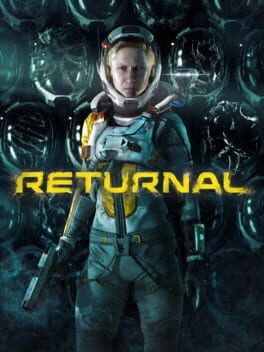
Returnal is a third-person shooter built around a time-loop roguelite structure where the mystery of what is happening deepens with each run. Like Blue Prince, each attempt both resets the layout and advances narrative understanding.
Key difference: Intense action combat dominates; much harder mechanically.
Best for: Blue Prince fans who also want a visceral skill challenge.
Skip if: You want pure puzzle with no twitch reflexes required.
Control takes place in a brutalist government building whose architecture shifts and hides secrets in every bureau. The building itself is the mystery, and uncovering its logic has the same obsessive pull as hunting for Room 46.
Key difference: Third-person shooter combat is central; no procedural generation.
Best for: Players drawn to the 'mysterious building as protagonist' feel.
Skip if: You dislike action combat or want a non-violent puzzle game.
The Case of the Golden Idol is a pure deduction puzzle game where you piece together what happened in a series of connected scenes by identifying names, motives, and actions. The satisfaction of cracking each tableau's logic matches Blue Prince's cerebral reward loop.
Key difference: Static point-and-click scenes; no exploration or spatial puzzles.
Best for: Players who love deduction and mystery above all else.
Skip if: You need exploration and movement through a 3D space.
FTL is a run-based strategy game where you draft ship upgrades and manage rooms across a procedurally generated galaxy. The room-management, resource tension, and run structure share meaningful mechanical DNA with Blue Prince.
Key difference: Real-time-with-pause combat; no exploration mystery or narrative puzzle.
Best for: Players who want Blue Prince's strategic resource tension in a sci-fi shell.
Skip if: You want mystery narrative and atmospheric exploration.
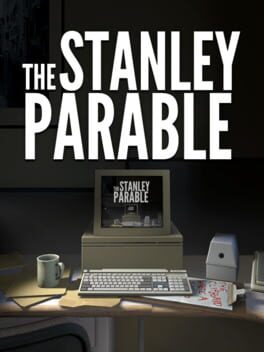
The Stanley Parable is fundamentally about navigating rooms in an office building and questioning what you're told about the space. Like Blue Prince, the building and its corridors are central to the mystery, and meaning shifts with every path you take.
Key difference: Narrative meta-comedy focus; no strategy or roguelite loops.
Best for: Blue Prince fans who love fourth-wall-aware mystery storytelling.
Skip if: You want mechanical puzzle depth and replayable runs.
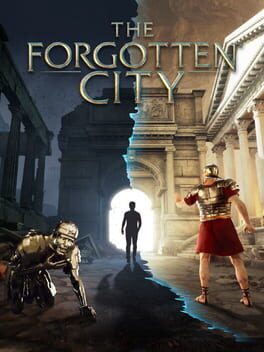
The Forgotten City traps you in a Roman city under a cursed loop — die once and everyone dies — so you must learn information across attempts to finally solve the mystery. The loop-based discovery and deduction feel is very close to Blue Prince.
Key difference: RPG dialogue and historical setting; no room-drafting mechanic.
Best for: Players who love solving mysteries across repeated loops.
Skip if: You want abstract spatial puzzles rather than conversation-driven investigation.
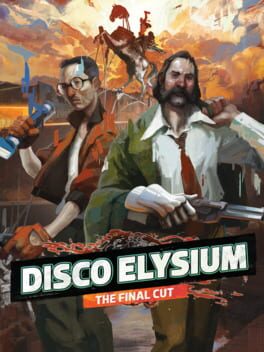
Disco Elysium is an investigative RPG where you assemble a crime's truth from fragmentary clues, contradictions, and strange systems. Like Blue Prince it rewards patience, lateral thinking, and revisiting assumptions.
Key difference: Dialogue-heavy RPG with no spatial or drafting puzzles.
Best for: Players who want mystery with deep literary and systemic richness.
Skip if: You want kinetic exploration over talking and reading.
The Room is a tactile puzzle game built around a single mysterious box that conceals ever-deeper mechanical secrets. The tactile intimacy of manipulating a contained puzzle object to reveal its hidden logic is very close to Blue Prince's puzzle spirit.
Key difference: Mobile-adjacent, very short, no roguelite or exploration.
Best for: Players who want hands-on mechanical puzzle with mysterious atmosphere.
Skip if: You need long-form replayability or strategic systems.
The Exit 8 challenges you to walk a looping underground corridor and spot subtle anomalies to escape — a pure exercise in spatial attention and pattern recognition in a shifting, repeating environment. The loop logic and mystery of the space are in Blue Prince's DNA.
Key difference: Tiny, singular mechanic; no strategy, drafting, or narrative depth.
Best for: Players who love the repeating-space anomaly-detection loop.
Skip if: You need narrative payoff or strategic complexity.
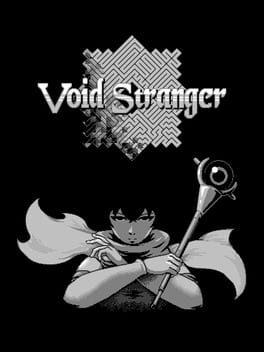
Void Stranger is a sokoban-style puzzle game with a deep hidden mystery narrative that rewards players who push far beyond the surface — multiple secret layers change what the game fundamentally is. Like Blue Prince, the most important secrets are never announced.
Key difference: Top-down block-push puzzles; extremely demanding and esoteric.
Best for: Players who want dense hidden mystery beneath a deceptively simple puzzle game.
Skip if: You dislike extremely cryptic meta-mysteries or sokoban mechanics.
Hades is a roguelite where each run through the procedurally assembled underworld also advances a layered narrative, and information compounds across deaths. The run-based discovery of secrets and characters parallels Blue Prince's daily-dawn loop.
Key difference: Fast action combat is the core skill expression.
Best for: Blue Prince fans who want a roguelite with a more action feel.
Skip if: You want pure puzzle and strategic planning over twitch combat.
Myst is a silent, solitary exploration of a mysterious island where every room hides a logical puzzle tied to a broader hidden narrative. The atmosphere of isolation and cryptic discovery is a clear ancestor to Blue Prince.
Key difference: Static pre-rendered world; no procedural generation or strategy layer.
Best for: Players who want pure exploration puzzle with no time pressure.
Skip if: You need run-based replayability or strategic resource decisions.
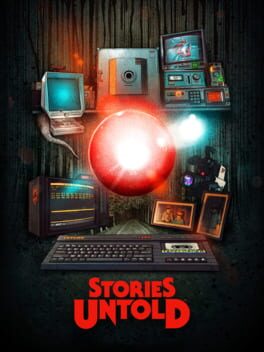
Stories Untold is a short anthology of experimental horror-puzzle vignettes that consistently subvert the player's understanding of what kind of game they're playing. Like Blue Prince, the meta-mystery of the format is half the point.
Key difference: Very short; no roguelite or spatial exploration mechanics.
Best for: Players who want unsettling meta-mystery with puzzle experimentation.
Skip if: You want long-form replayable runs with strategic depth.
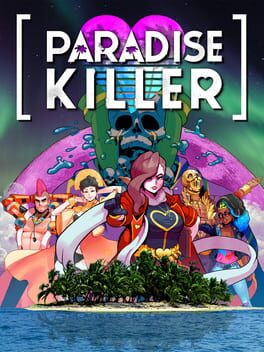
Paradise Killer is an open-world mystery investigation on a sealed island — you gather evidence, talk to suspects, and reconstruct a crime. The sense of uncovering a hidden truth layer by layer mirrors Blue Prince's gradual revelation.
Key difference: Open-world walking sim investigation; no procedural or roguelite elements.
Best for: Players who want an exotic open mystery with stylish aesthetics.
Skip if: You dislike visual novel-adjacent dialogue systems.
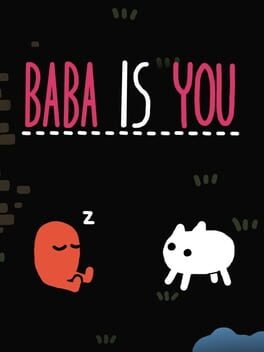
Baba Is You is a rule-manipulation puzzle game where the laws of the world are themselves objects you can move and rearrange. It shares Blue Prince's delight in systems that reveal hidden logic through lateral thinking.
Key difference: Pure abstract grid puzzles; no narrative mystery or roguelite runs.
Best for: Players who want maximum intellectual puzzle challenge above all.
Skip if: You need narrative or atmospheric context for your puzzles.
The Vanishing of Ethan Carter places you in a beautiful, eerie valley where you reconstruct violent events by finding environmental clues. Like Blue Prince, the setting holds secrets in every corner and rewards patient observation.
Key difference: Very short, linear narrative with no replayability.
Best for: Players who want atmospheric mystery walking sim without strategy.
Skip if: You want mechanical depth or roguelite replayability.
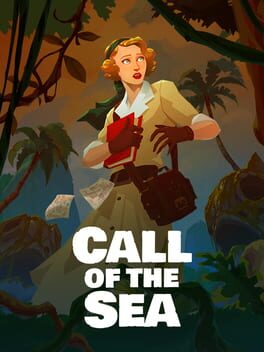
Call of the Sea is a first-person puzzle adventure set on a mysterious island steeped in Lovecraftian mystery, where each area hides a self-contained logical puzzle that feeds a larger revelation. The pacing and atmosphere echo Blue Prince.
Key difference: Linear progression; no drafting, roguelite, or procedural elements.
Best for: Players who want first-person puzzle mystery in an atmospheric setting.
Skip if: You need replayable structure or strategic resource management.
Her Story asks you to search a database of police interview clips to reconstruct what really happened in a crime — pure inductive mystery solving with no handholding. The detective-brain satisfaction is very close to Blue Prince's revelation loop.
Key difference: Pure FMV database; no spatial exploration or strategy at all.
Best for: Players who love deductive mystery above mechanics entirely.
Skip if: You want physical exploration, spatial puzzles, or run-based gameplay.
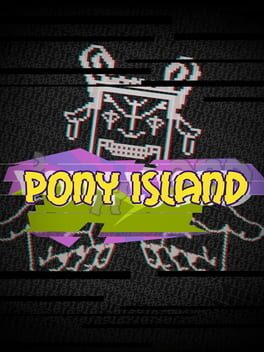
Pony Island is a meta-puzzle game disguised as a broken arcade machine — the mystery of what is really going on and what the game's rules actually are is the core loop. Like Blue Prince it rewards probing the edges of what the game tells you.
Key difference: Short, meta-horror tone; no spatial exploration or roguelite structure.
Best for: Players who love games that hide a deeper sinister mystery in plain sight.
Skip if: You want long strategic runs or spatial puzzle design.
Rusty Lake Paradise is a point-and-click puzzle game set on a creepy island where solving each plague-themed puzzle reveals a deeper family mystery. Like Blue Prince it wraps logic puzzles inside a consistently unsettling mystery.
Key difference: Short, simple point-and-click puzzles; no roguelite or strategy.
Best for: Players who want bite-sized mystery puzzles with a dark tone.
Skip if: You need mechanical complexity or long-form replayability.
3D space exploration with physics; no drafting or room-placement mechanics.
Xbox, PlayStation, PC, Nintendo
Inscryption
88%
Puzzle, Strategy
Card combat is the primary mechanical expression.
Xbox, PlayStation, PC, Nintendo
Tunic
82%
Puzzle, Adventure
Action combat replaces pure puzzle-drafting; no roguelite runs.
Xbox, PlayStation, Nintendo, PC
Animal Well
78%
Puzzle, Adventure
Platformer movement replaces top-down room drafting.
Xbox, PC, PlayStation, Nintendo
Returnal
75%
—
Intense action combat dominates; much harder mechanically.
PC, PlayStation
Control
72%
Adventure
Third-person shooter combat is central; no procedural generation.
Xbox, PlayStation, PC
The Case of the Golden Idol
72%
Puzzle, Adventure
Static point-and-click scenes; no exploration or spatial puzzles.
Xbox, PlayStation, Mobile, PC, Nintendo
FTL: Faster Than Light
72%
Strategy, Indie
Real-time-with-pause combat; no exploration mystery or narrative puzzle.
PC, Mobile
The Stanley Parable
70%
Adventure, Indie
Narrative meta-comedy focus; no strategy or roguelite loops.
PC
The Forgotten City
70%
Adventure, Indie
RPG dialogue and historical setting; no room-drafting mechanic.
Xbox, PlayStation, PC
Disco Elysium: The Final Cut
68%
Adventure, Indie
Dialogue-heavy RPG with no spatial or drafting puzzles.
Xbox, PlayStation, PC, Nintendo
The Room
68%
Puzzle, Adventure
Mobile-adjacent, very short, no roguelite or exploration.
Mobile, PC
The Exit 8
67%
Puzzle, Adventure
Tiny, singular mechanic; no strategy, drafting, or narrative depth.
Xbox, PlayStation, Nintendo, PC, Mobile
Void Stranger
65%
Puzzle, Adventure
Top-down block-push puzzles; extremely demanding and esoteric.
PC
Hades
63%
Adventure, Indie
Fast action combat is the core skill expression.
Xbox, PlayStation, PC, Mobile, Nintendo
What makes a game truly feel like Blue Prince?
The key ingredients are a loop that resets the world but not your knowledge, and a mystery that lives in the system rather than in cutscenes. Tunic and Animal Well both nail this: neither tells you what you're looking for, both reward players who write things down and revisit old areas with new understanding. The Case of the Golden Idol captures the deduction half — each scene is a logic puzzle where you deduce who did what from visual evidence, and the satisfaction of the "click" moment is virtually identical.
Games like Control and The Stanley Parable hit a different note: the building itself as an enigma. Control's Federal Bureau of Control shifts its architecture and hides its purpose in the same way Mt. Holly does, while The Stanley Parable makes the act of walking through numbered office doors into a meditation on choice and meaning — a surprisingly close cousin to Blue Prince's corridor-navigating tension.
If you want the roguelite mystery loop taken further
Returnal and Hades both use the roguelite run structure to dole out narrative — you die, you reset, you learn something new about the story. Returnal is the more demanding version: its alien world generates procedurally and its mystery is genuinely disturbing, but the run-based revelation loop is Blue Prince's closest mechanical relative among action games. Stories Untold takes a quieter approach — short experimental vignettes that keep subverting what kind of game they are, rewarding players who question every assumption.
Hidden gems Blue Prince fans shouldn't miss
The Case of the Golden Idol is criminally underplayed for how precisely it delivers deduction satisfaction. The Exit 8 — a loop-based anomaly-detection game set in a repeating underground corridor — is tiny but pulls off the same "navigating a space that isn't quite right" tension that Blue Prince lives in. Paradise Killer buries a sprawling murder mystery in an open-world island and trusts you entirely to find the truth without a checklist; it's exactly as unhurried and investigative as Blue Prince demands. And if you haven't played Pony Island, its meta-mystery of what the game actually is belongs on any list that includes Room 46.
Blue Prince is both — it uses roguelite structure (runs that reset the layout each dawn, with drafted room choices) as the delivery mechanism for a deep puzzle-mystery. The puzzle is figuring out how Mt. Holly works and what Room 46 actually is; the roguelite runs are how you gather the knowledge to answer that.
What game is most similar to Blue Prince for mystery and exploration?
Outer Wilds is the closest overall match: a loop-based game where the world resets but your understanding doesn't, and the entire experience is assembling a mystery from observation. Tunic is the best match within the candidate pool, hiding its rules and secrets as deliberately as Blue Prince hides Room 46.
Are there games like Blue Prince where you explore a mysterious building?
Yes — Control features a brutalist government building whose architecture shifts and hides secrets, and The Stanley Parable is built around navigating numbered rooms in an office to find something that may not exist. Both share Blue Prince's obsession with a building as the central mystery.
What roguelite games have the same knowledge-builds-across-runs feel as Blue Prince?
Returnal is the most direct: each run through a procedurally generated alien world also advances a horror mystery, and information compounds across deaths. Inscryption (in the additional recommendations) goes even further — its roguelite deckbuilding loop is wrapped in a meta-mystery that fundamentally changes what the game is across multiple layers.
Is Blue Prince good for players who don't usually like roguelikes?
Very much so. Blue Prince's runs are not about skill progression — they're about knowledge accumulation. You aren't getting better at combat or reflexes; you're learning the logic of the house. Games like Outer Wilds and The Forgotten City have the same ethos: the loop exists to teach you, not to challenge you mechanically.
 92%
92%