The 1992 Clue by Sculptured Software nails what the board game has always delivered: turn-based movement through a mansion, evidence-gathering through suggestions, and the tension of knowing one wrong accusation ends your game. Its "action point" mode — nine points per turn that cover everything from walking to making a suggestion — adds strategic rationing on top of the classic deduction loop, rewarding careful planning over luck of the dice.
When players look for games like Clue, they are really searching for two things: that satisfying process-of-elimination feeling as suspects and weapons get crossed off a mental list, and the social charge of knowing other players are racing toward the same answer. The best recommendations share either the deduction mechanic, the murder-mystery atmosphere, or both.
Top pick:Return of the Obra Dinn is the single closest match in spirit: it is entirely built around the same cross-referencing, process-of-elimination deduction that makes Clue tick, asking you to assign a cause of death and a responsible party to every crew member using only fragments of evidence — if you love the moment in Clue when the logic clicks and you know the answer, Obra Dinn delivers that feeling repeatedly and masterfully.
Some store buttons are affiliate links — we may earn a commission at no extra cost to you.
19 games like Clue
88%💎 Gem
Return of the Obra Dinn 2018
Return of the Obra Dinn is a pure deduction game: you examine frozen death scenes on a ghost ship and use logical elimination to identify each crew member's fate and killer — exactly the same process-of-elimination loop that powers Clue. Every conclusion is reached by cross-referencing evidence rather than action.
Key difference: First-person exploration replaces board movement; solo only.
Best for: Fans who love Clue's deduction logic above all else.
Skip if: You want multiplayer or traditional board-game structure.
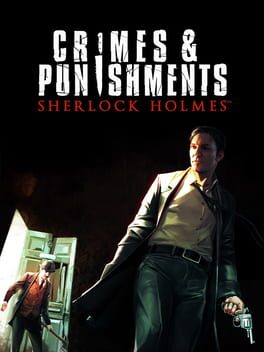
A dedicated detective game where you gather evidence, profile suspects, and deduce the culprit across six separate cases — the closest digital equivalent to Clue's accusation-based mystery structure in a full 3D adventure.
Key difference: Solo narrative; no board movement or competitive players.
Best for: Clue fans wanting deep structured detective investigations.
Skip if: You want competitive multiplayer or quick sessions.
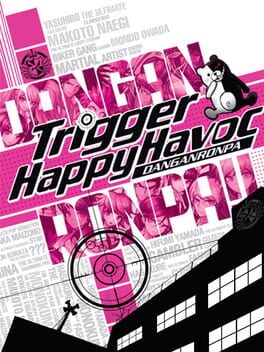
Danganronpa: Trigger Happy Havoc stages a series of class-trial murder investigations where you gather evidence, identify contradictions, and name the killer — a direct analogue to Clue's suggestion-and-accusation structure, wrapped in a visual novel.
Key difference: Heavy story and anime presentation; no board movement.
Best for: Clue fans who want a narrative around the whodunit.
Skip if: You dislike visual novel pacing or anime aesthetics.
A pure deduction game: you search a database of police interview clips and piece together the truth of a murder from contradictory testimony — exactly Clue's logic of eliminating suspects by cross-referencing evidence, in a radical FMV form.
Key difference: Entirely FMV database-search; no board or competitive play.
Best for: Clue fans who love deduction over mechanics.
Skip if: You want real-time gameplay or multiplayer.
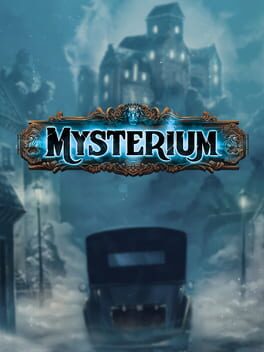
A digital adaptation of the board game Mysterium, where one player gives dream-card clues and others deduce a murderer, weapon, and location — structurally identical to Clue's core loop with asymmetric cooperative roles.
Key difference: Cooperative rather than competitive; abstract visual clues.
Best for: Clue groups who want a cooperative twist on the formula.
Skip if: You want competitive accusation gameplay.
Among Us is social-deduction at its most distilled: players debate, cross-reference alibis, and vote to eliminate the impostor — the same "accuse someone based on gathered evidence" climax Clue builds toward each round.
Key difference: Real-time action tasks; accusation is by social vote, not logical proof.
Best for: Groups wanting a quick multiplayer deduction session.
Skip if: You prefer single-player or slower turn-based play.
L.A. Noire puts you in the role of a detective interviewing suspects, reading body language, and piecing together crime scenes to name a perpetrator — thematically identical to Clue's murder-mystery premise, expanded into a 1940s open city.
Key difference: Action-adventure structure with driving and shooting sections.
Best for: Clue fans who want a cinematic detective experience.
Skip if: You dislike third-person action or long cutscenes.
Disco Elysium is a dialogue-driven detective RPG where you interrogate suspects, weigh contradictory testimonies, and reconstruct a murder — the investigative heart of Clue expanded into an enormous, literate RPG.
Key difference: No board; heavy text-based RPG with skill checks.
Best for: Clue fans craving deep narrative detective work.
Skip if: You want quick multiplayer games or minimal reading.
The Wolf Among Us casts you as a hardboiled detective investigating a series of murders, gathering clues and confronting suspects across five episodes — the whodunit mystery of Clue told as an interactive noir comic.
Key difference: Cinematic point-and-click; no strategy or board mechanics.
Best for: Clue fans who enjoy mystery atmosphere over mechanics.
Skip if: You want replayable board-game structure.
Heavy Rain follows four characters unraveling a serial-killer mystery by examining crime scenes and interrogating witnesses — the investigative deduction of Clue embedded in a cinematic thriller.
Key difference: QTE-driven cinematic game; no competitive or turn-based elements.
Best for: Players who love Clue's murder mystery theme in a story format.
Skip if: You want competitive multiplayer or replayable mechanics.
Papers, Please is a document-scrutiny puzzle game where you cross-reference names, photos, and dates to spot inconsistencies — a mechanical loop of logical deduction under pressure that mirrors Clue's process-of-elimination core.
Key difference: Dystopian bureaucratic theme; no mystery narrative.
Best for: Clue fans who love deduction mechanics over mystery theme.
Skip if: You need a whodunit mystery or multiplayer.
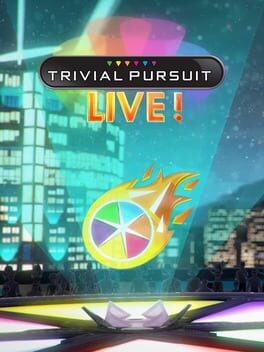
A digital adaptation of the classic trivia board game, sharing Clue's Quiz/Trivia and Card & Board Game DNA with turn-based competitive play and movement across a board.
Key difference: Pure trivia; no mystery or deduction element.
Best for: Clue fans who want competitive board-game trivia nights.
Skip if: You want mystery-solving over trivia questions.
Monkey Island 2 is a comic point-and-click mystery adventure from 1991 where you gather clues, interrogate colorful suspects, and solve inventory puzzles — a vintage peer to the 1992 Clue with comparable puzzle logic and humor.
Key difference: Pirate-comedy adventure; no grid board or competitive structure.
Best for: Fans of classic-era mystery puzzle games.
Skip if: You want competitive multiplayer or modern graphics.
PC
50%
Day of the Tentacle 1993
Day of the Tentacle is a classic LucasArts point-and-click puzzle-adventure from 1993 with a mystery-solving structure based on gathering items and applying logic across three time periods.
Key difference: Comedic sci-fi adventure with no deduction or accusation system.
Best for: Clue fans wanting a puzzle-heavy period-appropriate adventure.
Skip if: You want competitive mystery deduction.
PC
50%💎 Gem
The Vanishing of Ethan Carter 2014
The Vanishing of Ethan Carter is a first-person mystery where you reconstruct crime scenes by placing clues in sequence to visualize what happened — a direct forensic-deduction loop in a gorgeous open environment.
Key difference: Passive walking-sim pacing; no competition or board structure.
Best for: Solo players who love environmental mystery deduction.
Skip if: You need multiplayer or mechanical depth.
Outer Wilds is a mystery game driven entirely by deduction: you explore a solar system, gather fragments of information, and mentally piece together a hidden truth — no combat, just evidence synthesis.
Key difference: Sci-fi exploration in real-time 3D; no competitive structure.
Best for: Clue fans who love the eureka moment of connecting clues.
Batman: The Telltale Series frames the Dark Knight as a detective investigating a criminal conspiracy, examining crime scenes and choosing how to confront suspects in classic Telltale choose-your-own-path style.
Key difference: Action-heavy comic-book superhero setting; no board mechanics.
Best for: Clue fans who want superhero detective fantasy.
Skip if: You want turn-based or multiplayer gameplay.
SOMA layers a philosophical sci-fi mystery over exploration-based puzzle solving — you piece together what happened aboard a collapsed underwater facility by gathering audio logs and environmental clues.
Key difference: Horror atmosphere with monster-avoidance; no competitive deduction.
Best for: Clue fans comfortable with horror who want a rich mystery.
Gone Home strips mystery gaming to its essence: you explore a deserted house, read notes, and assemble a picture of what happened — the same "move room to room gathering information" loop as Clue, minus the competition.
Key difference: No opponent, no accusation — pure solo narrative exploration.
Best for: Clue fans wanting a gentle solo mystery with no pressure.
Skip if: You need strategy depth or competitive play.
First-person exploration replaces board movement; solo only.
PlayStation, PC, Xbox, Nintendo
Sherlock Holmes: Crimes & Punishments
85%
Puzzle
Solo narrative; no board movement or competitive players.
PlayStation, PC, Xbox, Nintendo
Danganronpa: Trigger Happy Havoc
82%
—
Heavy story and anime presentation; no board movement.
PC, Mobile, PlayStation
Her Story
80%
—
Entirely FMV database-search; no board or competitive play.
PC, Mobile
Mysterium
78%
Strategy, Card & Board Game
Cooperative rather than competitive; abstract visual clues.
PC, Mobile
Among Us
75%
Strategy
Real-time action tasks; accusation is by social vote, not logical proof.
Xbox, PlayStation, Mobile, PC, Nintendo
L.A. Noire
72%
Strategy
Action-adventure structure with driving and shooting sections.
PlayStation, PC, Xbox
Disco Elysium
68%
—
No board; heavy text-based RPG with skill checks.
PC
The Wolf Among Us
63%
—
Cinematic point-and-click; no strategy or board mechanics.
PlayStation, Mobile, PC, Xbox
Heavy Rain
60%
—
QTE-driven cinematic game; no competitive or turn-based elements.
PlayStation, PC
Papers, Please
55%
Puzzle
Dystopian bureaucratic theme; no mystery narrative.
PC, Mobile, PlayStation
Trivial Pursuit Live!
55%
Quiz/Trivia, Card & Board Game
Pure trivia; no mystery or deduction element.
PlayStation, Xbox, Nintendo
Monkey Island 2: LeChuck's Revenge
52%
Puzzle
Pirate-comedy adventure; no grid board or competitive structure.
PC
Day of the Tentacle
50%
—
Comedic sci-fi adventure with no deduction or accusation system.
PC
The Vanishing of Ethan Carter
50%
Puzzle
Passive walking-sim pacing; no competition or board structure.
PlayStation, PC, Xbox, Nintendo
What makes a game truly feel like Clue?
The essential Clue experience has three pillars: movement through a bounded space, information gathering by making and hearing suggestions, and the pressure of a final accusation you can only make once. Return of the Obra Dinn and Danganronpa: Trigger Happy Havoc are the rare games that replicate all three in spirit — constrained investigation spaces, evidence that only means something in combination, and a moment where you commit to a conclusion.
Among Us captures the social accusation layer almost perfectly: the killer is among a small, known group, evidence is gathered through observation, and the climax is a collective vote based on deductive argument. It lacks Obra Dinn's or Danganronpa's structured evidence trail, but no other game replicates the live-debate finale of a Clue accusation round.
Best picks for solo mystery fans
If you loved Clue's deduction but have no one to play with, Disco Elysium and L.A. Noire are the best starting points: both cast you as a detective working through a murder with a defined suspect pool, cross-referencing witness accounts and physical clues. L.A. Noire is the more accessible of the two, with crime scenes that reward methodical examination before you face a suspect.
The Vanishing of Ethan Carter and Her Story (see additional picks) are excellent hidden-gem alternatives — the former has you reconstruct crimes by placing evidence in sequence, while the latter asks you to build a picture of a murder entirely from database searches of police interviews, which is almost algorithmically similar to how Clue's notebook works.
If you want the board-game feeling specifically
Clue is ultimately a board game at heart, and that physical structure — rolling turns, shared board, competitive knowledge asymmetry — is hard to find outside dedicated adaptations. Mysterium (in additional picks) is the closest existing digital board game to Clue's formula, using dream-image clues to guide cooperative deduction toward a murderer, weapon, and room. Hearthstone shares the Card & Board Game genre tag but plays nothing like Clue; skip it for this purpose.
For trivia fans drawn to Clue's Quiz/Trivia genre tag, Trivial Pursuit Live! offers the same competitive board-game session feel with friends, even if the mystery element is absent. The deduction-lovers in any Clue group will be better served by Danganronpa or Return of the Obra Dinn.
Return of the Obra Dinn is the strongest modern equivalent: it is built entirely around the same process-of-elimination deduction as Clue, asking you to identify a murderer and method for each crew member on a ghost ship using only environmental evidence and logical cross-referencing. It won numerous Game of the Year awards in 2018.
Are there any multiplayer games like Clue?
Among Us is the most widely played multiplayer social-deduction game and captures Clue's accusation climax almost perfectly, though it plays in real time rather than turns. For a more direct board-game equivalent, the digital version of Mysterium (cooperative) or the official Clue/Cluedo digital app are the closest multiplayer options.
What video games are similar to Clue's mystery-solving theme?
L.A. Noire, Disco Elysium, The Wolf Among Us, Heavy Rain, and Danganronpa: Trigger Happy Havoc all center on gathering evidence about a murder, identifying suspects, and making a final accusation. Danganronpa is the closest structurally, with formal class-trial deduction sequences that mirror Clue's suggestion-and-accusation loop.
Is there a game like Clue where you investigate a murder scene?
Yes — Sherlock Holmes: Crimes and Punishments (in our additional picks) is specifically designed around examining crime scenes, profiling suspects, and selecting a culprit across six separate cases. The Vanishing of Ethan Carter takes a similar approach in a more atmospheric, exploratory style.
What games have the same deduction mechanics as Clue?
Return of the Obra Dinn is the purest mechanical match: like Clue, you work with a fixed set of possible answers (crew members, fates, perpetrators) and eliminate options through evidence until only one solution fits. Papers, Please applies a similar cross-referencing logic to document inspection, and Her Story tasks you with assembling truth from fragmented interview clips in a comparable way.
 88%💎 Gem